




Going Green Without Saying Goodbye to Diesel
Green shouldn't be the only color a fleet is considering when making a move toward “going green.” "The most important colors in business are still red and black," said Joe Fiorelli, fleet and safety director for Gulfeagle Supply, during a session for the National Truck Equipment Association's recent Green Truck Summit entitled, "Compounding the Green: Incremental Measures for Going Green and Sustainable."

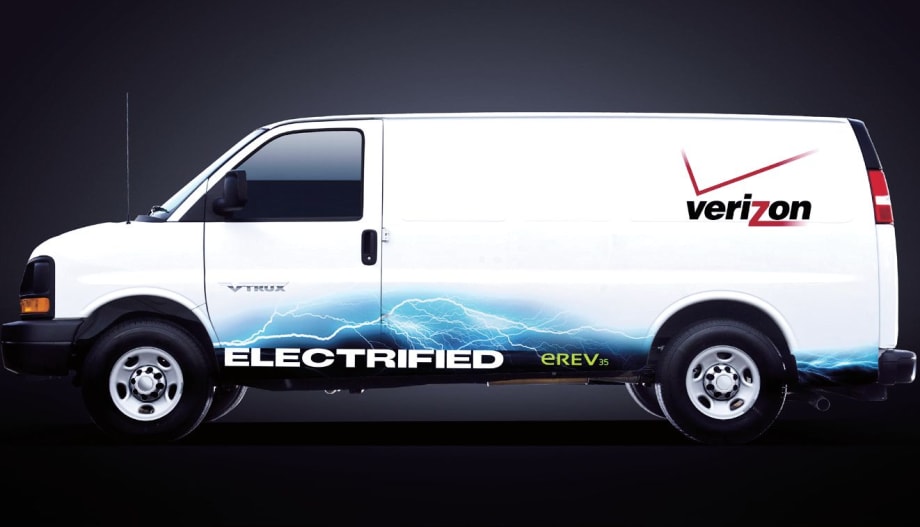
Verizon has tested alternative-fueled vehicles like this one but says there are many other ways to go gree, including using telematics.
Verizon has tested alternative-fueled vehicles like this one but says there are many other ways to go gree, including using telematics.
Green shouldn't be the only color a fleet is considering when making a move toward “going green.” "The most important colors in business are still red and black," said Joe Fiorelli, fleet and safety director for Gulfeagle Supply, during a session for the National Truck Equipment Association's recent Green Truck Summit entitled, "Compounding the Green: Incremental Measures for Going Green and Sustainable."
As fleets and the trucking industry increasingly focus on the many ways of going green, Fiorelli said there isn't one “right” solution. Each fleet is unique, and the path each takes to greening their fleet will be slightly different.
The spotlight on ways to improve a fleet's fuel economy and reduce greenhouse gas emissions has largely been focused on hybrid or alternative-fueled vehicles, which can be an expensive proposition.
While some fleets have found success with converting their die-sel- and gasoline-powered vehicles to hybrid, dual-fuel or alternative-fuel vehicles, there are many other ways to “go green” without dropping a lot of green to do it.
Fleets can go green and still be powered by the traditional diesel or gasoline fuel all while keeping their eye on the bottom line.
Fiorelli cited many questions that still linger for alternative-fuel vehicles, including lifecycle cost, the best long-term fuel choice, and facility requirements for vehicles other than diesel.
“As green is coming on board, we still need to work at reducing operating costs. In my perspective, the private Class 7 and 8 trucking industry is already challenged every day to move enough product down the road to be profitable,” said Fiorelli. “I think you can stick with low-capital investments and still reduce your fuel consumption.”
Lower-cost green options
Fiorelli has focused on proven green alternatives such as GPS for vehicle tracking and turn-by-turn directions.
“If you have a Class 8 truck that misses a turn, they might have to drive 10 miles before they can turn around. That's an added 20 miles that costs you money,” he said.
Other easy ways he suggested to improve fuel economy and cut GHG emissions included working closely with your engine manufacturer on idle shutdown and other parameters.
More suggestions include low-rolling-resistance tires, tire pressure monitoring systems, and taking a hard look at aerodynamics.
“Go green, but just go smart green,” Fiorelli said. You have to really understand what will work best for your fleet, he stressed.
Green data
George Mayhew with Verizon Fleet Operations agreed with Fiorelli that every company, fleet and driver should find the best way for their operation to go green.
Verizon has more than 35,000 on-road vehicles consuming around 40 million gallons of fuel. Those vehicles are separated by geography and by the jobs they need to perform.
“There are many different ways to go green besides changing the actual make-up of the vehicle,” Mayhew said.
Mayhew stressed that one of the most important things a fleet can do is to obtain and review empirical data to see where and how technology or alternative-fuel-powered vehicles will do the most good.
“You can't manage what you can't measure. We see telematics as extremely important to managing the whole green process,” he said.
For example, through the data it collected, Verizon determined that unnecessary idling is perhaps its greatest opportunity to reduce its fuel consumption and GHG emissions.
Telematics was able to identify those drivers who were found to idle too much, too often and Verizon was then able to correct that behavior.
According to Mayhew's presentation, Verizon's idle reduction efforts saved the company more than 200,000 gallons of fuel in 2012.
Mayhew stressed that fleets must make sure that the right technology or fuel economy step is taken with the right vehicles.
“Improper deployment will lengthen or eliminate ROI and mitigate the valuable environmental benefits these technologies offer — we must confirm effective technology application and have alternate solutions where they don't fit."
More Fleet Management

Color Match Smarter: Tools That Restore & Perform
For fleet managers and collision repair professionals keeping heavy-duty trucks on the road, getting the color right the first time isn't just about appearance — it's about efficiency, turnaround time, and bottom-line results. Discover how today's digital color tools are transforming the repair process from guesswork to precision.
Read More →
FMCSA Pauses Biennial-Update Enforcement Amid Motus Transition
Carriers whose updates were due on or after June 1 have more time, while FMCSA works to stabilize its new registration system and warns of phishing sites impersonating its new carrier registration system, Motus.
Read More →
2026 Blueprint for Countering Smarter Supply Chain Theft
Cargo theft is no longer just the cost of doing business. It's a multi-billion-dollar criminal enterprise exploiting vulnerabilities across your fleet, drivers, and supply chain.
Read More →


How Telematics Improves Visibility, Control, and Performance in Refrigerated Fleets
Explore how telematics help refrigerated fleets improve visibility, uptime, efficiency, compliance, and cargo protection across connected cold chain operations.
Read More →
What the U.S.-Canada Trade War Means for Trucking
Escalating U.S.-Canada tariffs could disrupt cross-border freight, reduce truck volumes, raise costs, and create new uncertainty for carriers on both sides of the border.
Read More →
What Are Trucking’s Top Concerns for 2026?
The American Transportation Research Institute wants to know what's worrying trucking fleet managers, drivers, and other stakeholders in its annual Industry Issues survey.
Read More →
American Trucking Associations Looks for a New Leader
ATA President and CEO Chris Spear abruptly left his job at the association on August 21, at a pivotal time for the trucking industry.
Read More →
Public Wi-Fi Cybersecurity Risks: How Truck Drivers and Fleets Can Protect Their Data
Public Wi-Fi can expose truck drivers and fleets to credential theft, malware, and other cyber threats. Here’s how to reduce the risk on the road.
Read More →
For Nicky Cupp, Fleet Innovation Starts With Frustration
HDT Truck Fleet Innovator Nicky Cupp turns everyday pain points at Fraley & Schilling into opportunities for better technology and smarter processes.
Read More →
Adam Buttgenbach’s Approach to Electric Trucks: Start With Where They Fit
HDT Truck Fleet Innovator Adam Buttgenbach helped PepsiCo build one of North America’s largest EV fleets by focusing on where electric trucks make operational sense.
Read More →