




Fuel-Saving Reefers
Diesel fuel is getting almost too dear in price to burn, so users are looking at ways to conserve it and to avoid consuming it altogether

Diesel fuel is getting almost too dear in price to burn, so users are looking at ways to conserve it and to avoid consuming it altogether.
This goes for refrigeration units as well as trucks, and studies are showing that greater efficiency is worth paying extra money to get. And the latest units are also cleaner burning - especially important if the long arm of a Clean Air law is reaching out to you.
In California, users of what authorities call transportation refrigeration units, or TRUs, are facing an imminent deadline to switch to units with reduced exhaust emissions. By Dec. 31, many existing reefers must be retrofitted with new engines or diesel particulate filters, or they must be entirely replaced with new units. This decree affects model-year 2000 units and older.
The state's Air Resources Board first proposed the rules in 2004 to meet stringent pollution-abatement requirements. The regs also require registration of each reefer and reports on their operation by owners of any units run in California. The federal Environmental Protection Agency has not yet approved them, but is expected to soon, and some fleets are proceeding accordingly.
One is Team Campbell Logistics, a food distributor with operations in California and neighboring states, with headquarters in Chino, in the sometimes smoggy Inland Empire east of Los Angeles. It has 288 older reefers affected by CARB's rules, and if it wants to continue running them it must replace their engines with cleaner-burning new ones or retrofit the existing engines with diesel particulate filters to cut soot and other pollutants. A DPF would cost $8,000 to $10,000 and a new engine is priced at $7,000 to $10,000. This is too much to be worthwhile, because the TRUs would still have original compressors and other equipment and thus would gain little in efficiency, says Steve Pilcher, vice president of transportation.
"A DPF is a high-efficiency muffler placed on an old engine," Pilcher says. "To me it doesn't make sense to put a new muffler on older equipment. For our company, it made more sense to install new reefers that are significantly more efficient and are equipped with data loggers and advanced microprocessors." So Team Campbell is replacing the old 1997- to 2001-model TRUs with new reefers.
The fleet is buying Thermo King SB 210-50 units with emissions-compliant diesels and standby electric capability. A careful study showed that buying the new units and installing them on existing trailers or moving them to new trailers would be more economical in the long run, even with the higher purchase costs and electric standby's premium of 10 to 20 percent over a straight-diesel version. The old units will be sold to out-of-state users.
Plugging into "shore power" is one of the options CARB allows to meet its regs, and the agency believes it's the best way because electric operation results in zero emissions by the units themselves. (Emissions from electric power plants are regulated separately.) But there aren't many places to plug into, as the outlets must supply either 230-volt 2-phase or 460-volt 3-phase power, and installing them can be costly.
CARB offers grants to help defray the cost of installation, and Pilcher says he's asked for $500,000 to pay for electrification of his company's loading docks. He's not yet heard back from CARB on the application. His company now has four 460-volt outlets at a distribution center that are used to power refrigerated containers brought in from the harbor and elsewhere in California with loads of fresh produce, dairy products and chocolate.
By December 2015 CARB will require the 2008-model engines to be replaced or retrofitted, but the units' standby electric apparatus could qualify as an "alternative technology." That would mean their trailers could transport products, as long as the TRUs operate on electric standby during loading, unloading or awaiting delivery, without further modification. Even if Team Campbell Logistics' TRUs need to be retrofitted in the future, Pilcher believes that it will pay to adjust them then. "In seven years there'll likely be more competition and more approved DPFs out there, and prices should be lower," he says.
Plug-Ins Not New
Thermo King has offered stand-by electric capability for reefers for 50 years, says Jerry Duppler, the manufacturer's trailer product manager. It is attractive for local operations whose trailers and trucks return home every night and their units plugged in. In some areas electricity rates are low enough to result in significant savings. Electric "cold plate" reefers have long been used in refrigerated delivery trucks, and battery-powered reefers that plug in at night are now available. However, standby equipment is generally not a good choice for over-the-road operations whose trailers spend more time moving than sitting, Duppler says.
Emissions-free cryogenic reefers are used in some applications, and Thermo King is working on advanced versions using frozen carbon dioxide as the refrigerant. The CO2 is expelled into the atmosphere after it expands in an evaporator to cool a load. Yes, it's a greenhouse gas now under attack by environmentalists, Duppler acknowledges. But the CO2 for reefers would come from other industries that generate it as part of their operations, so its venting is simply delayed until the gas serves another useful purpose, and then its effects are no worse than if vented sooner.
Meanwhile, diesel power is still required for most transport refrigeration and heating uses, and some fleets are finding the diesel-electric operation of Carrier Transicold's Vector unit an attractive proposition. Introduced in early 2006, the so-called Deltec hybrid will run with or without the diesel. The Vector's diesel spins a generator that runs the electrically powered cooling and heating equipment. It eliminates the drive belt and other moving parts, and is more efficient than a straight diesel unit, Carrier claims. It has no batteries so must be plugged in to run electrically, and it doesn't regenerate as a hybrid-drive truck or car does.
As Advertised
"When they introduced it to us two years ago, they talked up the maintenance benefits because it has fewer moving parts," says Jon Beckstead, director of transportation for Associated Foods, which distributes food to independently owned grocery stores in seven Intermountain states from a center at Farr West, Utah. "We have not had one Vector go down on us, and we're now three years into it," he says. "The Vector is pretty much what Carrier told us it would be. We should save 29,000 maintenance hours, at $1.50 to $1.90 per hour, our cost, based on hourly running."
Part of the savings is due to a Vector's engine running fewer hours - 28 per week on average compared to 35 with a typical straight-diesel unit, he says. At a gallon per hour, the Vector thus saves seven gallons of fuel a week; multiply the per-gallon cost by the number of Vector-equipped trailers by 52 weeks and the money saved adds up. Associated now has 60 Vector reefers and expected to add another 20 this summer. As the fleet buys new trailers and reefers, eventually all 280 vehicles will be Vector powered.
Another advantage is quiet running, even on diesel. "Drivers love them," Beckstead says, "because it's easier for them to sleep." The units are silent when plugged in, but "we're not using shore power as yet. We have started testing it here in the yard. Customers are not wired for it as yet, but we've sold them on having that capability."
One produce house rents a trailer to use as temporary warehouse when output increases during summer picking, and running its reefer on plug-in instead of diesel would be ideal. So the producer is thinking of wiring for it. So are individual stores, where quietness and reduction of diesel fumes in residential neighborhoods would be advantages.
Shore power can be much l
More Equipment

Electric Yard Tractors Move Beyond Pilots
Operating-cost savings have overtaken sustainability goals as the leading reason surveyed fleets are adopting battery-electric terminal tractors, according to new NACFE research.
Read More →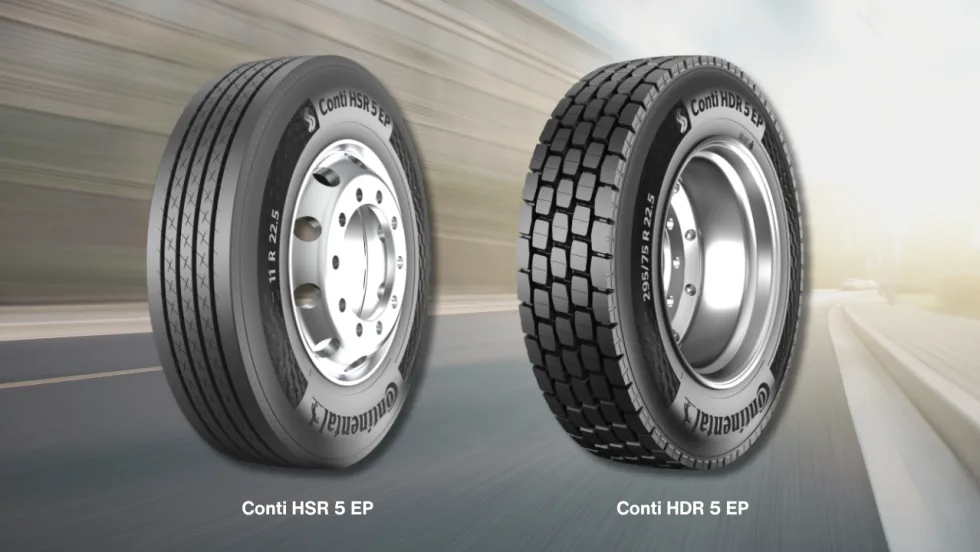
Continental Introduces New Regional Truck Tires
Continental says its new Generation 5 steer and drive tires for regional operations offer longer tread life, with estimated mileage gains of 22% and 19%, respectively.
Read More →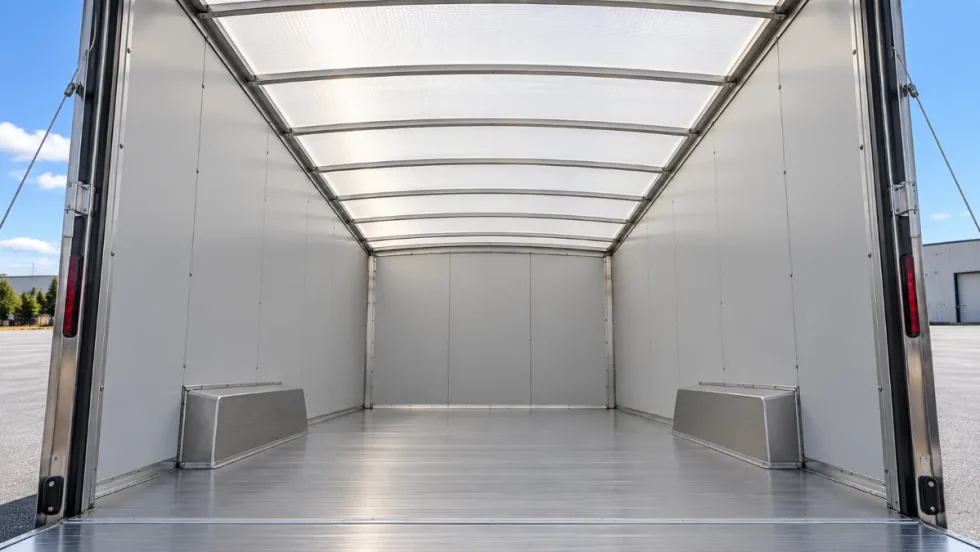
Tekmodo Introduces CargoBright Brand for Translucent Trailer Roofs
CargoBright is designed to diffuse daylight across the cargo area while performing as a working vehicle roof.
Read More →
Fleet Economics Shape Electric Truck Outlook
ACT Research expects costs, charging infrastructure, and technology improvements to drive zero-emission commercial vehicle adoption as federal regulations and incentives retreat.
Read More →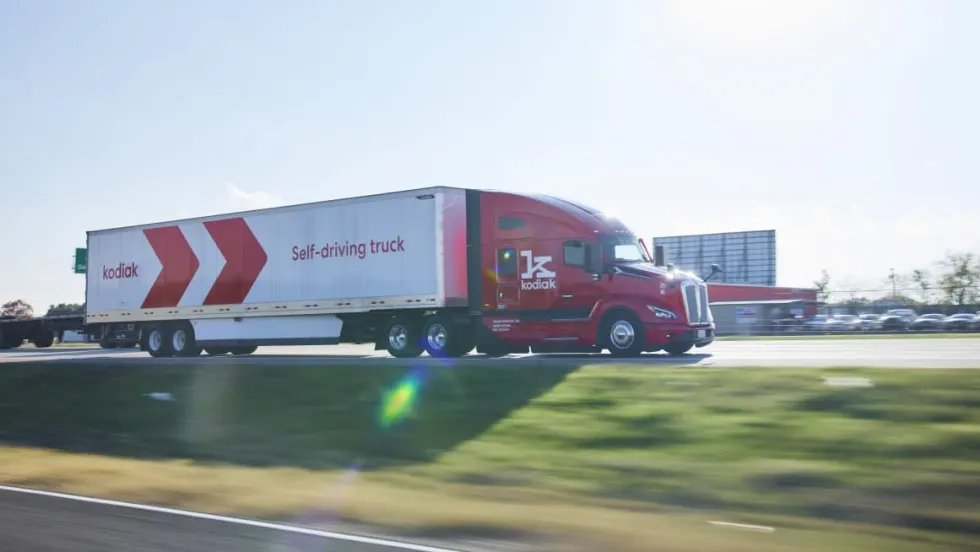
Kodiak Targets Dallas–Houston for Driverless Trucks
The company says its autonomous trucks are completing the I-45 run without a safety observer taking control. It plans to remove the observer by the end of 2026.
Read More →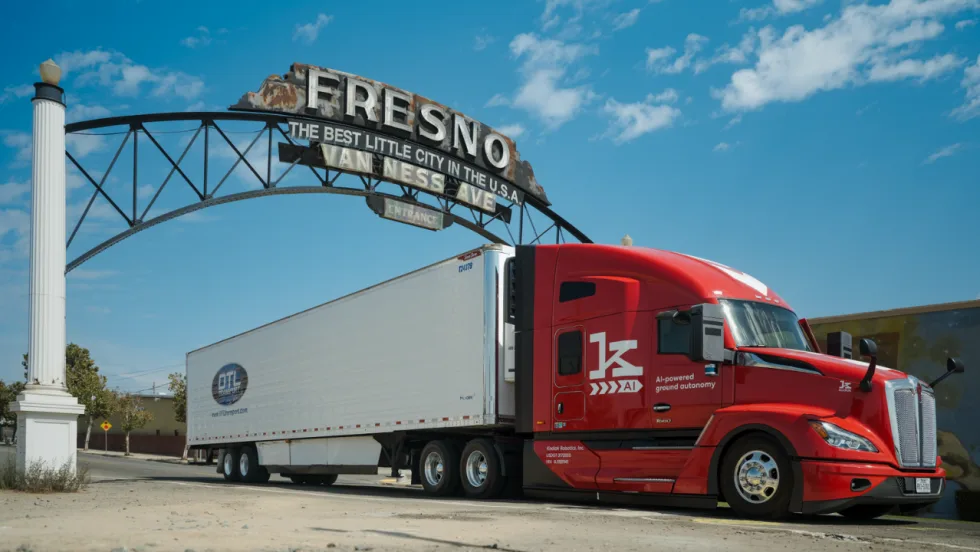
Kodiak Hauls Produce in California Autonomous Truck Pilot
Kodiak AI and DTL Transport have begun hauling produce between Fresno and Los Angeles under California’s new rules for testing heavy-duty autonomous trucks. A safety driver remains behind the wheel.
Read More →
Used-Truck Remarketing Math Is Changing
Used-truck value is no longer just a concern at trade-in. Decisions made throughout a truck’s first life can influence what it’s worth years later.
Read More →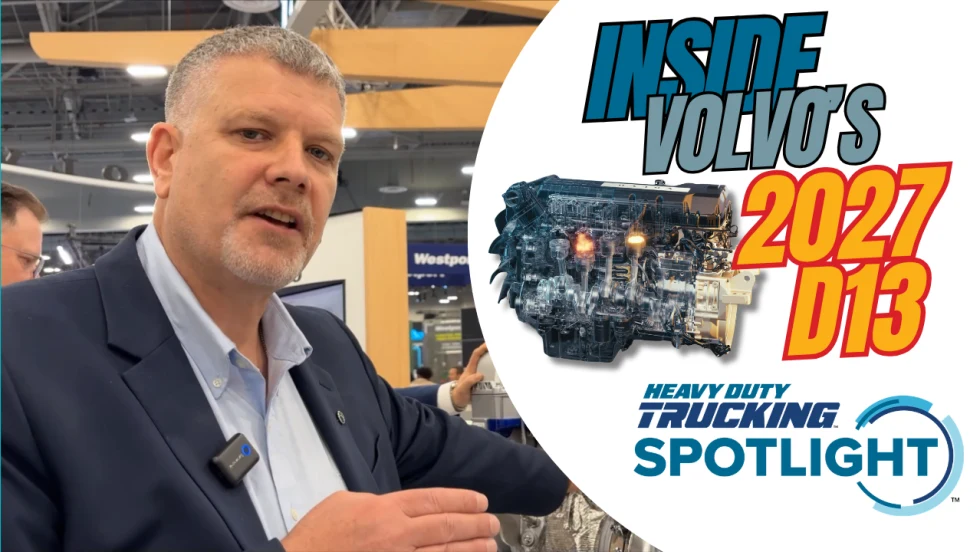
How Volvo Updated Its D13 for EPA 2027 [Watch]
Volvo’s updated D13 promises lower emissions without sacrificing performance or fuel economy. Take a closer look at what changed inside the engine in this HDT Spotlight video.
Read More →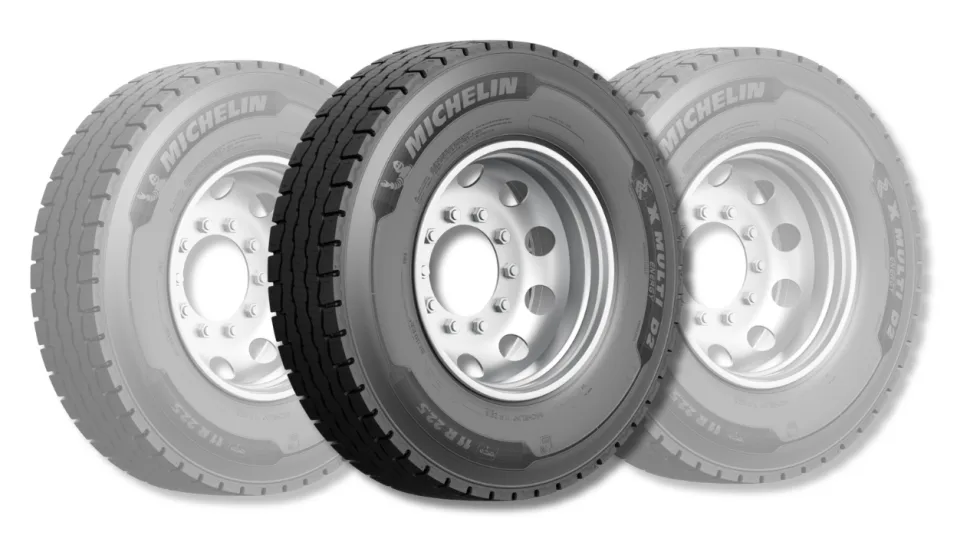
Michelin Tire Improves Efficiency and Durability for Regional Fleets
The Michelin X Multi Energy D2 is a regional haul drive tire engineered to help fleets improve fuel efficiency, durability and traction in demanding stop-and-go operations.
Read More →
ZF Expands Commercial Vehicle Push in North America
ZF is expanding its North American commercial-vehicle presence with new transmission applications, electrification, trailer technology and autonomous-driving systems.
Read More →