




Exec Views On Drivers
The driver shortage was one of the most pressing topics addressed by fleet executives at Newport Communications' annual economic summit, held in conjunction with the Mid-America Trucking Show.


This year's Truck Fleet Innovator award-winning panelists were: Dan England, chairman, C.R. England; Steve Williams, chairman/CEO, Maverick USA Inc.; Charles "Chuck" Hammel III, president, Pitt Ohio Express; Randy Marten, president/CEO, Marten Transport; and Don Orr, executive vice president, Central Freight Lines.
Following are some of their thoughts:
Randy Marten: We change every day at Marten. Our length of haul has stayed the same, and we are finding it more and more difficult to find people that want to participate in that length of haul. Some things help – we do relays on a 500-mile basis – but there's no one thing that really heals it.
One day I asked my father's sister, who was a surgical nurse, how is it that there's a shortage of nurses? She said that as soon as they raise the pay there will be more nurses available. It's no different in our business: We continually have to raise the pay. And when you get these lulls in the economy, we don't get the opportunity to raise the rate to reimburse the driver at the speed that I think we need to do it at. So it's going to be a combination of a lot of things.
• • •
STEVE WILLIAMS: I think it's probably a challenge that's been underestimated by the public at large. A lot of the policy decisions that we make within the industry and as citizens should take the microeconomic look at what's going on in regard to demographics – everything from Social Security to how we fight wars to how we're going to put drivers in trucks, find technicians and find nurses. I think we've underestimated the changes that are really going on. I would urge everyone to do their homework. Informed people will make better decisions.
We've been short of drivers for a lot of reasons, and one of the biggest reasons is, it's been a really crummy job. There's only a handful of people that really enjoy doing it, and thank goodness they are still out there. But we're going to have to change the business model that we all thought was a great idea – and certainly was the most efficient model for moving freight in this country in the late 1970s into 1980. You know, the truckload model from point A to point B. Is that sustainable? I don't think so.
Trucking was 15 percent of Gross Domestic Product in the late 1970s and 1980 – it has fallen to 10 percent now. America has benefited from the creativity and productivity of the trucking industry. That creativity and productivity has pretty much been at the expense of the truck driver. We have not done them any service by allowing it to happen. I think that as we see the compensation levels return to what they need to be, we will see that percentage of GDP go back up. We've gone too far, and it's because of economic deregulation, quite frankly. Adjusting for inflation, the drivers that haul steel today in this country – I'll just speak for my own specific circumstance – are working for less money today than they did in 1979. Why in the hell should we be surprised that it's hard to get them to continue to do it?
I don't think we're necessarily in store for a revolution, but I can tell you it would be naive to expect that to keep doing more of the same will give us a different outcome. So I think America is going to have an awakening, and I hope to be one that helps deliver the message, because I think it's going to look a lot different in five to 10 years, or we're going to be in a world of hurt.
The temptation from commercial interests is to go below our standards so that we can put people in trucks because they need them. I don't care. I think it's time for us to say that we're not going to – we're going to stand firm about not lowering our standards. We should be encouraged to raise our standards. I think the test will be whether the industry is actually mature enough to understand that, and not let ego stand in the way. Ego has gotten us a lot of trouble, I think. We all love having more trucks.
• • •
CHUCK HAMMEL: The challenges in the LTL sector are different. Finding good qualified drivers still is a difficult thing, but our drivers get home each night, so we don't have that problem of being away from home for weeks at a time. Our challenges are more about finding those that want to give good customer service, those that have a clean criminal history and things of that nature. So, you know, our challenge is a lot different than what it is in the truckload arena.
We've done a lot of things to try to overcome this. We've always taken and put a lot of pride in the employees that we have. We've tried to open up our doors to a more diverse group of drivers – those that aren't traditionally truck drivers. We've recruited a lot of minorities, a lot of women. We've also changed the size of our equipment to try to open up the opportunities to other drivers. For those that don't want to drive a 45-foot or a 53-foot trailer, we have smaller pieces of equipment. As the supply chain has changed, with just-in-time becoming part of our everyday life, the size of the shipments in LTL has gotten smaller. Every year there's less weight and they're shipping more often. So we've changed the equipment. We match the equipment with the shipment, rather than a one-size fits all. By doing that, we've been able to recruit a lot of non-traditional drivers.
• • •
DAN ENGLAND: A few years ago we saw someone try to separate themselves from the pack. It's a little bit like bike racing – every once in a while somebody tries to break away from the peloton, and most often the peloton pulls them back in. That's what happened with J.B. Hunt. They stepped out, did some innovative things in terms of compensation and so forth. But my observation was that they did not fare well with that. Now they're back more in line with the rest of us in terms of compensation. So in terms of what's going to happen over the next four or five years, I guess I don't have optimism that we're going to see dramatic changes.
Obviously, we need to be in an under-capacity situation where we can improve our return. And we've got to be smart enough to pass that on to our drivers. In the case of our fleet, one of the things we're doing to retain drivers is emphasize our dedicated operations. Right now, about 25 percent of our revenues are generated in our dedicated division, which has far better turnover than our over-the-road fleet. Our projection is in five years that that will represent 40 percent of our revenues. We're also increasing, on a modest basis, our regional operations, which are much better for drivers.
• • •
DON ORR: I still feel that any driver who has a million accident-free miles should not even have to fill in a log book. The one-size-fits-all issue is really big with drivers. There's really no reward for a guy that does a quality job. So a person that's had a long history and done a wonderful job is treated the same as the guy that just came out of driving school. I think that has a big effect on keeping the right person in the truck and in the industry.
E-mail Deb Whistler at dwhistler@truckinginfo.com
More Fleet Management

How Innovative Trucking Leaders Turn Change Into an Advantage
As the pace of change accelerates in trucking, the fleets that adapt best have more than the latest technology. They have cultures that embrace improvement.
Read More →
Freight Broker Bonds Just Got Harder to Get. Here's What That Means for Your Fleet.
When it gets harder for a freight broker to prove they are financially sound, the ones who cannot clear that bar get pushed out of the market. And those are exactly the brokers who used to leave motor carriers holding the bag.
Read More →
Long-Awaited Canadian Border Bridge to Open in Detroit
For trucking, the bridge opening should offer immediate improvements in efficiency and reliability, with new customs facilities, expanded inspection capacity, and direct freeway-to-freeway connections.
Read More →
Aurora Rolls Out Next Generation of Driverless Trucks for Commercial Freight
Aurora's latest autonomous trucks it's rolling out with International feature lower-cost hardware designed for a million miles as the company expands commercial driverless freight operations across the U.S. Sun Belt.
Read More →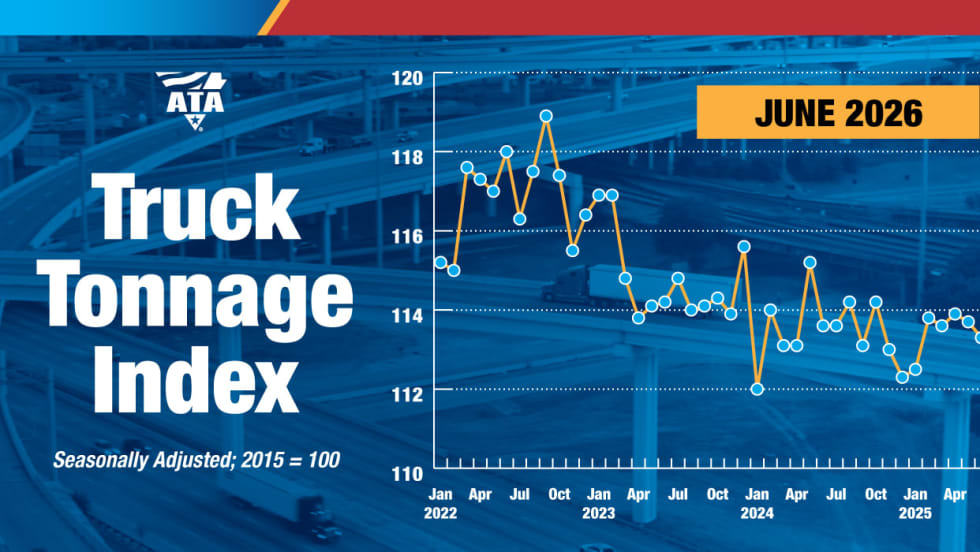
Freight Tonnage Down, Rates up, as Lower Capacity Powers Trucking Recovery
The recovery from the freight recession continues to be driven by reduction in capacity rather than by increased demand.
Read More →
Think Your Trucking Fleet Isn't Using Much AI? Think Again
Shadow AI — the use of unauthorized artificial intelligence tools at work — is becoming increasingly common, putting sensitive company data at risk. Learn how trucking fleets can protect sensitive data while embracing AI.
Read More →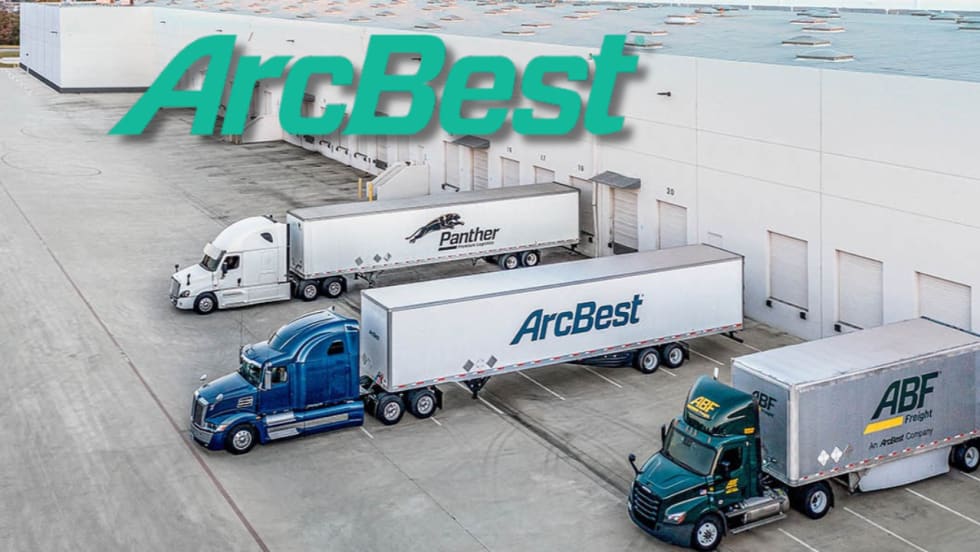
ArcBest Consolidates Brands, Cuts Workforce
The company will bring three business units under the ArcBest brand, eliminate about 2% of positions, and expects the changes to generate $40 million in annual savings.
Read More →
Trucking Fleets Faced Record Operating Costs During Third Year of Freight Recession
ATRI's annual operational cost report shows carriers trimmed fleets, delayed equipment purchases, and ran older trucks as expenses continued to outpace freight rates.
Read More →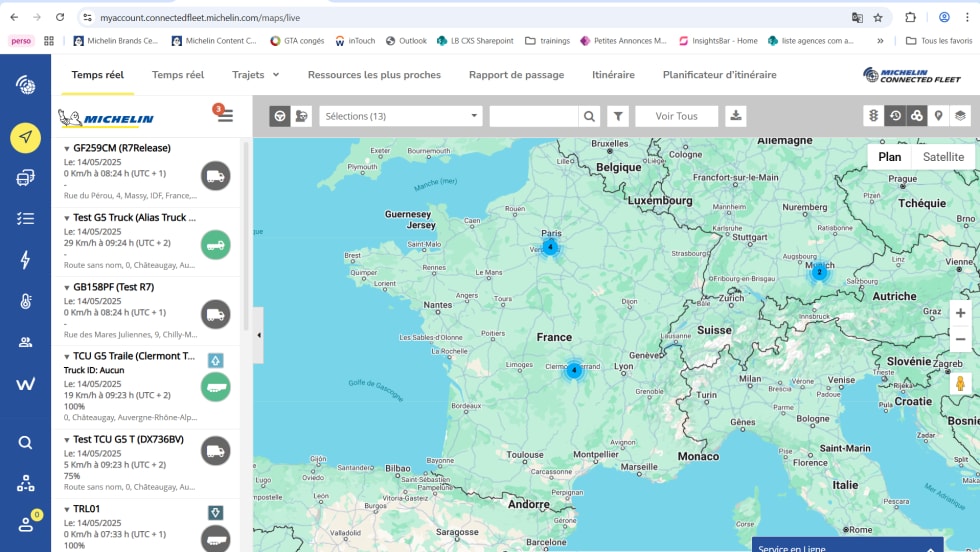
Michelin Adds AI Assistant to MyConnectedFleet Platform
Michelin’s new generative AI tool delivers instant fleet insights, helping managers analyze fuel use, tire maintenance, vehicle status, and operational performance without manually creating reports.
Read More →
LytxOne Platform Now Features AI, Compliance, and Asset Tracking Tools
New enhancements add AI-powered insights, asset tracking, compliance automation, and configurable privacy controls to Lytx's all-in-one fleet management platform.
Read More →