




Engineering from Home
As trucking industry office workers from across North America adapt to the realities of working from home, it should come as no surprise that engineers have employed some fairly clever ways to get the job done.
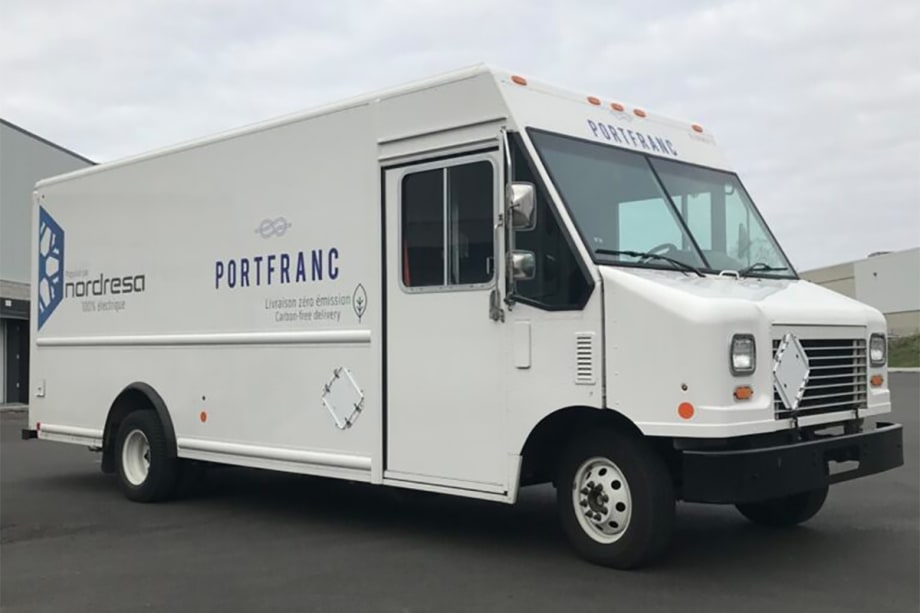
Nordresa engineers have come up with creative ways to advance projects in development while working from home.
Photo: Steve Bouchard
As trucking industry office workers from across North America adapt to the realities of working from home, it should come as no surprise that engineers have employed some fairly clever ways to get the job done.
At Nordresa, a Laval, Quebec-based developer of electrified powertrains recently acquired by Dana, a tight-knit group of 45 employees began working from home in mid-March. Having recently gone from a small company of a few dozen to part of Dana’s global workforce of 35,000, work travel had skyrocketed.
“There were perpetually Dana people in our facility or our people at a Dana facility,” said Marc Daigneault, co-founder of Nordresa and head of e-vehicle integration, engineering.
Engineers were in a product development stage when the shutdown hit, frequently visiting customer facilities and collaborating with new colleagues as far away as Mexico, Germany, and the United Kingdom. The sudden stay-at-home order issued in Quebec in mid-March meant engineers had to quickly adapt to a new reality.
“We didn’t know initially if it would be a week, two weeks,” Daigneault said. “We didn’t imagine it would be 12 weeks, and we had to get pretty creative originally to start working together remotely.”
Engineers are used to collaborating in person, examining parts in hand and having impromptu brainstorming sessions. Instead, Nordresa engineers began using Microsoft Teams for meetings and document sharing, while using cellphone cameras to exchange visuals with peers.
“All our data systems are in the cloud,” Daigneault said. “We have access to all our IT systems and every piece of software we need.”
In some cases, engineers took the work-from-home experience to a whole new level, constructing makeshift labs in their living rooms. One Nordresa battery management system engineer built a hardware-in-the-loop system on his coffee table, which was connected to the internet so programmers in Michigan could push software to it for testing.
Another set up a harness assembly station on his kitchen table and brought in engineering peers for design reviews using his smartphone camera.
In terms of the impact on project rollout, Daigneault said some short-term timelines were affected when the shutdown limited parts availability, but because Nordresa was working on multi-year programs, there’ll be no major disruptions to its longer-term plans.
There have even been some benefits. Daigneault said the company has had to become better organized, and if anything, communication has been heightened.
“Working from home forces us to schedule more meetings,” he said. “One thing we put in place are daily stand-ups. Every day with my team we spend a half hour on the phone talking about our objectives for the day, what we’re trying to accomplish, what our roadblocks are. This is something we will keep doing after Covid. It’s a great way to share information.”
He also said the company will be more lenient towards working from home in the future, since employees have proven they’re able to do so productively. And there are times, he acknowledged, that the open concept office isn’t the best environment for focusing. One thing he misses, however, is the extra-curricular activities that develop from working together.
“We did a lot of social activities, such as skiing in the winter and mountain biking in the summer,” he said.
Eaton Embraces Industry 4.0
Likewise, power management company Eaton has been adapting to new workplace realities by implementing a system it calls Industry 4.0. The company defines the concept as “both operational and informational technologies, enabling autonomous production systems that are connected, optimized, transparent, proactive, and agile. Supported by an integrated ecosystem, the technologies are composed of augmented reality, rapid application development, autonomous robots, digital simulation, and additive manufacturing.”
“I’m proud of our Vehicle Group team and their ingenuity, especially during the Covid-19 pandemic,” said Joao Faria, president, Eaton Vehicle Group. “By leveraging augmented reality, we are able to continue to support our operations remotely and continue the development of new products, ensuring our customer deadlines are met despite the global challenges we are all facing.”
The company uses Microsoft’s HoloLens 2 augmented reality goggles to display and view 3D images, while connected remotely.
It’s also continuing to train engineers on the use of new equipment, previously done in person, using augmented reality.
Robots are being used to optimize manufacturing flow and eliminate the need for forklifts and other human-operated machinery, while COBOTS – robots designed to interact with humans in a shared space – safely handle complex and repetitive tasks.
“This results in improved consistency and accuracy during the manufacturing process,” Eaton claims.
Digital simulation applications determine which solution will produce the highest output, running various scenarios using different parameters, such as the number of operators, cycle times, etc.
“The applications are being used to define new manufacturing cells and assembly lines or to redesign existing ones,” the company says. “In most cases, the Vehicle Group is seeing productivity increase from 10-30% via higher production output or reduced amount of investment needed.”
Eaton is also using 3D printing tools to expedite processes, reduce lead times and purchase costs and create more highly-customizable products.
“Lead times can be reduced from weeks to days, while reducing costs from thousands to hundreds,” the company claims.
James Menzies is the editor of Today's Trucking, where this article originally appeared, and was used with permission from Newcom Media as part of a cooperative editorial agreement.
More Equipment

How Volvo Updated Its D13 for EPA 2027 [Watch]
Volvo’s updated D13 promises lower emissions without sacrificing performance or fuel economy. Take a closer look at what changed inside the engine in this HDT Spotlight video.
Read More →
Michelin Tire Improves Efficiency and Durability for Regional Fleets
The Michelin X Multi Energy D2 is a regional haul drive tire engineered to help fleets improve fuel efficiency, durability and traction in demanding stop-and-go operations.
Read More →
ZF Expands Commercial Vehicle Push in North America
ZF is expanding its North American commercial-vehicle presence with new transmission applications, electrification, trailer technology and autonomous-driving systems.
Read More →
Tesla Wants a Self-Driving Semi. Are Cameras Enough?
Could Tesla’s camera-only autonomous driving technology work on an 80,000-pound Semi? In this commentary, HDT's Deborah Lockridge takes a look at Tesla, Cybercab, and how autonomous trucks see the road.
Read More →
Kodiak: Driverless Long-Haul Truck Launch on Track for 2026
Kodiak AI says its driverless long-haul safety case is 93% complete and it remains on track to begin commercial operations by year-end 2026.
Read More →
What DOT’s Automated Vehicle Strategy Means for Trucking
The U.S. Department of Transportation issued a new automated-vehicle strategy that outlines plans for driverless-truck regulations, cross-state freight corridors, and federal safety standards.
Read More →
East Coast Port Launches $45M Electric Truck Push
The Port Authority of New York and New Jersey announced millions in incentives for zero-emission drayage trucks, yard tractors, and new charging hubs near the port.
Read More →
PlusAI Going Public to Fund Autonomous Truck Launch
A SPAC deal could provide PlusAI with up to $300 million as it works toward a 2027 commercial launch of factory-built autonomous trucks.
Read More →
NHTSA Moves to Rewrite Truck Fuel-Economy Rules
The National Highway Traffic Safety Administration says it lacks authority to regulate medium- and heavy-duty truck engines separately from complete vehicles, but the existing standards have not yet been eliminated.
Read More →
Detroit Opens Orders for EPA 2027 Engines
Detroit isn’t starting from scratch to meet EPA 2027 diesel emissions standards. Its Gen 6 DD13 and DD15 engines keep much of today’s platform while updating the fuel and aftertreatment systems.
Read More →