




Engine Smarts: Navistar's ProStar+ Cooling System Features Dimpled Radiator Vanes, Multi-Speed Fan
"We're experts in cooling. It's not that we wanted to become experts, but that is what it has taken," said Ramin Younessi, Navistar's vice president of powertrain and strategy. He was talking of the development of the cooling systems to support the 12.4-liter MaxxForce 1
"We're experts in cooling. It's not that we wanted to become experts, but that is what it has taken," said Ramin Younessi, Navistar's vice president of powertrain and strategy. He was talking of the development of the cooling systems to support the 12.4-liter MaxxForce 13
just coming into the marketplace, and the upcoming MaxxForce 15, currently planned for limited production in January.
The result is a cooling system that is both remarkable and not significantly different from competitors', except in performance. The major achievement is a package that fits within the current hood, frame and fenders and uses the same grille opening as the previous generation of heavy duty 11- and 13-liter MaxxForce engines.
Younessi said one of the contributing factors is that, contrary to conventional wisdom, the Advanced Exhaust Gas Recirculation Navistar is using to meet EPA's 2010 emissions regulations actually does not flow significantly more EGR, so there's not so much more exhaust to cool on its way back from the exhaust and into the intake manifold. There is some, but the slick part of the cooling package is the design of the radiator surface area for heat transfer.
"The ProStar+ cooling system uses high-performance cores that have low air-side restriction to increase air flow through the core, and a unique tube design that maximizes heat transfer from the coolant," said Younessi in an interview. "The fin geometry was selected to balance the need for air flow through the module versus the overall effectiveness of the cores.
"Dimpled tubes are used to increase coolant turbulation at lower water flow rates to ensure that the cooling performance is acceptable across the entire speed range of the engine. A low-temperature circuit is used to improve the efficiency of the high-pressure turbo by cooling the low-pressure turbo-out gas."
Low-Temp Coolant, Air
There is some complexity from the cooling of the air between the series turbos. "The low-temperature circuit is also used to provide additional cooling to the EGR system, which is a vital part of the emissions recipe," he said. "The configuration of the cooling module is optimized to provide the required low-temperature coolant required by the EGR strategy. The three-pass low-temperature radiator is positioned so that the final pass is cooled with lower-temperature air, which is a necessity to meet the stringent emissions requirements."
Part of the package is an electronically controlled viscous fan drive in order to meet the air-flow demands of the cooling module. The fan position relative to the engine-mounted fan ring is optimized to provide the highest possible efficiency in order to provide the highest air flow through the core at the lowest possible power consumption, Younessi explained.
The fan is gear-driven, which reduces belt load, and, because the drive is a variable-speed device, it allows the delivery of the right amount of air at the right time to meet the cooling demands of either the water-side load, air-side load or the air-conditioning load.
As a bonus, the variable-speed feature allows the engine controller to improve fuel economy by delivering only the required amount of air to meet the various demands for cooling.
Nitrite-Free ELC
The choice of coolant is also part of the overall performance. It is not the non-aqueous type that was rumored, but a regular, premium Shell product.
"Shell Rotella Ultra ELC coolant is nitrite-free," said Younessi. "Navistar and Shell have been monitoring the performance of extended-life coolants across many different engine manufacturers and vehicle applications."
Navistar believes Shell Rotella Ultra ELC provides better coolant performance by eliminating nitrite depletion and ammonia formation. Nitrites in a typical extended-life coolant deplete over time and must be replenished at regular service intervals. The formulation of Ultra contains a third organic additive that provides as much protection as nitrites, and remains stable throughout its useful life."
According to Younessi, other benefits of this coolant are:
* Enhanced corrosion protection for aluminum components in the cooling system;
* Service life of 600,000 miles or 12,000 hours without the need for an extender additive;
* The same cooling and antifreeze performance as today's coolant; and
* Backwards compatibility for all cooling systems with OAT (organic additive technology) coolants.
More Equipment

ZF Expands Commercial Vehicle Push in North America
ZF is expanding its North American commercial-vehicle presence with new transmission applications, electrification, trailer technology and autonomous-driving systems.
Read More →
Tesla Wants a Self-Driving Semi. Are Cameras Enough?
Could Tesla’s camera-only autonomous driving technology work on an 80,000-pound Semi? In this commentary, HDT's Deborah Lockridge takes a look at Tesla, Cybercab, and how autonomous trucks see the road.
Read More →
Kodiak: Driverless Long-Haul Truck Launch on Track for 2026
Kodiak AI says its driverless long-haul safety case is 93% complete and it remains on track to begin commercial operations by year-end 2026.
Read More →
What DOT’s Automated Vehicle Strategy Means for Trucking
The U.S. Department of Transportation issued a new automated-vehicle strategy that outlines plans for driverless-truck regulations, cross-state freight corridors, and federal safety standards.
Read More →
East Coast Port Launches $45M Electric Truck Push
The Port Authority of New York and New Jersey announced millions in incentives for zero-emission drayage trucks, yard tractors, and new charging hubs near the port.
Read More →
PlusAI Going Public to Fund Autonomous Truck Launch
A SPAC deal could provide PlusAI with up to $300 million as it works toward a 2027 commercial launch of factory-built autonomous trucks.
Read More →
NHTSA Moves to Rewrite Truck Fuel-Economy Rules
The National Highway Traffic Safety Administration says it lacks authority to regulate medium- and heavy-duty truck engines separately from complete vehicles, but the existing standards have not yet been eliminated.
Read More →
Detroit Opens Orders for EPA 2027 Engines
Detroit isn’t starting from scratch to meet EPA 2027 diesel emissions standards. Its Gen 6 DD13 and DD15 engines keep much of today’s platform while updating the fuel and aftertreatment systems.
Read More →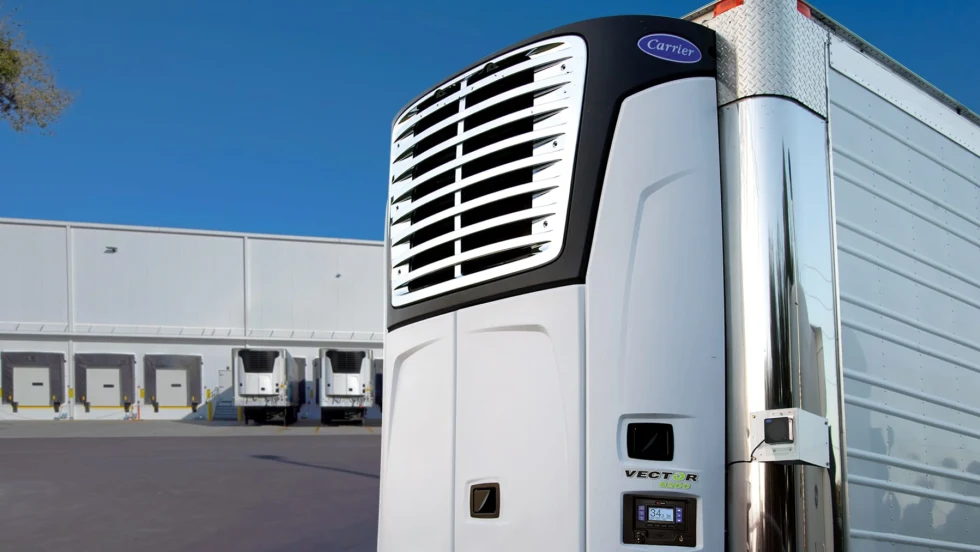
Carrier Transicold Adds All-Electric TRU for Stationary Cold Storage
Carrier Transicold’s new Vector 8200 all-electric transport refrigeration unit gives fleets a diesel-free option for temporary refrigerated and frozen trailer storage.
Read More →
A Closer Look at Kenworth’s Electric T880E Vocational Truck [Video]
Learn more about Kenworth's T880E battery-electric vocational truck at the Paccar Technical Center, including its range, applications, upfitting considerations, and PTO options, in this HDT Spotlight video.
Read More →