




Emerging Technologies Enlarging Playing Field for Biofuel
The face of biofuels is changing, and more than one company is responsible.

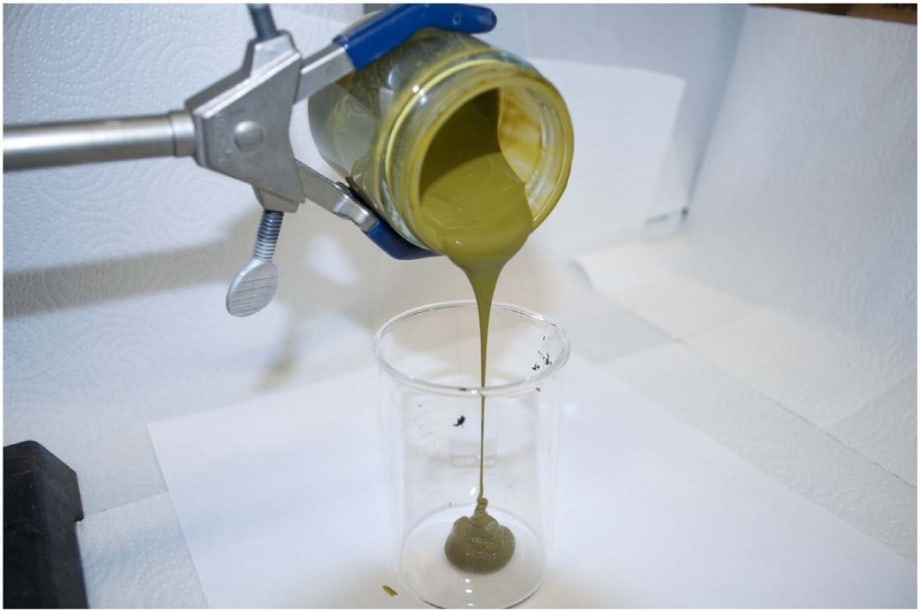
A team of researchers at the U.S. Department of Energy’s Pacific Northwest National Laboratory has developed a way to transform a mixture of algae and water into a form of crude oil in less than an hour. Photo: Pacific Northwest National Laboratory
A team of researchers at the U.S. Department of Energy’s Pacific Northwest National Laboratory has developed a way to transform a mixture of algae and water into a form of crude oil in less than an hour. Photo: Pacific Northwest National Laboratory
When you think biofuel, what comes to mind? Is it turning soybeans into fuel? Or maybe you think about driving up to the local fast food eatery and politely asking for all their used cooking oil. No matter the initial images that flood your head, the face of biofuels is changing, and more than one company is responsible.
“It’s difficult to reduce the biofuel industry down to one single status, because the industry is so diverse,” says Brian Siu, lead analyst, Natural Resources Defense Council. “Some forms of biofuel, like corn ethanol, are already well commercialized. Other types of biofuel are only now emerging.”
Siu points to the upcoming release of the first commercial cellulosic ethanol plants, which are expected to enter production this year, as well as technologies to produce fuel from industrial waste gases and algae. Siu was recently part of an NRDC report that discusses the use of unsustainable biofuels versus sustainable ones, and how the creation of third-party biofuel sustainability certification systems can ensure that biofuel feedstocks are grown and converted into fuel in a sustainable manner.
“Biofuels can deliver environmental benefits, but they can also inflict environmental harm if they are produced in the wrong ways,” explains Siu. “For instance, a feedstock grown on cleared forest will have a very different environmental profile than one that is derived from waste with little or no land requirements.”
According to Siu, large fleet operators can play a valuable role by stating a preference for biofuels that are certified sustainable by a credible certification system. By seeking demonstrably sustainable biofuels, it will help insulate the fleet operator against unintended environmental outcomes — and offer a marketable “green” message.
Don Scott, director of sustainability for the National Biodiesel Board, points to the fact that the NBB has already met its goal of producing 5% of U.S. diesel fuel volumes ahead of its 2015 target.
“Now our sights are set on 10% by 2022,” wrote Scott in a post on the organization’s website. “Our industry track record proves that we are good at setting responsible goals for biodiesel volume growth. While setting those goals requires some balance between overreaching and stagnation, we cannot overreach when it comes to investing in science.”
Looking to a ‘greener’ biofuel
Some companies are looking to another potential biofuel feedstock: algae. About eight years ago, Genifuel Corp. began playing with the idea to convert wet organic material (usually wastes) into biofuels. The process, known as hydrothermal processing, can make bio-crude oil, methane (natural gas), or both together.
“Essentially we do in 30 minutes what nature does in 30 million years — apply temperature and pressure to wet organic matter to make oil and gas,” says James Oyler, president of Genifuel. “This process solves two problems at once, in that it cleanly disposes of wet wastes and produces renewable fuels. The liquid fuels come from the bio-crude oil, which can be refined just like fossil crude oil to yield a full range of fuels, such as gasoline, jet fuel, and diesel.”
Genifuel was recently licensed to use technology from researchers at the U.S. Department of Energy’s Pacific Northwest National Laboratory, who developed a way to quicken the process of creating biofuel from algae. Other feedstocks, such as corn stover, wood, animal manure, municipal solid waste, wastewater sludge, and food processing waste, could also be used in a similar process, but, according to Oyler, algae works will with the hydrothermal process since it is already wet and easy to convert to fuel. Currently, the process is too expensive for use to process fuels, but the company is working to rectify that.
“The fuels refined from our bio-crude are almost identical to fossil fuels, so it’s all a matter of price, after whatever incentives are being offered,” Oyler says. “If you could have a biofuel that came from the same refinery as fossil fuel, and was competitively priced after incentives, and you knew it had environmental benefits, it would just blend right into the existing fuel supply.”
Is conversion the key?
When it comes to conversion, the engine also falls into the equation. Since many fleets run vehicles that were not made to burn 100% biofuels, some companies have created conversion systems that enable existing commercial diesel engines to use of a wide variety of renewable fuels ranging from 100% biodiesel to various advanced biofuels. One of those companies is Optimus Technologies.
“Right now the market is flooded with ‘green’ solutions,” says Colin Huwyler, CEO of Optimus. “People are significantly overlooking the upfront costs for stations, training, vehicle upgrades, maintenance facilities, etc.”
According to Huwyler, the biofuel industry is on an upswing and entering a new phase. A case for biofuel can be made based on the numerous available sources, he says. Huwyler is seeing growing interest in the company’s fuel partner program from existing refineries.
“These facilities can use their existing equipment with new processing techniques to produce advanced biofuels with lower per gallon production costs and lower lifecycle energy requirements and emissions,” says Huwyler.
The Optimus conversion system bolts onto existing engines, which allows fleets to use existing fuels and accommodate new fuels as they emerge.
“Our goal is that our technology will help the commercialization path of new fuels and in turn new fuels entering the market can help to further reduce the overall costs of biofuels,” says Huwyler.
More Fuel Smarts

How Volvo Updated Its D13 for EPA 2027 [Watch]
Volvo’s updated D13 promises lower emissions without sacrificing performance or fuel economy. Take a closer look at what changed inside the engine in this HDT Spotlight video.
Read More →
Diesel Price Spike Shortens Payback for Natural Gas Trucks, Report Says
Energy Vision estimates fleets could recover the higher purchase price of an RNG-fueled Class 8 tractor in 1.3 to 2.8 years under current fuel-price scenarios.
Read More →
Calstart Becomes Catalyst Mobility, Reflecting Broader Focus
Calstart is now Catalyst Mobility, reflecting the nonprofit’s growing national role in clean transportation, including zero-emission trucks, infrastructure and incentive programs.
Read More →

Record Diesel Prices Squeeze Trucking Fleets
Average U.S. diesel prices have climbed to nearly $6 a gallon, surpassing the 2022 record as tight refinery capacity and Middle East disruptions keep fuel costs elevated.
Read More →
How Fuel Delivery Shapes Engine Performance
Fuel delivery depends on more than what happens at the injector. For fleet, maintenance and technical professionals, looking at the full path from pump to injector can provide useful context for understanding engine performance.
Read More →
East Coast Port Launches $45M Electric Truck Push
The Port Authority of New York and New Jersey announced millions in incentives for zero-emission drayage trucks, yard tractors, and new charging hubs near the port.
Read More →
California Bill Could Shed Light on Electric Truck Prices
Why do battery-electric Class 8 trucks remain so expensive? A California bill headed to Gov. Gavin Newsom would give fleets and state agencies more visibility into what manufacturers charge.
Read More →
Detroit Opens Orders for EPA 2027 Engines
Detroit isn’t starting from scratch to meet EPA 2027 diesel emissions standards. Its Gen 6 DD13 and DD15 engines keep much of today’s platform while updating the fuel and aftertreatment systems.
Read More →
Zero-Emission Truck Corridor Planned for West Coast
California, Oregon, Washington, British Columbia and Baja California are coordinating plans for truck charging and hydrogen fueling from Canada to Mexico.
Read More →
A Closer Look at Kenworth’s Electric T880E Vocational Truck [Video]
Learn more about Kenworth's T880E battery-electric vocational truck at the Paccar Technical Center, including its range, applications, upfitting considerations, and PTO options, in this HDT Spotlight video.
Read More →