




Don’t Let Cargo Claims Take Your Final Profit on Your Final Mile Shipments
With the boom in e-commerce demand, trucking and logistic companies all over the country are racing to get into the final mile industry. But to avoid losing profit, there are steps that every provider should walk through before and after accepting the business.
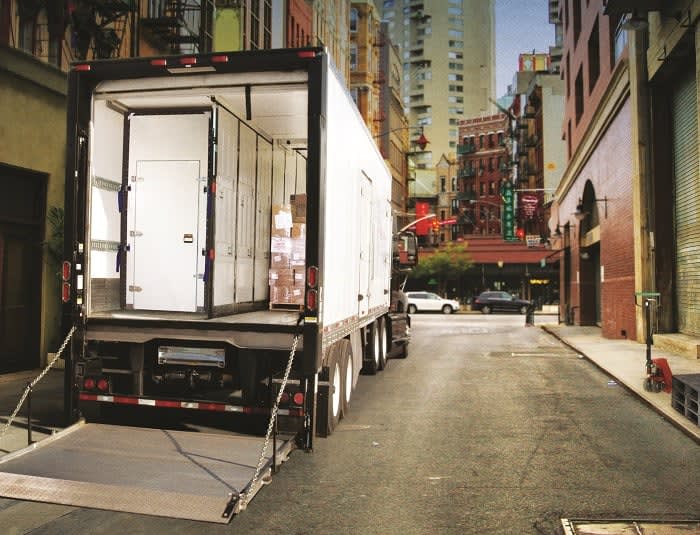
Getting the last-mile business is only part of being successful.
Photo: Utility [From HDT files]
With the boom in e-commerce demand, trucking and logistic companies all over the country are racing to get into the final mile industry, especially those providers who are already developed in the LTL and full truckload industry.
Such providers are acquiring specialized equipment, skilled labor forces, warehouses, and developing customer facing technology to get an edge in this market.
However, sometimes the focus is so heavy on the front end of the business, companies could be at risk of losing sight of other areas of the business that are equally as important -- such as contracts, insurance, proper freight training for the relevant personnel, and the establishment of proper claims handling procedures.
Losing focus on these areas of the business could cut into a provider's profit as the cargo claims begin to roll in at a high volume. To avoid losing profit, there are steps that every provider should walk through before and after accepting the business.
Before Accepting the Business
First, determine what hat you are wearing as a transportation provider. Are you a broker, or the actual final mile provider? Thereafter, think about your customer; is it an online retailer, a manufacturer, middle-mile carrier, first-mile carrier, or broker? You will take a different approach to risk management depending on the hat that you and your customer are wearing.
Second, think about the cargo itself before accepting the business. Understand the product being shipped, the packaging, the dimensions and the weight.
The packaging is important because if the manufacturer is skimping on the quality of packaging, you may be paying for the goods; especially if the goods are coming from overseas.
The dimensions are important because you want the goods to be easy to lift, load onto the box truck, and unload. Take pictures of the customer's product and create a “customer profile” for the warehouse personnel and claims clerks to use.
Third, consider the value of the goods and various types of damages your customer may try to claim if something goes wrong. You always want a contract with the customer that limits your liability of a cargo claim.
This is tricky and you must be savvy. If the customer refuses or is unable to provide you with details of the cargo or the cargo's value, you may want to start with the LTL approach of a per-pound limitation of liability. If you received the details of the cargo and you believe the tendered freight will remain consistent, you may want to consider a limit of liability for each different type of freight instead.
If you suspect the freight has poor packaging, is delicate (e.g. glass), or may be coming from overseas, you will want to have a lower limit than you normally would negotiate.
Fourth, negotiate a contract with your customer after analyzing the freight and evaluating your rates. Develop a standard contract that is strict and negotiate certain terms with the customers that is worth the concessions.
Major terms to consider drafting into your standard contract to reduce your exposure may include:
Filing Freight Claims: (a) federal regulations govern the freight claim process; (b) claims will not be accepted without pictures of the damage; (c) bill of ladings signed free-and-clear are considered evidence of good condition; (d) manufacturer's invoice for the product is required, do not pay retail price for the freight; and (e) claims will be processed within 120 days of receipt of the properly filed claim (it is helpful to spell this out for your customers, although redundant).
Liability Determination and Limitations: (a) federal transportation law governs liability determinations; (b) claims must be filed within sixty days from the date of delivery; (c) provider is not liable for concealed damage (or, if you must, assign a low-limit amount, but include a notice period); (d) provider is not liable for manufacturer's defect; (e) provider is not liable for insufficient packaging; (f) provider is not liable for special or consequential damages, including delays in shipment; and (g) provider is not liable for any damage that occurred during storage.
Disposition and Salvage: (a) disposition must be provided after five days of receipt of On-Hand Notice; (b) if disposition is not provided, the goods will be salvaged at customer's expense (or charge a daily fee for storage instead); and (c) provider has the right to salvage the goods if provider pays for the cargo claim.
Repairs: (a) reimbursement for repairs requires provider's written pre-approval; and (b) a copy of the repair invoice must be included in the filing of the claim.
Free Astray: Terms regarding free astray arrangements should be in a separate contract or an addendum and not part of your standard agreement. Do not offer this service to every customer or you may lose money. Conduct a freight analysis as described in the beginning of this article before agreeing to a free astray arrangement.
In this industry, proactive risk management entails a constant balance between the types of freight that will be shipped, the appropriate rates that you will charge, and the proper amount of liability to negotiate. It is an analysis that must be taught to your sales personnel and constantly practiced when accepting new customers.
Taking the time to analyze your risk will save you from losing your final profit on your final shipments.
After Accepting the Business
First, create easy, consistent procedures for your warehouse operations. You want a routine for your incoming and outgoing freight.
Place catchy reminder signs throughout the warehouse to remind your team where freight should go and how it should sit. Make sure your team is checking the destination labels and documenting the freight as it is coming into the warehouse. Have a claims clerk walk around and double check the compliance of the procedures. It is worth the extra effort.
Second, take pictures of all of your freight. It may be cumbersome to take pictures of all of the freight, but it will save you money.
For example, the consumer paid for white glove service and therefore, your team opens the packaging to prepare the goods for delivery. But, when the package is opened, your team discovers that the goods are damaged. If pictures were taken of the packaging upon arrival (and before opening), you can prove the damage was concealed.
Third, read the bill of lading and document damage. Whether upon arrival to your warehouse or upon arrival to the consumer's home, document any damage on the bill of lading. It sounds simple but folks can forget sometimes, especially when the end consumer is angry and rejecting the product or when your team is under the pressure for on-time delivery.
Fourth, pay attention to trends in damages and document the trends. The trends may include damaged product consistently arriving from a certain middle-mile provider; or, a certain product is improperly packaged and continues to get damaged.
These trends should be reported to your customer as soon as possible so that you are not left paying for the cargo claim. Indeed, consider re-negotiating the terms of your contract if you start to lose money on cargo claims for insufficient packaging.
This article only addresses the basic fundamentals of how to avoid losing money on cargo claims. There are other considerations that should take place, such as posting a standard terms and condition policy online for all your customers to read and for your claims personnel to cite. If possible, use technology for the end consumer's signatures so that they agree to certain terms as well.
This industry is difficult and specialized, but if you are proactive in risk management, you will avoid losing your final profit on your final mile shipments.
About the Author
Cassandra Gaines is a practicing litigator on the Transportation & Logistics team of Atlanta-based law firm Smith Moore Leatherwood. She holds a bachelor's degree in economics and financial management from Cornell University and a law degree from the University of California – Hastings College of Law. This article originally appeared on www.smithmoorelaw.com and is posted here with permission.
More Fleet Management

Nominations Open for HDT Emerging Leaders
Heavy Duty Trucking is looking for accomplished trucking fleet professionals under 40 who are making an impact and helping lead the industry forward.
Read More →
Why Private Fleets Are Taking More Freight
Private fleets are putting their own trucks on demanding customers and high-cost lanes as companies seek greater control over service, costs, and capacity.
Read More →
Color Match Smarter: Tools That Restore & Perform
For fleet managers and collision repair professionals keeping heavy-duty trucks on the road, getting the color right the first time isn't just about appearance — it's about efficiency, turnaround time, and bottom-line results. Discover how today's digital color tools are transforming the repair process from guesswork to precision.
Read More →


FMCSA Pauses Biennial-Update Enforcement Amid Motus Transition
Carriers whose updates were due on or after June 1 have more time, while FMCSA works to stabilize its new registration system and warns of phishing sites impersonating its new carrier registration system, Motus.
Read More →
2026 Blueprint for Countering Smarter Supply Chain Theft
Cargo theft is no longer just the cost of doing business. It's a multi-billion-dollar criminal enterprise exploiting vulnerabilities across your fleet, drivers, and supply chain.
Read More →
How Telematics Improves Visibility, Control, and Performance in Refrigerated Fleets
Explore how telematics help refrigerated fleets improve visibility, uptime, efficiency, compliance, and cargo protection across connected cold chain operations.
Read More →
What the U.S.-Canada Trade War Means for Trucking
Escalating U.S.-Canada tariffs could disrupt cross-border freight, reduce truck volumes, raise costs, and create new uncertainty for carriers on both sides of the border.
Read More →
What Are Trucking’s Top Concerns for 2026?
The American Transportation Research Institute wants to know what's worrying trucking fleet managers, drivers, and other stakeholders in its annual Industry Issues survey.
Read More →
American Trucking Associations Looks for a New Leader
ATA President and CEO Chris Spear abruptly left his job at the association on August 21, at a pivotal time for the trucking industry.
Read More →
Public Wi-Fi Cybersecurity Risks: How Truck Drivers and Fleets Can Protect Their Data
Public Wi-Fi can expose truck drivers and fleets to credential theft, malware, and other cyber threats. Here’s how to reduce the risk on the road.
Read More →