




Does natural gas make sense as a truck fuel? Why not use it to make stuff that's easier to handle?
Natural gas! Almost everything's natural gas! That was my impression while walking through the displays at the Alternative Clean Transportation Expo in early May at the Long Beach Convention Center. Suppliers were offering all sorts of equipment and services connected to this fuel that's so much in the news
Natural gas! Almost everything's natural gas! That was my impression while walking through the displays at the Alternative Clean Transportation Expo in early May at the Long Beach Convention Center. Suppliers were offering all sorts of equipment and services connected to this fuel that's so much in the news.
Part of it was the location -- California, whose Clean Air officials have endorsed natural gas by granting money to people who buy trucks and buses with engines that burn the stuff. They support other clean-burning fuels, too, but natural gas seems to be the anointed one.
The Wrightspeed Route turbine-electric hybrid truck that I review in the current Engine Smarts blog was running on compressed natural gas, something Ian Wright, the company's president, noted during my drive. "It could run on other things," he said, "but we chose natural gas for this truck." So it fit right in with this expo. But is all the hype over natural gas accurate?
The oil companies tell us we have vast reserves of gas in the United States, and it would be foolish not to use it. However, does direct use as a motor fuel make sense? The gas itself is cheap, sure. But a heavy truck costs tens of thousands of dollars to equip for natural gas, and filling stations cost hundreds of thousands of dollars, even millions. Who can afford that? Not many, which is why natural gas will continue to be a very small part of the commercial truck scene, according to forecasts I've seen.
Yes, government-sponsored grants and tax rebates reduce the so-called incremental costs of buying a truck that runs on gas or another favored alternative fuel, and sometimes these incentives pay some or all of the cost of setting up filling stations. But incentives come and go as lawmakers bend with political and budgetary winds.
Some argue that incentives are absolutely necessary to spur early adoption. Others now are saying that the fuel's price alone can make a good business case without any incentives. That's been true since natural gas's price has plunged due to massive drilling and production. At $2 or so per diesel-equivalent gallon, natural gas is a big bargain. But this can change, and might if producers cut back, as some are doing, and demand rises, as it will if more electric generating plants switch from coal to gas.
The president of Shell Oil has just predicted that natural gas's price will double in a few years. There is some cushion between the prices of bulk gas and gas sold as motor fuel, but gas destined for trucks must go up if bulk prices do.
Won't that do a number on any truck operator's business case? Won't people with a fleet of highly specialized trucks and tractors be left holding expensive gas bags that now cost more to run than if they had straight diesels? I'm not hoping this happens, just wondering what T. Boone Pickens and the other boosters of natural gas will say if it does.
Meanwhile, wouldn't natural gas be better used as a feedstock for production of fuels that are easier and much less costly to handle and store on a vehicle? Why not let producers make the big investments in special refineries and let Pickens sell his gas to them?
One such fuel is already here, and has been for many years: propane. Some is still a byproduct of petroleum refining (thus its more proper name, liquefied petroleum gas, or LPG). But more than half of it is made from natural gas and is widely used as a motor fuel (even if it gets little publicity).
Propane is stored under low pressure (75 psi), so tanks, while stout, needn't be ultra-strong aluminum with carbon-fiber wrapping (for compressed NG) or cryogenic (for liquefied NG).
Propane's price is now as cheap as natural gas's, and it contains 85% to 90% of the energy in gasoline, which it normally replaces in conversions. Natural gas has only about 65% of the energy of diesel, which it's replacing in a few highly publicized instances. Thus a truck needs a lot of expensive storage volume to get a reasonable range.
The other alternative fuel is dimethyl ether (DME), which can be made from natural gas or biomass (wood byproducts). DME is now being successfully tested in Europe, according to Volvo, which believes it is a viable fuel for the future. DME is propane-like in its handling requirements and diesel-like in its performance. It can be burned in diesel engines with few changes, and it's clean enough that its exhaust might not need urea injection, as current diesels do, Volvo says.
The cost for DME should be considerably less than diesel fuel, says a small company that's setting up a DME plant in Imperial County, Calif., east of San Diego. It will make DME from natural gas because it's cheap and readily available, but could also use wood byproducts.
DME's energy content is close to diesel fuel's, and could sell for half to three-quarters of diesel's price, according to some estimates. Thus it begs to be burned in diesel trucks. If it becomes widely available, anyone who believes in alternative fuels would be nuts to not seriously consider it.
But this is just me talking. We'll see where the trucking world goes on this score.
More Equipment

Tesla Wants a Self-Driving Semi. Are Cameras Enough?
Could Tesla’s camera-only autonomous driving technology work on an 80,000-pound Semi? In this commentary, HDT's Deborah Lockridge takes a look at Tesla, Cybercab, and how autonomous trucks see the road.
Read More →
Kodiak: Driverless Long-Haul Truck Launch on Track for 2026
Kodiak AI says its driverless long-haul safety case is 93% complete and it remains on track to begin commercial operations by year-end 2026.
Read More →
What DOT’s Automated Vehicle Strategy Means for Trucking
The U.S. Department of Transportation issued a new automated-vehicle strategy that outlines plans for driverless-truck regulations, cross-state freight corridors, and federal safety standards.
Read More →
East Coast Port Launches $45M Electric Truck Push
The Port Authority of New York and New Jersey announced millions in incentives for zero-emission drayage trucks, yard tractors, and new charging hubs near the port.
Read More →
PlusAI Going Public to Fund Autonomous Truck Launch
A SPAC deal could provide PlusAI with up to $300 million as it works toward a 2027 commercial launch of factory-built autonomous trucks.
Read More →
NHTSA Moves to Rewrite Truck Fuel-Economy Rules
The National Highway Traffic Safety Administration says it lacks authority to regulate medium- and heavy-duty truck engines separately from complete vehicles, but the existing standards have not yet been eliminated.
Read More →
Detroit Opens Orders for EPA 2027 Engines
Detroit isn’t starting from scratch to meet EPA 2027 diesel emissions standards. Its Gen 6 DD13 and DD15 engines keep much of today’s platform while updating the fuel and aftertreatment systems.
Read More →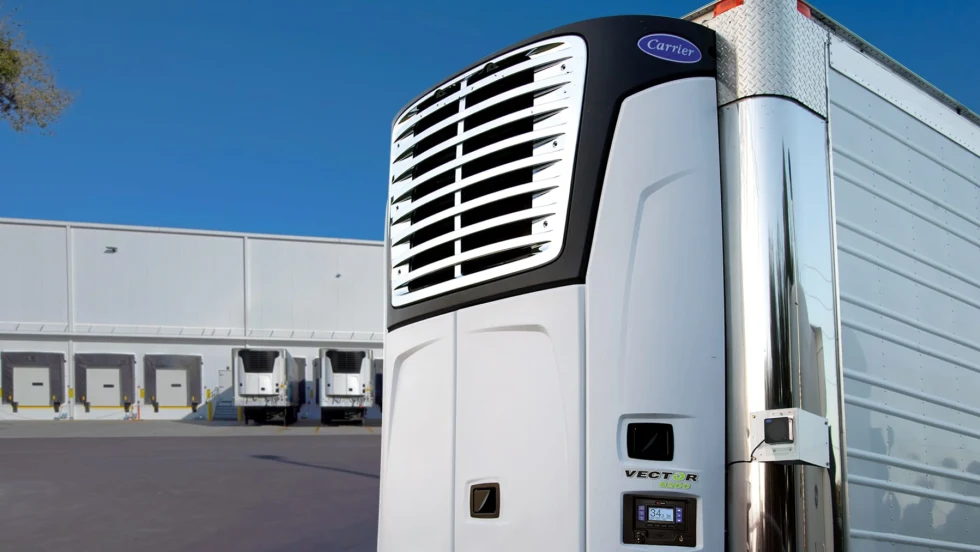
Carrier Transicold Adds All-Electric TRU for Stationary Cold Storage
Carrier Transicold’s new Vector 8200 all-electric transport refrigeration unit gives fleets a diesel-free option for temporary refrigerated and frozen trailer storage.
Read More →
A Closer Look at Kenworth’s Electric T880E Vocational Truck [Video]
Learn more about Kenworth's T880E battery-electric vocational truck at the Paccar Technical Center, including its range, applications, upfitting considerations, and PTO options, in this HDT Spotlight video.
Read More →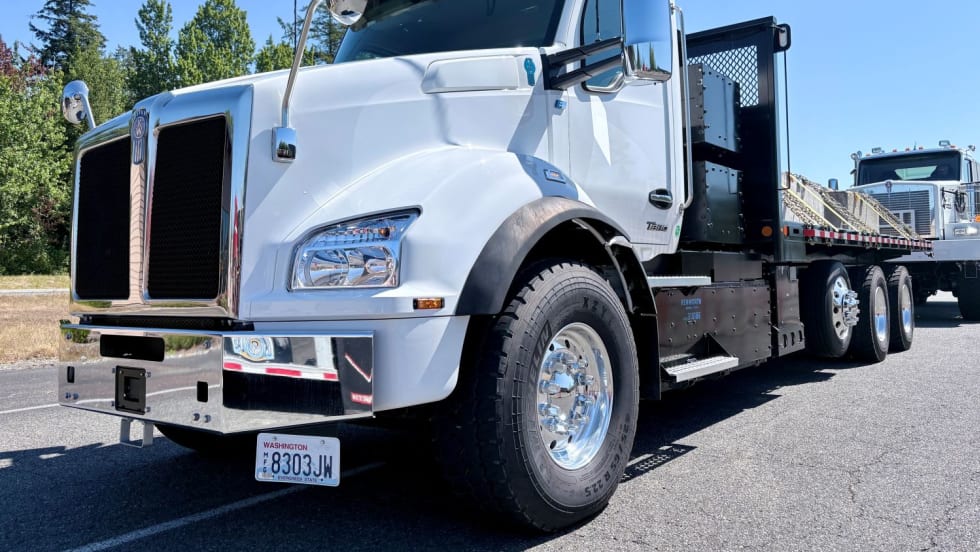
Kenworth T880E Brings EV Power to Vocational Trucks
A closer look at the Kenworth T880E’s range, charging, powertrain and upfit options — and where fleets are showing the most interest.
Read More →