




Related: Smart Trucks Have Already Arrived
Commentary: Let's Look More Closely at Automation in Trucking
As it currently stands, autonomous technology is impractical anywhere except on smooth and easy highways in good weather, says Executive Contributing Editor Rolf Lockwood in his October column.
by Rolf Lockwood
October 17, 2017
Rolf Lockwood
3 min to read

Rolf Lockwood
Escape is impossible. The word “autonomous” is everywhere I look, and if I believed the hype in the mainstream press, I’d think that human control of cars and trucks will soon be a thing of the past.
Yes indeed, some forms of autonomous driving will find their way into trucking before long. Who knows when? Not me, but it won’t be tomorrow for the mainstream freight business.
At the user level, I fear that the whole autonomous phenomenon is poorly understood, and in a conversation over dinner recently, I found that a veteran OEM engineer agrees with me. First off, in only very rare circumstances are we talking about actual full autonomy – that is, with no driver present. It is already happening in mines and in some agricultural applications, though very slowly, and it’s likely to appear in container ports on very proscribed routes fairly soon.
Everywhere else, we’re talking “semi-autonomous,” meaning a driver is in there – or even two as presently required in some jurisdictions. Jobs will not be lost any time soon.
The technology component is relatively easy, but not the social and regulatory sides of it all. That challenge takes “complex” to new heights.
Last-mile deliveries are a different story, and there we already see the start of jobs being lost to drones. But that’s a different kettle of techno-fish.
My engineer friend and I also got to talking about platooning. Both of us registered a little skepticism there too. At best I think we’ll see two-truck platoons in the nearish future – but not as near as I once thought we would. I’m not sure the benefits are sufficiently large to justify the expense and the hassle, though a “confidence report” from the North American Council on Freight Efficiency last year begs to differ.
A two-truck platoon would save about 4% in fuel compared to a pair of rigs running separately, the report says, and payback could be as short as one or two years. Fuel savings come from reduced air turbulence between the two vehicles when they operate 40- to 50-feet apart.
The original vision, as I understood it, suggested that as many as 10 trucks could be platooned, limited only by the strength of the radio signal connecting them. And that vision also suggested that random trucks could join an existing platoon if they “asked” by electronic means and determined that routes were compatible. A commercial connection between trucks was also envisioned, namely that the lead rig – which enjoys a much smaller fuel saving – could be paid by the others.
As things stand now, none of this is practical anywhere except on smooth and easy highways in good weather with a pair of trucks from the same fleet.
The biggest downside, to my mind, is the fate of the poor driver in the second truck. These are not autonomous trucks, remember, so all following trucks will need a driver. How on earth do you keep that poor bugger awake?
One big cloud over all this fancy wizardry is that it’s essentially limited to 80,000-pound vans being hauled down clean highways. Talk to loggers, guys hauling to and from remote mines, people supplying all manner of things in oil fields, and you know what you’ll hear.
Subscribe to Our Newsletter
More Equipment

How Volvo Updated Its D13 for EPA 2027 [Watch]
Volvo’s updated D13 promises lower emissions without sacrificing performance or fuel economy. Take a closer look at what changed inside the engine in this HDT Spotlight video.
Read More →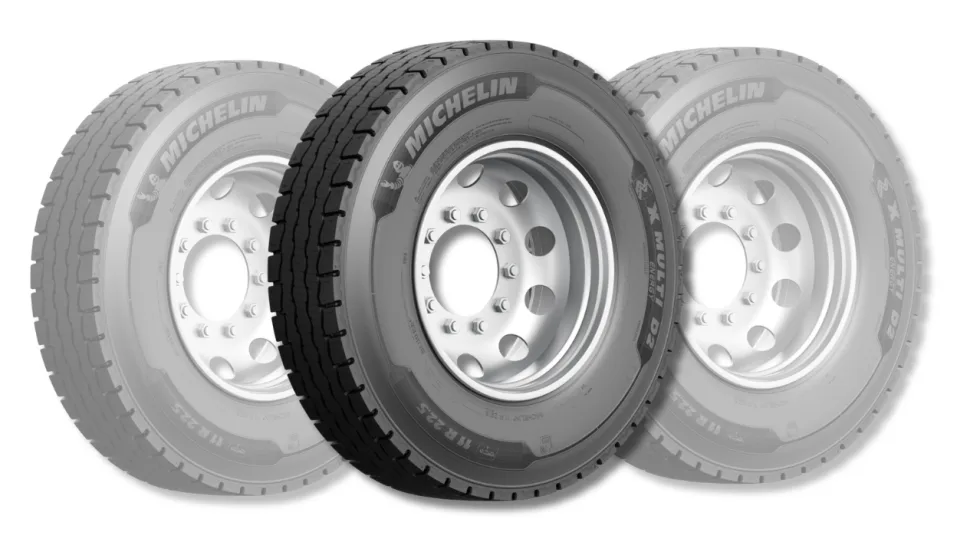
Michelin Tire Improves Efficiency and Durability for Regional Fleets
The Michelin X Multi Energy D2 is a regional haul drive tire engineered to help fleets improve fuel efficiency, durability and traction in demanding stop-and-go operations.
Read More →
ZF Expands Commercial Vehicle Push in North America
ZF is expanding its North American commercial-vehicle presence with new transmission applications, electrification, trailer technology and autonomous-driving systems.
Read More →
Tesla Wants a Self-Driving Semi. Are Cameras Enough?
Could Tesla’s camera-only autonomous driving technology work on an 80,000-pound Semi? In this commentary, HDT's Deborah Lockridge takes a look at Tesla, Cybercab, and how autonomous trucks see the road.
Read More →
Kodiak: Driverless Long-Haul Truck Launch on Track for 2026
Kodiak AI says its driverless long-haul safety case is 93% complete and it remains on track to begin commercial operations by year-end 2026.
Read More →
What DOT’s Automated Vehicle Strategy Means for Trucking
The U.S. Department of Transportation issued a new automated-vehicle strategy that outlines plans for driverless-truck regulations, cross-state freight corridors, and federal safety standards.
Read More →
East Coast Port Launches $45M Electric Truck Push
The Port Authority of New York and New Jersey announced millions in incentives for zero-emission drayage trucks, yard tractors, and new charging hubs near the port.
Read More →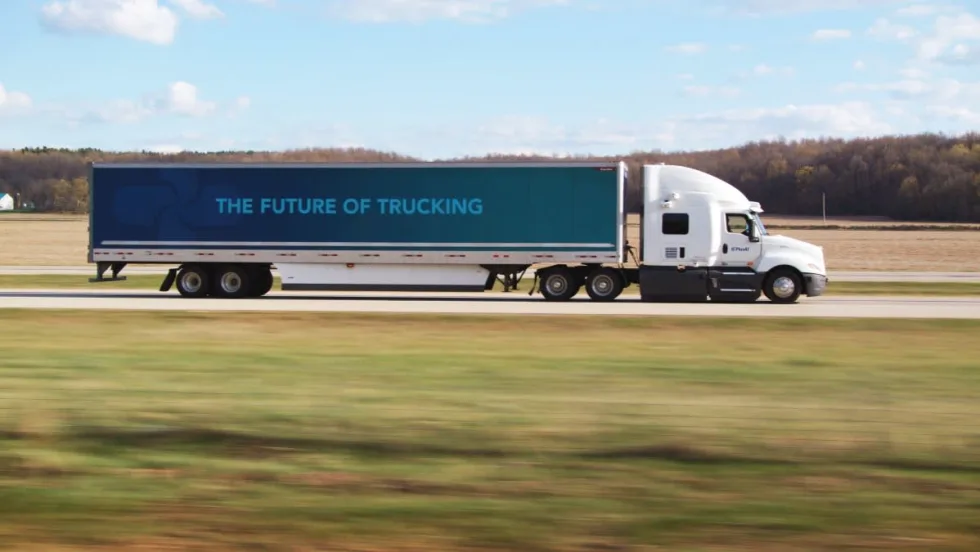
PlusAI Going Public to Fund Autonomous Truck Launch
A SPAC deal could provide PlusAI with up to $300 million as it works toward a 2027 commercial launch of factory-built autonomous trucks.
Read More →
NHTSA Moves to Rewrite Truck Fuel-Economy Rules
The National Highway Traffic Safety Administration says it lacks authority to regulate medium- and heavy-duty truck engines separately from complete vehicles, but the existing standards have not yet been eliminated.
Read More →
Detroit Opens Orders for EPA 2027 Engines
Detroit isn’t starting from scratch to meet EPA 2027 diesel emissions standards. Its Gen 6 DD13 and DD15 engines keep much of today’s platform while updating the fuel and aftertreatment systems.
Read More →