





Related: What Do Fleet Earnings Tell Us About the State of Trucking?
Commentary: How a Tough Winter Impacted Trucking
Every winter impacts the economy in some way, but this season was especially tough and could have led to a slowdown in truck freight.
April 1, 2019
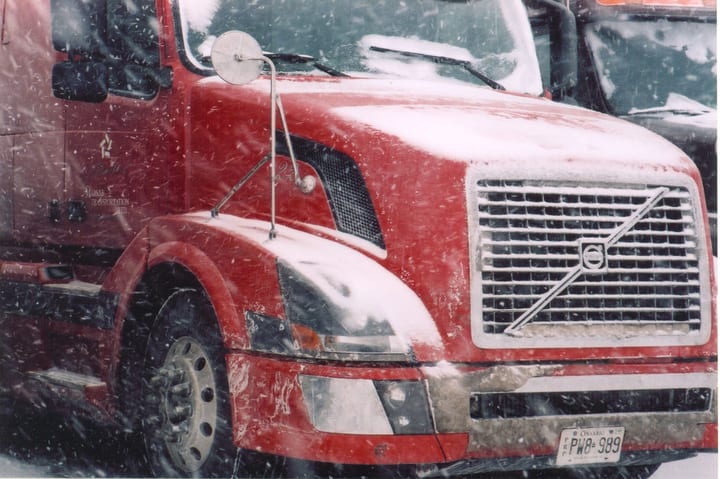
Every winter impacts the economy in some way, but this season was especially tough and could have led to a slowdown in truck freight.
Photo: Jim Park
3 min to read
As is typically the case, weather events happen during winter. In some years, they have a modest impact - almost immeasurable. However, in years like this one, the impact has been more material, and in our opinion, may be distorting the trends in January/February economic data. We bring this up, because following somewhat weaker than expected retail traffic in February, and a meaningful pullback in railroad carloads, questions have been increasing in terms of economic growth slowdown, or weather impact. Let’s investigate the railroad impact.
In our graphic below, we note that there has been a turn downward in three-month moving averages in truck tonnage, as shown by the American Trucking Association’s non-seasonally adjusted index, which has pulled back from 8.0% growth in October and 6.4% growth in November to only 2.8% growth in December, and 6.0% growth in January. As we use a three month moving average in our chart, the figure appears to have turned downward, and we expect a weaker figure in February as the intermodal carload data from the American Association of Railroads has slowed from 6% growth in the Fall, to 2.8% at yearend, which bounced back to 5.0% growth in January, but fell to 1% in February. Combined with slowing housing data, which has gone from 2.9% growth in starts in 4Q 2019 to -8% quarter to date, and there could be cause for concern. Hence, the questions we have been receiving this past month.
While we can understand the slowdown in housing on higher interest rates, and we believe that some moderation in freight volumes is occurring during 1Q 2019 because of pre-shipping ahead of potential tariff deadlines, we note that unemployment remains at a healthy 3.9% rate, meaning many Americans have jobs, and as such, we expect continued consumption. So, why the weak February, and why the extraordinary slowdown in railroad carload data? We believe that some of the retail weakness can be explained by the Polar Vortex we have seen in the Midwest, the rain on the West Coast and heavy snowstorms we have seen in the Midwest as well. Back in 2014, we had somewhat worse, but similar weather, and it slowed commerce in 1Q (negative GDP), which snapped back in 2Q and 3Q with consecutive 4%+ GDP figures.
Where we are seeing similar metrics is on the service side of the railroads, with increases in terminal dwell and average train speed, that are not as bad as in 2014, but much worse that we were seeing last year. This leads us to believe the slowdown in rail traffic we have seen in February and early March is more weather-related than commerce-related. Looking at the publicly available data on the Union Pacific website, we see that average train speed has declined since January 12th from 25.7 mph to 22.4 mph, while at the same time, terminal dwell has risen from 23.7 hours to 27.4 hours. These changes, a 13% decline in average train speed, and a 15% increase in terminal dwell are significant. This could explain the decline in intermodal traffic from a 6.8% growth rate in mid-January to a 2-3% decline in February, but a recovery to a 1% decline in early March. Management confirmed at a recent investor conference that weather had slowed the fluidity of the railroad system meaningfully, and it could take into second quarter to recover.
So we recommend waiting to see the March data before coming to any conclusion about the magnitude of any slowdown in economic data in the first quarter.
Subscribe to Our Newsletter
More Fleet Management

Sponsored•September 16, 2026
Color Match Smarter: Tools That Restore & Perform
For fleet managers and collision repair professionals keeping heavy-duty trucks on the road, getting the color right the first time isn't just about appearance — it's about efficiency, turnaround time, and bottom-line results. Discover how today's digital color tools are transforming the repair process from guesswork to precision.
Read More →
FMCSA Pauses Biennial-Update Enforcement Amid Motus Transition
Carriers whose updates were due on or after June 1 have more time, while FMCSA works to stabilize its new registration system and warns of phishing sites impersonating its new carrier registration system, Motus.
Read More →
Sponsored•September 14, 2026
2026 Blueprint for Countering Smarter Supply Chain Theft
Cargo theft is no longer just the cost of doing business. It's a multi-billion-dollar criminal enterprise exploiting vulnerabilities across your fleet, drivers, and supply chain.
Read More →


Sponsored•September 1, 2026
How Telematics Improves Visibility, Control, and Performance in Refrigerated Fleets
Explore how telematics help refrigerated fleets improve visibility, uptime, efficiency, compliance, and cargo protection across connected cold chain operations.
Read More →
What the U.S.-Canada Trade War Means for Trucking
Escalating U.S.-Canada tariffs could disrupt cross-border freight, reduce truck volumes, raise costs, and create new uncertainty for carriers on both sides of the border.
Read More →
What Are Trucking’s Top Concerns for 2026?
The American Transportation Research Institute wants to know what's worrying trucking fleet managers, drivers, and other stakeholders in its annual Industry Issues survey.
Read More →
American Trucking Associations Looks for a New Leader
ATA President and CEO Chris Spear abruptly left his job at the association on August 21, at a pivotal time for the trucking industry.
Read More →
Public Wi-Fi Cybersecurity Risks: How Truck Drivers and Fleets Can Protect Their Data
Public Wi-Fi can expose truck drivers and fleets to credential theft, malware, and other cyber threats. Here’s how to reduce the risk on the road.
Read More →
For Nicky Cupp, Fleet Innovation Starts With Frustration
HDT Truck Fleet Innovator Nicky Cupp turns everyday pain points at Fraley & Schilling into opportunities for better technology and smarter processes.
Read More →
Adam Buttgenbach’s Approach to Electric Trucks: Start With Where They Fit
HDT Truck Fleet Innovator Adam Buttgenbach helped PepsiCo build one of North America’s largest EV fleets by focusing on where electric trucks make operational sense.
Read More →