




Commentary: Devil's in the Details of California Emissions Dream
Yes, it’s a worthy goal to improve the environment and public health by reducing emissions. But you can’t blame trucking for looking at proposals to further cut NOx with a good bit of trepidation.


Deborah Lockridge

Deborah Lockridge
"Trucks are going to have to get cleaner and cleaner — just as the modern automobile has gotten cleaner and cleaner. … Now it is the trucking industry’s turn.”
This comment, part of a contributed piece that ran on Forbes.com, sent me straight up a tree.
The topic was California’s recent announcement that it is planning to crack down further on emissions from diesel trucks as it struggles to meet federal air quality limits in some parts of the state.
I don’t disagree with the overall message of the Forbes column, that trucking should “engage regulators” instead of just saying “no.” In fact, that’s exactly what trucking has been doing at the federal level.
Truck and engine makers and the American Trucking Associations and other groups worked with the Environmental Protection Agency and the National Highway Traffic Safety Administration on developing federal greenhouse gas/fuel efficiency regulations, Phase 2 of which is near final publication.
We Don't Want a Repeat of the 2000's Emissions Nightmare
I don’t need to tell most of you about how excruciating it was getting through the decade of federal nitrogen oxide (NOx) and particulate matter (PM) emissions changes in the aughts. Equipment got more expensive, fuel economy suffered, maintenance costs went up, and heavy aftertreatment equipment got added that we’re still trying to figure out how best to maintain.
Yes, it’s a worthy goal to improve the environment and public health by reducing emissions. But truck emissions have in fact come a long way. It’s quite likely that the air in some parts of California is now actually cleaner coming out the exhaust side of a new diesel truck than it is going in.
But it was an expensive, painful process to get there, both for the makers of the engines and for the fleets that bought them. Caterpillar got out of the business altogether, and Navistar is still working to recover from its failed emissions strategy.
So you can’t blame trucking for looking at proposals to further cut NOx with a good bit of trepidation.
Low NOx vs. Better Fuel Economy
The California Air Resources Board in May proposed a low-NOx engine standard to be developed for heavy trucks, which would go into effect starting in 2023 (NOx is a major component of the smog that plagues the LA basin.) It also plans to push the EPA for a nationwide low-NOx standard.
But truck and engine makers have said in the past that striving for low NOx in diesels is at odds with federal GHG goals for increasing fuel economy.
I spoke with Mike Tunnell, director of energy and environmental affairs for the American Trucking Associations, a couple weeks after the CARB announcement. He pointed out there’s a lot going on here, as truck emissions are just one small piece of a wide-sweeping effort with intersecting plans from different agencies.
One of the concerns is the lack of detail, he said, which make it “difficult to gauge how the impacts are going forward.”
Heavy-Duty Truck Tailpipe Pollutants vs. Greenhouse Gas Emissions
Trucking has had very little time to digest all this (again making it difficult for the industry to really “engage” CARB, as the Forbes article suggests), with comments due July 1 in advance of a September hearing on the plan.
Making it more difficult is that the federal Phase 2 GHG regs are still being finalized.
“I think the uncertainty over the GHG standards will have to be resolved,” Tunnell said.
“If they’re viewed as really stringent and trying to push out all the fuel economy/GHG reductions that you can get out of an engine, that doesn’t leave you much room to go back and get NOx [reductions].”
California is the only state that’s allowed to write its own emissions regulations. But if it makes these decisions in a vacuum and doesn’t take into account how its goals intersect with federal GHG regs, I’m afraid we could see a repeat of the aughts.
More Fuel Smarts
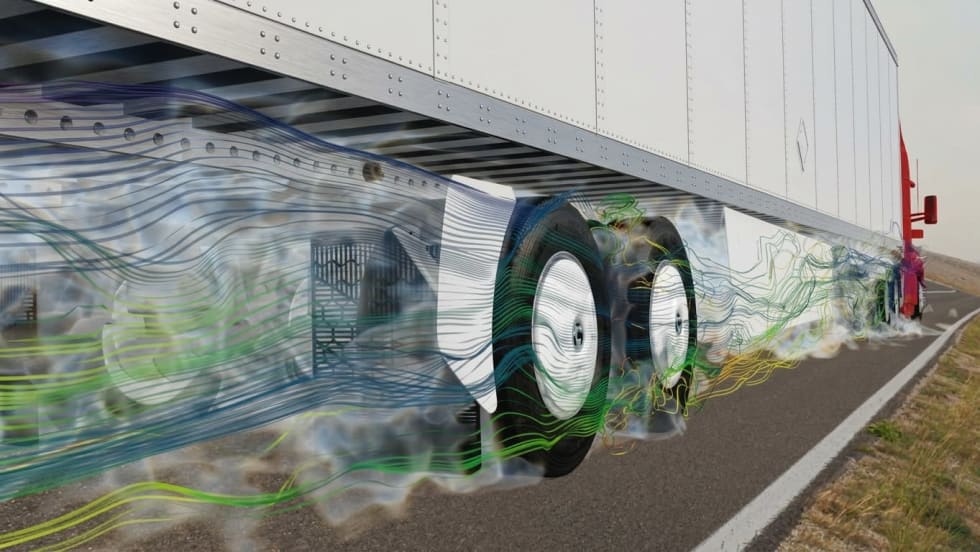
FlowBelow Redesigns Trailer AeroSlider to Cut Fuel Use
The lighter trailer aerodynamic system installs in less than 45 minutes, according to the company, with potential payback in under a year depending on fuel prices and trailer mileage.
Read More →
Why Diesel Price Relief Efforts May Fall Short
Diesel prices have eased from September’s record high, but doubts about additional Russian supply and limits on dyed-diesel tax relief mean trucking fleets still face expensive fuel. And prices could go higher.
Read More →
Why Small Fuel Savings Matter in Trucking
Can better fuel economy help pay for driver raises? In this podcast, GP Transco explains how small efficiency gains create room to reinvest in its people.
Read More →
How GP Transco Cuts Trucking Fuel Costs, a Tenth of a Gallon at a Time
What’s another tenth of a mile per gallon worth? GP Transco shares how equipment upgrades and driver coaching turn small gains into meaningful fuel savings.
Read More →
Electric Yard Tractors Move Beyond Pilots
Operating-cost savings have overtaken sustainability goals as the leading reason surveyed fleets are adopting battery-electric terminal tractors, according to new NACFE research.
Read More →
Geotab Links Fleet Card to Vehicle Data
The new card combines fuel discounts with telematics-based purchase controls. Geotab’s analysis also points to potential savings from choosing lower-priced fuel stops.
Read More →
Fleet Economics Shape Electric Truck Outlook
ACT Research expects costs, charging infrastructure, and technology improvements to drive zero-emission commercial vehicle adoption as federal regulations and incentives retreat.
Read More →
Wex Adds Cardless Fuel Payments for Over-the-Road Customers
A new fuel card feature for Wex customers offers convenience and security.
Read More →
New California Law Could Shed Light on Electric Truck Prices
Why do battery-electric Class 8 trucks remain so expensive? A California bill signed by Gov. Gavin Newsom would give fleets and state agencies more visibility into what manufacturers charge.
Read More →
How Volvo Updated Its D13 for EPA 2027 [Watch]
Volvo’s updated D13 promises lower emissions without sacrificing performance or fuel economy. Take a closer look at what changed inside the engine in this HDT Spotlight video.
Read More →