




Charging Truck Batteries in Cold Weather
One of the biggest misconceptions about truck batteries is that they charge the same throughout the year. The colder it is outside, the less charge the battery pack wants to accept.

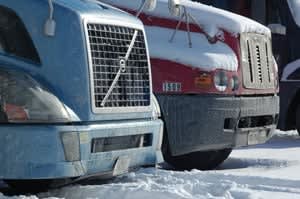
Charging vehicle batteries in cold weather is totally different in the winter. (Photo by Jim Park)
One of the biggest misconceptions about truck batteries is that they charge the same throughout the year. They simply don't! The colder it is outside, the harder it is to charge those batteries.
In warm weather (above 40 degrees), batteries are very easy to recharge.
They can normally take as much charge that the vehicle charging system can provide. Even deeply discharged battery packs can be completely recharged in a few hours if the only issue is a discharged battery not defective batteries..
However, the colder it is outside, the less charge the battery pack wants to accept. When it is very cold, the electrolyte in a flooded cell battery becomes like jelly and the molecular action in the battery slows down. The battery is similar to a tube of toothpaste -- difficult to get out and almost impossible to put back in.
The operator may become fooled by the way the vehicle responds in cold weather. The voltmeter on the dash displays a correct charging range and the lights are bright so it is assumed that the batteries are charging as normal.
What is really happening is that the vehicle's alternator is at the correct voltage and is powering the vehicle loads, but because the batteries are cold, the charge acceptance of the batteries is very low, sometimes as low as 2 amps per hour. Driving times of up to 40 hours can be required to charge deeply discharged cold batteries.
While AGM batteries have up to 40% better recharge capacity across all temperature ranges they will still require more time in cold weather to recharge than driving laws allow.
Things to Remember About Truck Batteries in Cold Weather Operation:
Discharged batteries can freeze in cold weather.
Never try to jump-start a vehicle that has frozen batteries.
Cold batteries will not accept a normal charge until the batteries reach an ideal temperature or extensive charging time is available.
Cold batteries can take up to 30 hours to warm back up to room temperature.
While jump-starts can get the vehicle started, many hours of charging may be required to recharge the battery pack. It might be a more prudent path to change batteries as normal vehicle operation cannot recharge the battery pack adequately during a normal workday.
(Information courtesy Purkeys Fleet Electric, www.purkeysfleetelectric.com.)
More Maintenance

Color Match Smarter: Tools That Restore & Perform
For fleet managers and collision repair professionals keeping heavy-duty trucks on the road, getting the color right the first time isn't just about appearance — it's about efficiency, turnaround time, and bottom-line results. Discover how today's digital color tools are transforming the repair process from guesswork to precision.
Read More →
Wrong Repair Prompts Recall of Freightliner, Western Star 4x2 Trucks
DTNA is recalling more than 2,400 trucks that received an incompatible software fix instead of the hardware repair required to address brake valve corrosion.
Read More →
Truck Drivers Need More Than Another Alert
Fleets have more visibility into truck health, safety events, and driver activity than ever. The next challenge is turning all that information into useful guidance for the person who has to decide what to do next.
Read More →
The Maintenance Checks Trucking Fleets Should Prioritize Before Fall Freight Picks Up
Making it through August isn’t the same as being ready for the next several months of operation. Find out what systems may have suffered from summer heat and need to be checked out before fall.
Read More →
What Three Fleets Are Doing Differently When Buying Truck Parts in 2026
With freight improving but costs still climbing, fleet maintenance executives explain how they're balancing price, quality, and supplier relationships.
Read More →
Paccar Recalls 2027 Trucks Built This Summer for Possible Electrical Problem
The nearly 6,000 Kenworth and Peterbilt trucks in the recall could potentially lose engine power, among other things.
Read More →
Will API PC-12 Oil Change Trucking Fleet Maintenance?
The new API PC-12 heavy-duty engine oil category reflects the changing demands of modern diesel engines. But fleets like Foodliner are looking to getting their own data before making decisions on adopting the new oils and questions such as extending oil drain intervals.
Read More →
Brake Safety Week to Focus on Drums and Rotors
Commercial vehicle inspectors are focusing on truck brakes during CVSA's Brake Safety Week, August 23-29.
Read More →Possible Battery-Cable Fires Prompt Recall of 15,000+ International MV and HV Trucks
On the recalled vehicles, manufacturing variations can cause the battery interconnect cable to contact the auxiliary stud and hold down the bracket.
Read More →
Rush, MCT Team Up to Grow Refrigeration Service Network
The joint venture will operate MCT's network of Carrier Transicold dealerships and mobile service locations, with the companies promising greater service capacity and uptime for refrigerated fleets.
Read More →