




Ceramic Roof Coating Saves Fuel for Food-Hauling Fleet
Sunshine brings warmth and happiness, but to refrigerated trailers it brings only heat, and too much of it

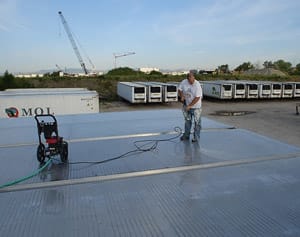
Super Therm can be sprayed over large areas or rolled onto smaller surfaces. Coating needn't be cleaned to stay effective and lasts more than 20 years. (Photo by Curt Lundberg)
Sunshine brings warmth and happiness, but to refrigerated trailers it brings only heat, and too much of it.
Those hot rays from far away can raise temperatures inside the trailer to unbearable levels and cause the reefer unit to work really hard to keep things cool.
That was the case with Pacific Shipping & Trucking of Denver, which has a two-way food products haul with temperature extremes that were difficult to deal with. Then came a special roof coating that proved to be an impressive solution.
The carrier moves truckloads of baked bread from Denver to Phoenix, then returns to Denver with ice cream, explains Keith Robertson, the fleet's owner and president. Bread is maintained at 80 degrees, but ice cream must stay frozen at minus 20 degrees - "extreme heat to extreme cold," he says. It's a drop-and-hook operation, with trailers full of bread left at docks in the usually hot southern Arizona city while empty reefer trailers wait nearby.
A driver backs his tractor onto an empty, then starts the reefer unit to begin cooling down the trailer's interior so it can take on ice cream. Temps inside the trailer can be 120 degrees or more, and it's got to be cooled to below zero. "It was taking us two and a half hours to get the reefer that was sitting out in the sun to get to minus 10 - from there they can start loading - then," Robertson says. "Now it takes 45 minutes to an hour," so the reefer runs less and burns less fuel.
The product is called Super Therm, a ceramic-based compound that blocks the sun's rays and prevents the trailer's roof from becoming a heat sink. The product costs $900 to $1,000 to apply, but saves enough fuel to pay for itself in 10 to 11 months, Robertson says. He has had Super Therm installed on 22 trailers involved on this haul and plans to put it on more of his 100 trailers.
Super Therm is a water-borne insulating coating that also prevents moisture penetration and air infiltration over a surface, says its maker, Superior Products International, of Shawnee, Kan. "It is the most effective and longest lasting ceramic insulation coating on the market today," SPI claims on its web site, www.spicoatings.com. It is ecologically safe, fire-resistant and approved for use around food by the federal Food and Drug Administration. SPI makes seven insulation coatings for various applications, and others for corrosion and fire control.
Super Therm reflects over 95 percent of the three radiation sources from the sun, which are ultraviolet, visual light and infrared rays, the site says. On building roofs, where it has been used for more than 20 years, it does the work of 6 to 8 inches of traditional insulation. It is Energy Star qualified as a 20-year roof coating.
Curt Lundberg, a Denver-based distributor of SPI products who sold the Super Therm to Robertson, did a study of Pacific's bread-ice cream operation that measured fuel use before and after the coating was in place. As Robertson said, after coating roofs with Super Therm, the cool-down time in Phoenix was cut by 1.75 hours or 44 percent. The study showed a reefer unit also used less fuel while under way: 20 percent less fuel on the outbound "hot" haul and 29 percent less on the return "cold" leg.
A reefer burned thus 5.75 fewer gallons per day and saved about $13.50 with non-road fuel at $2.35 per gallon. Long-term savings depend on the number of trips a trailer makes; at 200 to 250 trips a year, the savings could total $2,500, Lundberg says.
Installation is fairly simple, he says. "You pressure-wash the roof with a detergent - we use Simple Green - then roll or spray it on. It goes on to the thickness of a credit card, 18 mils wet and dries to 9 mils, or about a thousandth of an inch. We have had it on buildings in Kansas for years and it doesn't deteriorate and it lasts through hail storms. It will last more than 20 years, which is more than the life of a trailer. You don't have to re-coat it at any time; you don't even have to clean it for it to work."
Another part of Pacific's operations involves hauling refrigerated containers of meat to West Coast ports for export to Asia. Robertson says he doesn't use the coating on the containers because they are stacked aboard ships, which blocks the sun for most of them. He also says roofs painted white at the factory perform better than the bare aluminum he had covered by Super Therm.
Lundberg has measured roof-surface temperatures and found them to be even higher than interior temps. "A roof gets to 144 degrees in Denver in the sun. Elsewhere it'll get to 200 degrees," he says. "By putting this on, the product doesn't allow the roof to heat up. It'll only be 2 or 3 degrees above ambient. It amounts to putting a tent over the trailer."
From the April 2010 issue of Heavy Duty Trucking.
More Maintenance
Oil Crisis Squeezes Trucking Lubricant Supplies
Fleets report higher lubricant costs as Middle East disruptions tighten supplies of ingredients used in synthetic engine oils and some driveline lubricants.
Read More →
Shell Prepares Rotella Oils for 2027
New CL-4 and FB-4 formulations will begin arriving in early 2027, with improved protection against oil breakdown, wear and deposits, according to Shell.
Read More →
Mack Expands Extended Coverage With Four Chassis System Plans
Mack Trucks' new system-specific coverage options allow heavy-duty fleets to select protection for driveline, cab, HVAC, electronics, and advanced safety components.
Read More →
What an Out-of-Service Order Really Costs, and How to Plan for One
The repair invoice is the first number you see — and often one of the smallest. Here’s what else an out-of-service order can cost a fleet, and how planning can reduce the damage.
Read More →
International Launches Online Truck Parts Store
Fleetrite.com lets fleets and repair shops find OEM and all-makes parts, check prices and availability, and order without calling a parts counter.
Read More →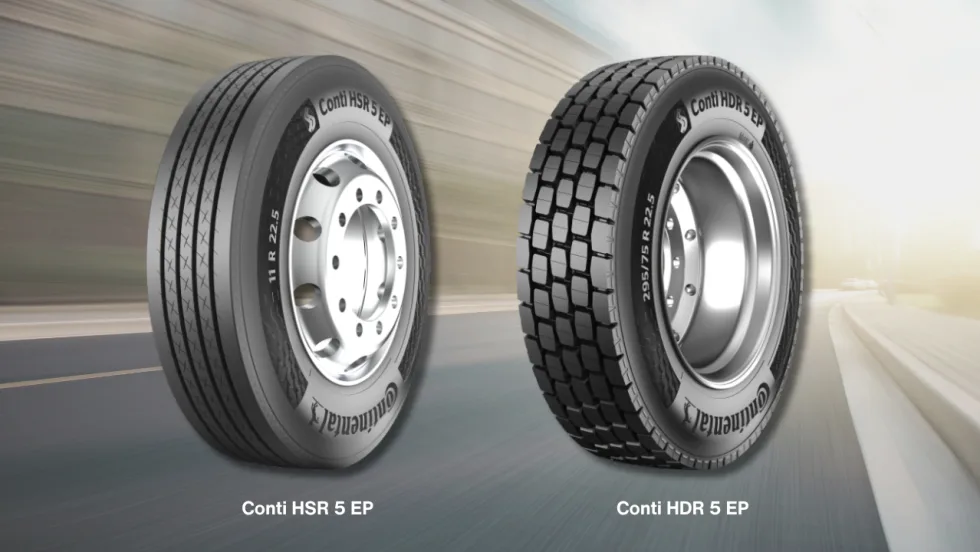
Continental Introduces New Regional Truck Tires
Continental says its new Generation 5 steer and drive tires for regional operations offer longer tread life, with estimated mileage gains of 22% and 19%, respectively.
Read More →
How AI Can Help Your Techs’ Efficiency
The technician shortage isn't going away, and no single fix can close the gap on its own. Trent Broberg makes the case that AI's real job in the shop is protecting the billable hours and job satisfaction of the techs you already have, not asking them to work faster.
Read More →
Color Match Smarter: Tools That Restore & Perform
For fleet managers and collision repair professionals keeping heavy-duty trucks on the road, getting the color right the first time isn't just about appearance — it's about efficiency, turnaround time, and bottom-line results. Discover how today's digital color tools are transforming the repair process from guesswork to precision.
Read More →
Wrong Repair Prompts Recall of Freightliner, Western Star 4x2 Trucks
DTNA is recalling more than 2,400 trucks that received an incompatible software fix instead of the hardware repair required to address brake valve corrosion.
Read More →
Truck Drivers Need More Than Another Alert
Fleets have more visibility into truck health, safety events, and driver activity than ever. The next challenge is turning all that information into useful guidance for the person who has to decide what to do next.
Read More →