




Behind the Scenes at Fontaine Fifth Wheel R&D
Fifth wheels often get taken for granted.

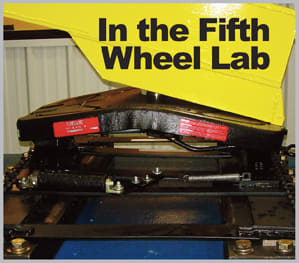
Fifth wheels often get taken for granted.
But think about what they have to do: Clamp on to a relatively small metal pin and stay clamped on through all sorts of conditions, even a rollover. If a fifth wheel lets loose of a 60,000-pound loaded trailer going down the highway, you're looking at an expensive mishap at best, if not a fatal tragedy.
"Failure is not an option," says Henry Bell, president of Fontaine Fifth Wheel.
That's why Fontaine Fifth Wheel takes fifth wheel research, development and testing very seriously. The company's new state-of-the-art headquarters in Trussville, Ala., features a 9,000-square-foot R&D lab, which the company says is the largest facility in the world dedicated to research and development of fifth wheels.
Like nearly every company during the recession, Fontaine has had to make significant cutbacks in the last two years, Bell says. "But the one area we didn't decrease a penny was R&D - that's our future."
Testing, Testing
Fontaine conducts extensive testing on its own new and existing fifth wheels and components, and performs benchmark testing on competitors' products. Engineers conduct life-cycle, strength, wear, vibration, environmental and corrosion tests. Testing equipment includes dynamic test stands, a static load test frame, a single-axis shaker table, lock cycle test stand, and corrosion and environmental chambers.
Customers can watch testing from the comfort of a control room, which overlooks the lab from behind shatterproof glass, while a static load test is conducted. In this test, a hydraulic arm, fitted with an extra-strong kingpin that is locked into the fifth wheel, bends the fifth wheel. This tests at what point you get "permanent deformation" and also the fifth wheel's ultimate strength (at what point does it break). It's pretty impressive to watch.
Setting Standards
Fontaine engineers are involved in a committee of the Society of Automotive Engineers to develop U.S. testing standards for fifth wheels. Right now, they said, there is no standard. Most companies have adopted the European standard, and truck makers have their own performance tests, but there is no legal standard in this country.
Fontaine engineers are particularly proud of a unique test stand they've developed, which builds on one of the European tests. In the European test, a two-axis dynamic test, the fifth wheel is moved up and down and backwards and forwards. This simulates the abuse fifth wheels get in a typical over the road application.
However, Fontaine engineers say, if you are looking at an off-road situation, you need a third axis, or lateral movement. Fontaine developed the test based on the stresses and strains put on fifth wheels in one of the toughest applications they could find, a Canadian oil patch. The test will run a million cycles, which takes 10 to 12 days.
Who Needs Ink?
The R&D lab at Fontaine also features a 3D printer, which allows prototypes to be "printed," using a special fine starch powder and glue instead of ink, directly from computer-aided design programs. The lets Fontaine make its own casting patterns for new products, reducing lead times to get prototype castings made.
The 3D printer also comes in handy for making miniature demonstration models for salespeople to take to customers. (I'd hate to see the extra baggage charge for a full-size fifth wheel.)
More Equipment
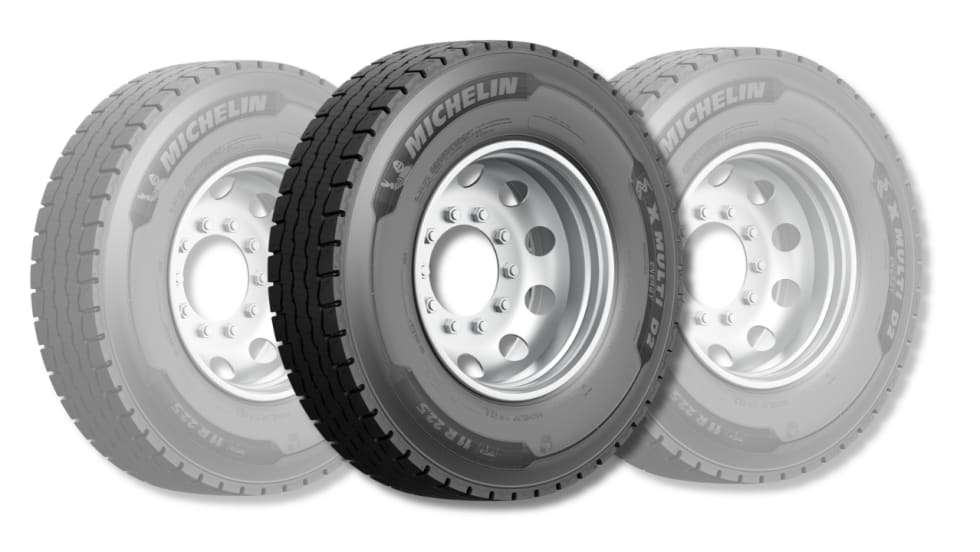
Michelin Tire Improves Efficiency and Durability for Regional Fleets
The Michelin X Multi Energy D2 is a regional haul drive tire engineered to help fleets improve fuel efficiency, durability and traction in demanding stop-and-go operations.
Read More →
ZF Expands Commercial Vehicle Push in North America
ZF is expanding its North American commercial-vehicle presence with new transmission applications, electrification, trailer technology and autonomous-driving systems.
Read More →
Tesla Wants a Self-Driving Semi. Are Cameras Enough?
Could Tesla’s camera-only autonomous driving technology work on an 80,000-pound Semi? In this commentary, HDT's Deborah Lockridge takes a look at Tesla, Cybercab, and how autonomous trucks see the road.
Read More →
Kodiak: Driverless Long-Haul Truck Launch on Track for 2026
Kodiak AI says its driverless long-haul safety case is 93% complete and it remains on track to begin commercial operations by year-end 2026.
Read More →
What DOT’s Automated Vehicle Strategy Means for Trucking
The U.S. Department of Transportation issued a new automated-vehicle strategy that outlines plans for driverless-truck regulations, cross-state freight corridors, and federal safety standards.
Read More →
East Coast Port Launches $45M Electric Truck Push
The Port Authority of New York and New Jersey announced millions in incentives for zero-emission drayage trucks, yard tractors, and new charging hubs near the port.
Read More →
PlusAI Going Public to Fund Autonomous Truck Launch
A SPAC deal could provide PlusAI with up to $300 million as it works toward a 2027 commercial launch of factory-built autonomous trucks.
Read More →
NHTSA Moves to Rewrite Truck Fuel-Economy Rules
The National Highway Traffic Safety Administration says it lacks authority to regulate medium- and heavy-duty truck engines separately from complete vehicles, but the existing standards have not yet been eliminated.
Read More →
Detroit Opens Orders for EPA 2027 Engines
Detroit isn’t starting from scratch to meet EPA 2027 diesel emissions standards. Its Gen 6 DD13 and DD15 engines keep much of today’s platform while updating the fuel and aftertreatment systems.
Read More →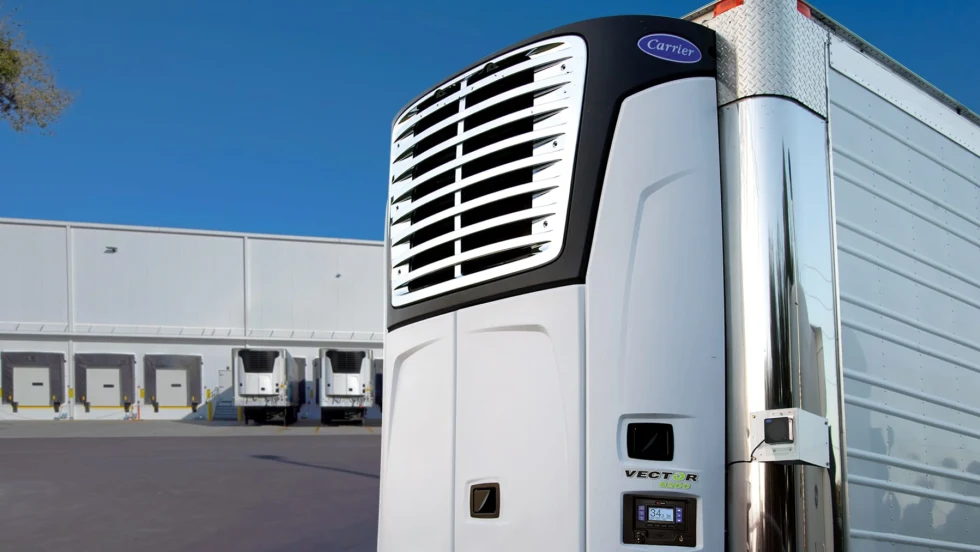
Carrier Transicold Adds All-Electric TRU for Stationary Cold Storage
Carrier Transicold’s new Vector 8200 all-electric transport refrigeration unit gives fleets a diesel-free option for temporary refrigerated and frozen trailer storage.
Read More →