




Are Diesel Fuel Additives for You?
Diesel fuel additives can help compensate for poor quality fuel, and even make good fuel better. The question is, does your trucking operation need a fuel additive?

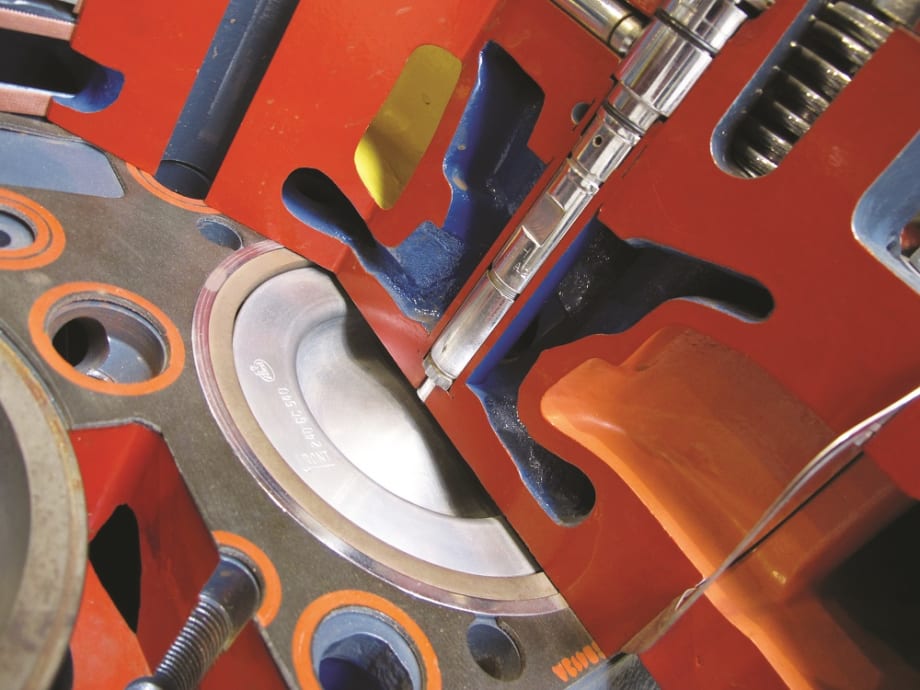
Good quality combustion occurs with rapid ignition followed by smooth and complete fuel burn. The higher the cetane number, the shorter the ignition delay and the better the quality of combustion. Cetane improver additives can help with sluggish diesel.
Photo: Jim Park
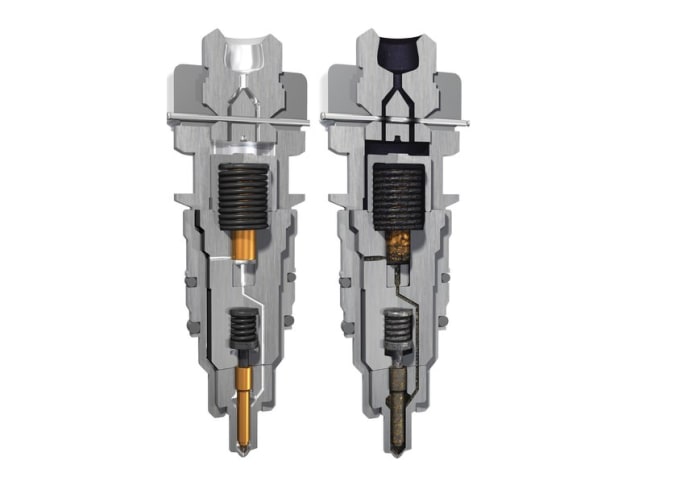
Hydrocarbon deposits on injector nozzles and internal surfaces (far right) can impede their function and performance. Corrosion inhibitors, detergent additives, and lubricity agents can help alleviate potential problems.
Image courtesy Lubrication Specialties Inc.
Most fleets would confess to using diesel fuel additives from time to time, most likely in the winter to prevent gelling. But there are fleets, lots of them it seems, that regularly treat their fuel with fuel additives of some description.
Some use detergent fuel additives or lubricity agents to make up for the loss of sulfur in diesel fuel, which disappeared under a government mandate back in 2006.
Others use fuel stabilizers to offset the effects of aging, and cetane improvers to optimize combustion — or in the words of some additive suppliers, “to increase horsepower and reduce emissions.”
It's easy to be skeptical of such claims, but evidence suggests there's some truth there.
Common Problems Fuel Additives May Address
“Many different problems can be solved or avoided all together when including fuel additives in a fleet's maintenance plan,” says Kevin Adams, director of research and development for Lubrication Specialties Inc., makers of Hot Shot's Secret.
“One of the most common problems, and perhaps the most easily avoided, relates to the condition of the injectors. By using the correct fuel additives, injector damage due to water and internal diesel injector deposits will be prevented. When a lubricity additive is used, the life of the injector is increased.”
Is that Fuel Additive Working?
In most cases, you'll never know if a diesel fuel additive is working or not. How does one gauge the condition of fuel injectors, short of tearing it down and examining it?
If it fails, you might do that. But if it doesn't fail over its expected life, is that a result of the diesel fuel additives you used? Or would it have been fine without fuel additives?
In other instances, it's easier to tell if the fuel additive is working.
If you suffer from fuel filter plugging, for example, an additive can help dissolve the asphaltenes. These are high-molecular-weight hydrocarbons that are usually found on the bottom of the crude. They can also be formed in ultra-low-sulfur diesel fuel from the heat created by higher pump pressures inside the fuel system and returned to the tank from your fuel pressure regulator, notes Adams.
“High-performance fuel additives can contain ingredients that not only dissolve the asphaltenes that are already present in your fuel, but also help prevent asphaltenes from forming and plugging filters,” he says.
“Additionally, many trucks suffer from the effects of a low cetane rating within the fuel that causes poor fuel economy and hard starts during the cold months,” Adams adds. “A good fuel additive will boost the cetane number and solve each of these fuel-related issues.”

Cold weather is not kind to diesel fuel. A winterization additive can lower the cloud point, cold filter plugging point, and pour point temperatures of the fuel and prevent paraffin wax crystals from plugging fuel filters at low temperatures.
Photo: Jim Park
Do Engine Makers Approve of Additives to Address Diesel Fuel Quality?
While the nation's supply of diesel fuel is generally dependable, it's not always consistent. Diesel engine makers account for swings in quality when designing and certifying their engines. Generally, they do not endorse or recommend the use of fuel additives.
“We do not recommend that Volvo truck owners add additives to diesel fuel. If additives are needed, it should be done at the fuel supplier terminal,” says John Moore, powertrain product marketing manager for Volvo Trucks North America.
Cummins, on the other hand, last year officially endorsed a fuel additive for the first time, recommending two Power Service products, Diesel Kleen + Cetane Boost and Diesel Fuel Supplement + Cetane Boost.
“Cummins engines are designed, developed, rated and built to both certify and operate efficiently on commercially available diesel fuel,” said Josh Hahn, coolants and chemicals business leader at Cummins Filtration.
“However, Cummins recognizes that there are poor-quality fuels on the market which don't always meet ASTM D975 [the U.S. diesel fuel standard], and these fuel issues can result in a variety of issues for the customer, such as poor lubricity, low cetane numbers, low temperature operability issues, or injector deposits.
"Some cold weather operations may also call for the use of fuel additives when pour-point depressants, wax-crystal modifiers or de-icers are needed.”
When Cummins announced the Power Service partnership last year, Roger England, director of technical quality and materials engineering for Cummins, said, “In recent years, diesel fuel quality has become increasingly important as engines evolve and the diesel fuel manufacturing processes change.”
That's not hard to understand, as emissions requirements become stiffer and advancing engine technology drives tighter mechanical and engineering tolerances and efficiency.
Detroit Diesel: Look for Top Tier Diesel Fuel
Meanwhile, Detroit Diesel says it does not have any specific requirements beyond current ASTM specs, but it does suggest customers take steps to ensure they are using a quality fuel in the tank.
“Detroit does not specifically endorse any brand or type of fuel additive, but we recommend Top Tier diesel fuel, as it addresses many of the shortcomings of ASTM specifications regarding diesel fuel quality,” says Jason Martin, manager, HDEP thermodynamics and fuel map management at DTNA.
“Top Tier is a voluntary retailer program that addresses the stability and lubricity of fuel, detergency, water and particulates — items that help maintain the performance of the fuel system over the lifetime of the engine, which is a contributing factor to ensure top engine performance.”
Top Tier diesel is available through many retailers in North America. The website notes, “Since retailers may also sell non-additized diesel fuel or diesel not meeting the Top Tier requirements, always check the dispenser.”
The Cetane Question
Many fuel additives claim to improve the cetane number of the diesel. A fuel's natural cetane number is influenced by several factors, such as the base crude stock used to make the fuel and the refining process. The minimum cetane number in the United States is 40, but actual numbers will vary. In Europe the minimum is 51. Higher is viewed as better — up to a point.
A BP oil website from the UK offers a clear and concise description of cetane and its effect on performance: “The cetane number is the key measure of diesel fuel combustion quality. The number relates to the ignition delay — the period that occurs between the start of fuel injection and the start of combustion.
"Good quality combustion occurs with rapid ignition followed by smooth and complete fuel burn: The higher the cetane number, the shorter the ignition delay, and the better the quality of combustion."
Conversely, BP explains, "low cetane number fuels are slow to ignite and then burn rapidly. These poor combustion characteristics can give rise to excessive engine noise and vibration, increased [soot] emissions [from incompletely burned fuel] and reduced vehicle performance.”
Increased Burn Efficiency
“There are several ways fuel additives increase mpg and performance while reducing emissions, but they all revolve around a similar theory — increased burn efficiency,” says Adams. “Clean injectors have a more atomized spray pattern, which helps the fuel burn more efficiently and cleaner. Cetane improvers impact the point of ignition as well as promote a more complete burn of the fuel. The results are improved performance, mpg, and lower total hydrocarbon and carbon monoxide emissions.”
Additive advocates say there are many reasons to consider investing in fuel additives programs, from increasing fuel mileage to reducing DPF soot loads and maintaining good injector performance and reducing corrosion within the fuel system.
The key to success with additives is to identify any weaknesses in your fuel and to treat it accordingly.
“If fleets want the best fuel economy possible, they are going to have to do it with chemistry, because the oil industry is not going to do it for them,” says Gary Pipenger, owner and CEO of Amalgamated Inc., a Fort Wayne, Indiana-based additive supplier. “There is something out there for every application, but they are not all equal. Additives are designed for different tasks, and they must be applied according to need.”
Researching Fuel Additives
Researching additives can be daunting. The ATA’s Technology & Maintenance Council offers Recommended Practice RP 341A, Diesel Fuel Additive Functionality Groups and Winter Operability Guidelines, to help fleets sort the wheat from the chaff. There are products out there that lives up to the billing — and some that don’t. Only field tests can prove what might be a good investment for your fleet.
“Do not buy an additive without doing some testing,” Pipenger says. “Test your fuel, ask for samples from the supplier, and test the fuel again [with the additives added]. Run A/B tests on a couple of trucks to prove the additives are working. Bottom line: test, test, test.”
More Fuel Smarts

Wex Adds Cardless Fuel Payments for Over-the-Road Customers
A new fuel card feature for Wex customers offers convenience and security.
Read More →
New California Law Could Shed Light on Electric Truck Prices
Why do battery-electric Class 8 trucks remain so expensive? A California bill signed by Gov. Gavin Newsom would give fleets and state agencies more visibility into what manufacturers charge.
Read More →
How Volvo Updated Its D13 for EPA 2027 [Watch]
Volvo’s updated D13 promises lower emissions without sacrificing performance or fuel economy. Take a closer look at what changed inside the engine in this HDT Spotlight video.
Read More →

Diesel Price Spike Shortens Payback for Natural Gas Trucks, Report Says
Energy Vision estimates fleets could recover the higher purchase price of an RNG-fueled Class 8 tractor in 1.3 to 2.8 years under current fuel-price scenarios.
Read More →
Calstart Becomes Catalyst Mobility, Reflecting Broader Focus
Calstart is now Catalyst Mobility, reflecting the nonprofit’s growing national role in clean transportation, including zero-emission trucks, infrastructure and incentive programs.
Read More →
Record Diesel Prices Squeeze Trucking Fleets
Average U.S. diesel prices have climbed to nearly $6 a gallon, surpassing the 2022 record as tight refinery capacity and Middle East disruptions keep fuel costs elevated.
Read More →
How Fuel Delivery Shapes Engine Performance
Fuel delivery depends on more than what happens at the injector. For fleet, maintenance and technical professionals, looking at the full path from pump to injector can provide useful context for understanding engine performance.
Read More →
East Coast Port Launches $45M Electric Truck Push
The Port Authority of New York and New Jersey announced millions in incentives for zero-emission drayage trucks, yard tractors, and new charging hubs near the port.
Read More →
Detroit Opens Orders for EPA 2027 Engines
Detroit isn’t starting from scratch to meet EPA 2027 diesel emissions standards. Its Gen 6 DD13 and DD15 engines keep much of today’s platform while updating the fuel and aftertreatment systems.
Read More →
Zero-Emission Truck Corridor Planned for West Coast
California, Oregon, Washington, British Columbia and Baja California are coordinating plans for truck charging and hydrogen fueling from Canada to Mexico.
Read More →