




Related: The Promise of E-Commerce
Analysis: How E-commerce and Millennials are Changing Retail and Trucking
Retail sales are important – not just to the overall economy, but also to trucking – and the game is changing big-time, possibly thanks to an entire generation.

Evan Lockridge・Former Business Contributing Editor
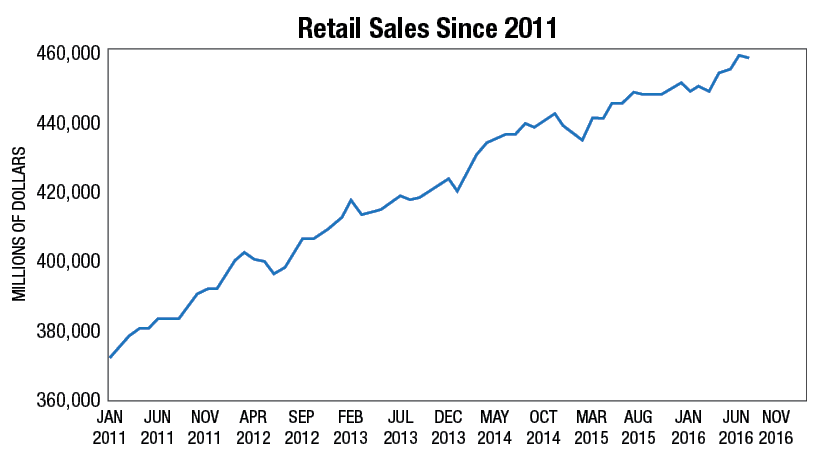
Source: U.S. Census Bureau, Advance Monthly Sales for Retail and Food Services, Seasonally Adjusted
3 min to read
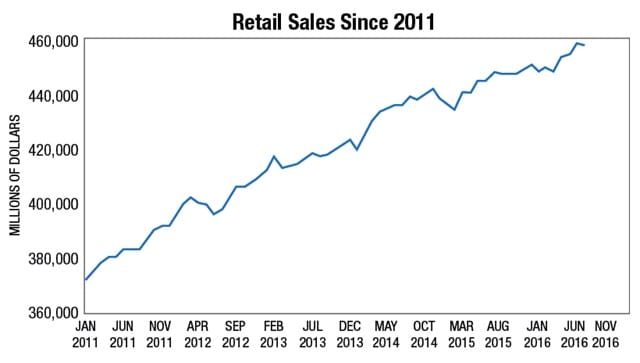
Source: U.S. Census Bureau, Advance Monthly Sales for Retail and Food Services, Seasonally Adjusted
From the September 2016 issue of Heavy Duty Trucking
Retail sales are important – not just to the overall economy, but also to trucking – and the game is changing big-time, possibly thanks to an entire generation.
About two-thirds of U.S. economy is driven by retail sales. Compare that to around 12% for manufacturing. As for why it’s important to trucking, surely you’ve heard the line, “If you bought it, a truck brought it.”
The good news is retail sales, including food service sales, were up 2.8% in July from a year earlier. The bad news is that when you compare July to the month before, sales were flat, following a second quarter in which sales increased at a 4.2% annual rate.
This could just be a blip, but others note this may be the beginning of a whole paradigm shift in American spending habits.
Online sales are booming, meaning the traditional patterns of distributing and selling goods isn’t the only game in town. In the second quarter, e-commerce sales totaled $97.3 billion, up 4.5% from the first quarter. And e-commerce sales were up 15.8% while total retail sales moved up just 2.3%. E-commerce as a percent of total sales was 7.5% in the second quarter versus 6.6% a year earlier.
In other words, people are still spending. They just aren’t doing it the same way they used to – and that has some retailers scared.
In August, department store giant Macy’s said it would close around about 100 stores, cutting its footprint by around 15%, to strengthen its presence as an “omnichannel shopping destination.” The move was greeted with a thumbs-up by many analysts. Retailing behemoth Walmart recently bought online retailer Jet.com for $3.3 billion to increase its e-commerce presence and broaden its audience.
There’s another way spending is changing. According to the Wall Street Journal, since 2000 consumers are spending less on goods and more on services. Part of it’s by necessity, with more going for non-discretionary items such as healthcare, housing, student debt and transportation. But consumers also spending more on travel and leisure activities, which are estimated to have increased in July 8.6% from a year earlier, and less on buying the “stuff” that goes in your trucks.
If pressed to name a single factor driving these different trends, I’d have to say millennials. This generation that reached adulthood around the turn of the century is doing things differently…a whole lot differently than my not-long-after-baby boomer generation did.
Trucking companies have already seen difficulties in recruiting millennials as drivers, as this generation make it clear they want their lives to be different than those of their parents. They generally prefer to live smaller and lighter, eschewing many big-ticket items their parent purchased – and they don’t want their hand-me-downs. More than three in four millennials (78%) would choose to spend money on an experience or event over buying something desirable, according to a frequently cited Harris survey of more than 2,000 U.S. consumers.
With these differences between millennials and baby boomers, it should come as no surprise they will transform one of the biggest parts of the American economy. Even if individually millennials don’t buy as much of some types of products, collectively it’s a big group. Investment firm Goldman Sachs describes millennials as “one of the largest generations in history [and] is about to move into its prime spending years.”
The result will be a big shift in not just how retail goods are sold, but how they are delivered by trucks.
Subscribe to Our Newsletter
More Fleet Management
Why This Trucking Recovery Is Different
Freight demand remains sluggish, but rising costs and tougher enforcement have taken enough capacity out of the market to change the outlook for motor carriers.
Read More →
Platform Science Adds Dispatch and Safety Tools
Four additions to PS Fleet help fleets monitor loads, manage driver coaching, share truck locations and adjust video system settings.
Read More →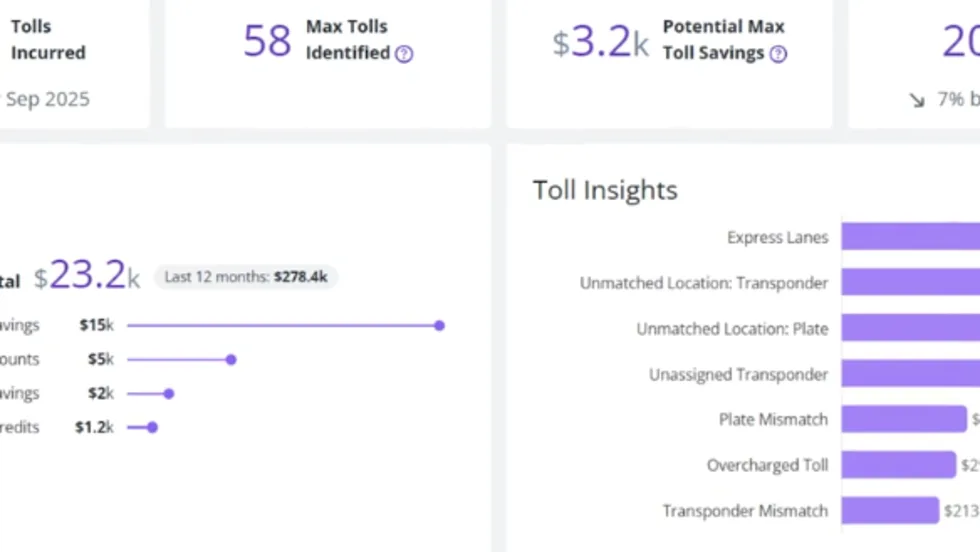
PrePass Intelligence Mines Fleet Bypass, Toll and Safety Data
PrePass Intelligence helps fleets measure bypass savings, flag potential toll overcharges, and spot suspicious transactions by combining data from separate systems.
Read More →
Motive Adds AI Agents for Fleet Operations
New tools automate follow-up on fleet data, from maintenance work orders to driver alerts, with two-way voice conversations planned for later this year.
Read More →
Can You Beat Our Trucking Trivia Challenge?
Test your truck knowledge with 19 trivia questions from Heavy Duty Trucking Exchange. Can you keep up with the fleet pros?
Read More →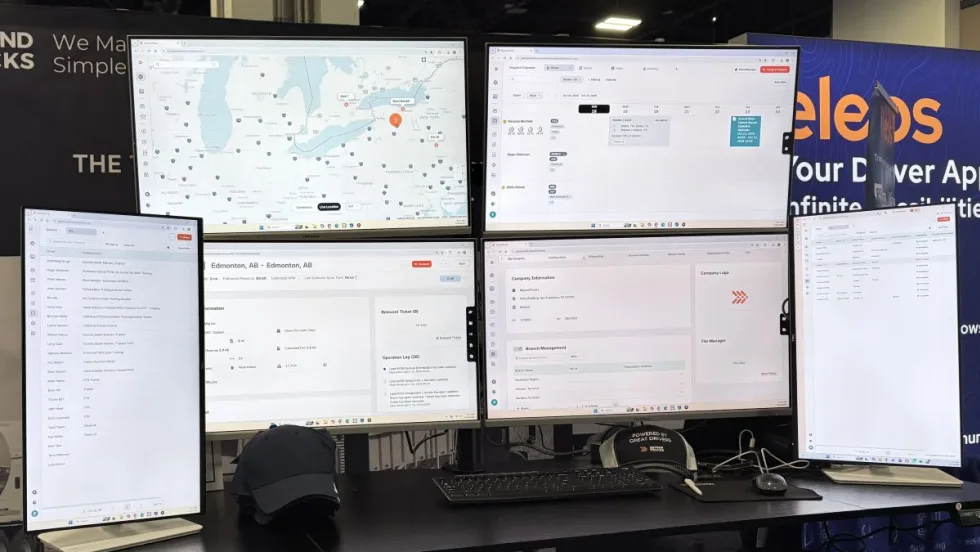
BeyondTrucks Adds Rules Checks to Dispatch
New Compatibility Engine checks driver qualifications, equipment requirements and fleet policies before loads are dispatched.
Read More →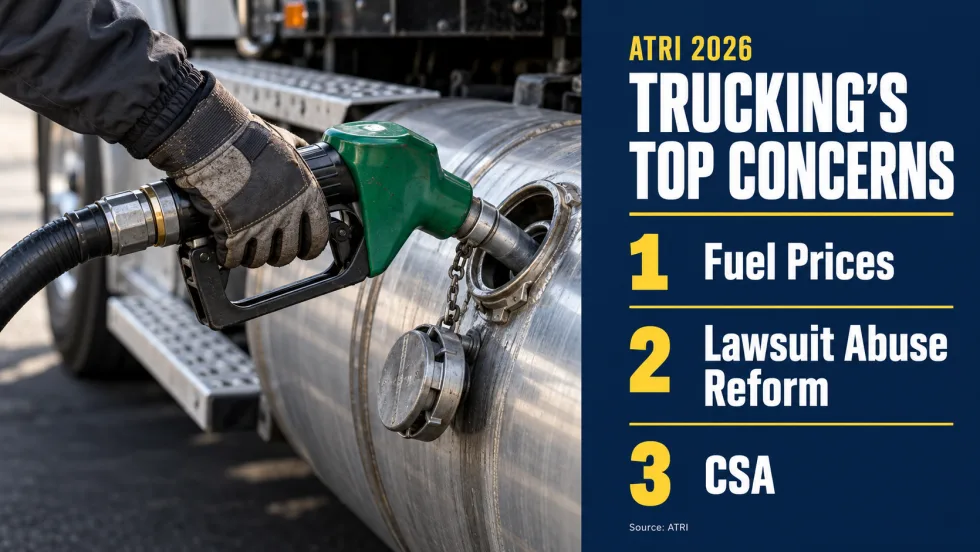
Diesel Prices Hijack Trucking’s Worry List
ATRI’s annual survey finds cautious optimism about freight, but diesel costs, litigation, and insurance continue to squeeze fleets. Drivers have different priorities on several issues.
Read More →
Nomination Deadline Extended for HDT Emerging Leaders
Just a few more days to nominate accomplished trucking fleet professionals under 40 who are making an impact and helping lead the industry forward for the HDT Emerging Leaders award. Deadline extended to October 20!
Read More →
What Will ATA’s New Leader Bring to Trucking's Table?
Incoming President and CEO Mark Colson’s record in Alabama offers clues about his priorities and approach following Chris Spear’s abrupt departure as the head of the American Trucking Associations.
Read More →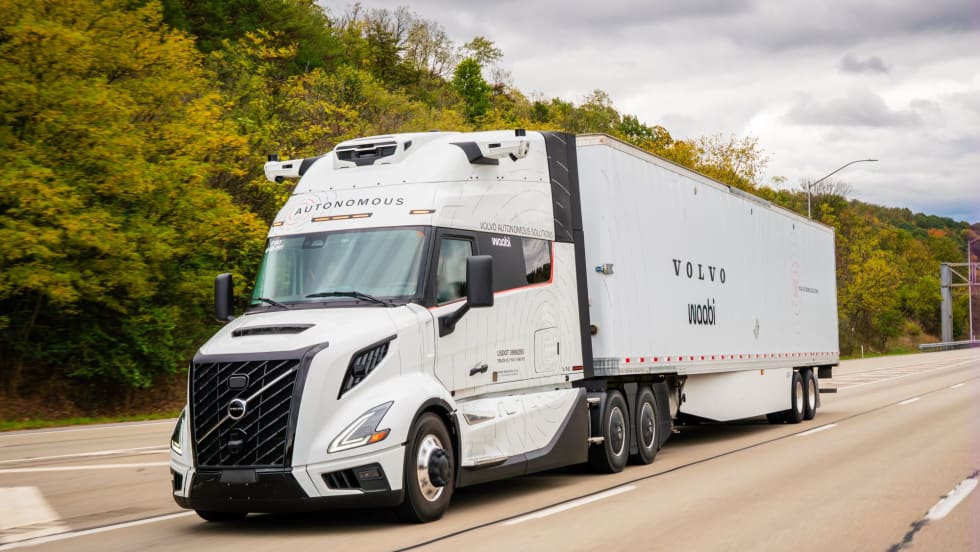
Volvo, Waabi Start Commercial Autonomous Operations in Texas
Volvo VNL Autonomous trucks, powered by the Waabi Driver, are hauling freight directly to third-party facilities for a customer in Texas.
Read More →