




Alternative Fuels: Many Options
Natural gas. Biodiesel. Dimethyl ether. Hybrid. Electric. Algae-based diesel. Hydrogen fuel cells. There’s a virtual smorgasbord of available and potential fuel sources to power medium- and heavy-duty trucks. The critical question becomes which one, or which combination of fuel sources, represent the best path for fleets, manufacturers and the industry.
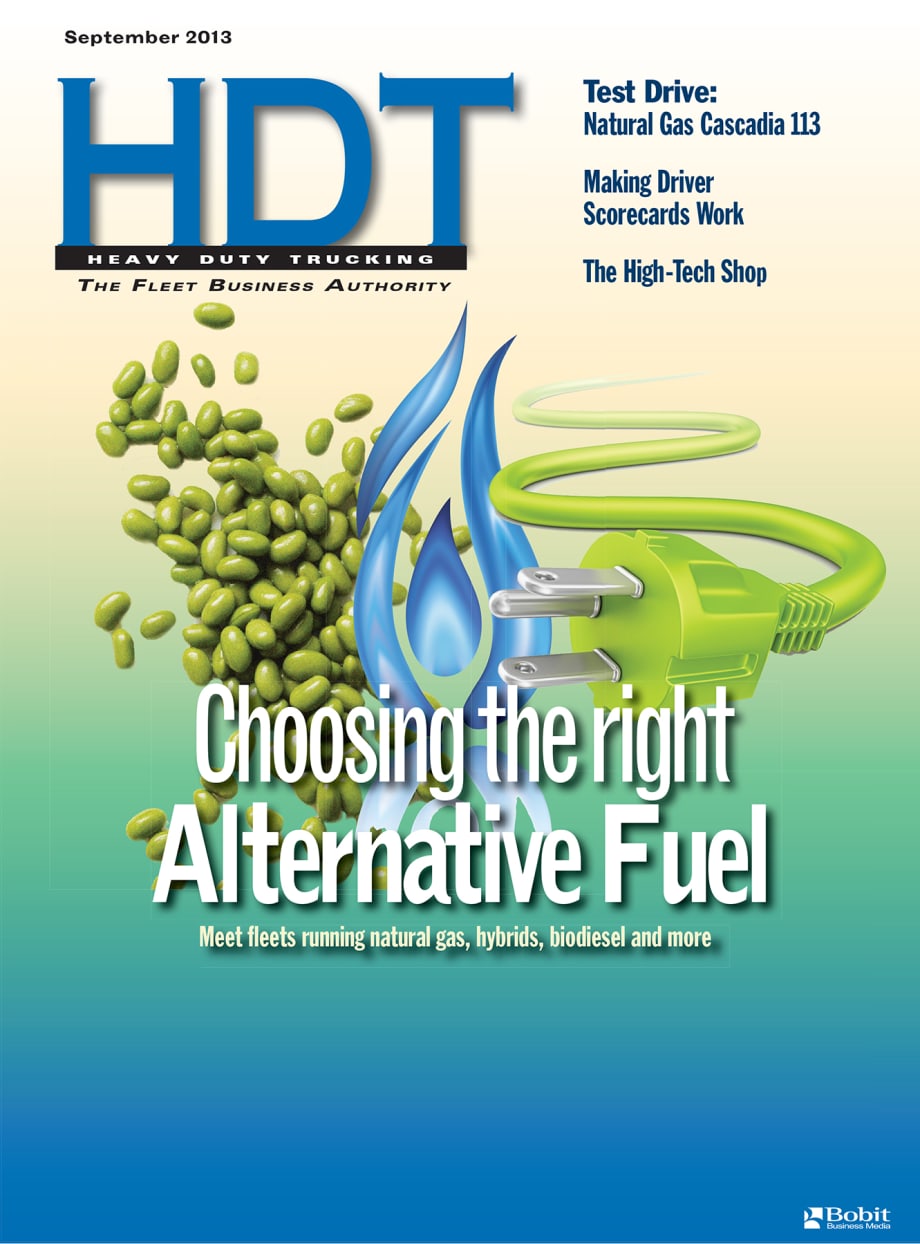
Natural gas. Biodiesel. Dimethyl ether. Hybrid. Electric. Algae-based diesel. Hydrogen fuel cells. There’s a virtual smorgasbord of available and potential fuel sources to power medium- and heavy-duty trucks.
The critical question becomes which one, or which combination of fuel sources, represent the best path for fleets, manufacturers and the industry.
“It’s a very interesting time in engine technologies,” says Mark Lampert, senior vice president of sales and marketing at Daimler Trucks North America.
“Without a doubt the most discussed topic in the last 12 to 18 months in North America has been the emergence of natural gas. How big is it, what’s the technology path we’re going to use and where is it most applicable?”
Yet Lampert points out that natural gas still represents less than 1% of the total Class 8 marketplace in North America right now.
“To put it in perspective, if [natural gas] increases five or six fold, we’re still talking about a single-digit market share player. We don’t see significantly aggressive adoption of natural gas, but we see steady increases with it.”
Other alternatives, such as electrics and hybrids, are even a smaller fraction of the market than natural gas, but they still make a lot of sense for certain fleets.
And some companies are looking into other options for the future. Volvo and Mack, for instance, while offering natural gas engines, believe dimethyl ether holds vast potential because it can be made from natural gas or a variety of other sources.
Deciding what alternative fuel or powertrain option(s) might be best for your operation is “a process [fleets] need to go through in a very careful way,” says Tom Patterson, director of commercial vehicle business development for Ricardo, which consults with OEMs on advanced powertrains and alternative fuels.
“You look at things like duty cycle. Short haul versus long haul, for instance, can drive you to a decision of CNG versus LNG. It’s all about total cost of ownership. [Fleets] need to look at what’s the most suitable technology for their application, and then they need to make sure they know where they can get fuel, and how much the fuel costs. Then they can make decisions about the configuration of the vehicle.”
Joe McManus, Ricardo’s chief engineer on engines, adds that another key point fleets can overlook is where you will get that alternative-fueled-vehicle serviced.
“They need to know they have that location that has that capability to support their needs and they’re not taking hits on their uptime because they chose an alternative fuel.”
Alternative fuels are not for everyone. In fact, the best “green” option for some fleets may be today’s “clean diesel” technology.
Ken Gillies, manager of truck ordering and engineering for GE Capital Fleet Services, says he’s seen fleets ready to jump into alternative fuels with both feet without doing their homework or giving thought to their overall “green” strategy as a whole.
“There’s so much talk about alternative fuels, it has turned almost into the total focal point – and there’s so many other things that should be done that can help without adding that kind of cost and infrastructure,” he says.
For instance, fleets can get green benefits and fuel efficiencies simply by upgrading to a new-model diesel. For a fleet with 8- to 10-year-old trucks, the newest Class 8s are far cleaner-burning and more fuel-efficient. Although there will be sticker shock involved, it’s not as much as that for alternative-fueled vehicles.
Then there are things like driver training and incentives for fuel efficiency, optimized routing and other tactics.
“It’s really easy to get caught up in, ‘Wow, look at the price difference with CNG,’” Gillies says. “It’s about kind of backing up the bus a little bit and asking the right questions.”
For this special cover package on alternative fuels, we’ve spoken with fleets in a variety of operations about their experiences with natural gas, electric vehicles and hybrids.
The Alternative Fuel Issue articles:
More Drivers

When Language Stops the Truck: The Return of ELP Out-of-Service Orders
English language proficiency rules for commercial drivers aren’t new, but renewed out-of-service enforcement has raised the stakes. Here’s what carriers need to know before a driver reaches a roadside inspection.
Read More →
Samsara Launches Custom AI Agent Builder
Agent Studio lets fleets create AI tools for hours-of-service monitoring, reporting and driver support, including agents that communicate by phone.
Read More →
Trucker Path Expands Reserved Parking Network
Trucker Path has added close to 6,000 more truck parking spaces to its Trucker Path Reserved Parking Network with the addition of Safe Truck Parking.
Read More →
EEOC Sues Texas Trucking Company Over Driver Age Limits
The agency says Trancasa USA rejected applicants over 65 and applied tougher driving-record standards to those over 60.
Read More →
Nussbaum, Roehl Announce Second Driver Pay Increase This Year
This year has seen a swath of major truck driver pay increases as freight capacity has tightened.
Read More →
From One Generation to the Next: How Mentorship Builds Safer Truck Drivers
After three decades in trucking, Harold Perry shares what he's learned about driver safety, mentorship, and helping the next generation build confidence behind the wheel.
Read More →
Truck Drivers Need More Than Another Alert
Fleets have more visibility into truck health, safety events, and driver activity than ever. The next challenge is turning all that information into useful guidance for the person who has to decide what to do next.
Read More →
FMCSA Removes 110 Truck Driver Training Schools from Certified ELDT List
Federal regulators also are targeting more than 160 additional training providers and launching a nationwide audit of third-party CDL skills testers as part of a broader crackdown on trucking fraud.
Read More →
Hours of Service Pilot Programs: FMCSA Readies for 2027 Rollout
Two pilot programs could eventually reshape hours-of-service rules, giving truck drivers options to pause their 14-hour clock or use longer split sleeper rest periods.
Read More →
Medical Cards, English Proficiency Reshape Roadcheck Violations
Medical-card violations jumped to the top of the driver out-of-service list during CVSA’s 2026 International Roadcheck, while English-language proficiency violations appeared among the leading violations for the first time.
Read More →