




7 Steps to Getting the Most From Your Software
Trucking companies make significant investments in software systems — to become more efficient, safer and more profitable. But not all have the same level of success.


User conferences, such as the Peoplenet User Conference, allow clients to take advantage of new enhancements, network with other users and learn best practices.
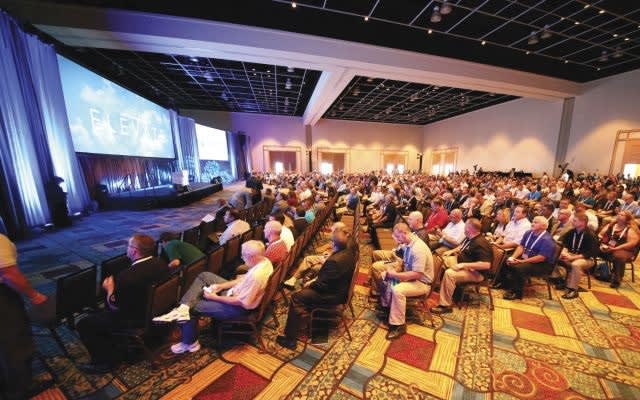
User conferences, such as the Peoplenet User Conference, allow clients to take advantage of new enhancements, network with other users and learn best practices.
Trucking companies make significant investments in software systems — to become more efficient, safer and more profitable. But not all have the same level of success. Some may see immediate gains and can leverage their investment across their business.
Others find themselves a long way from the anticipated return on investment.
“There is a large spectrum of usage. Some fleets barely break the surface — maybe 10% of what the system can do,” says Pete Allen, executive vice president sales, MiX Telematics. Others get the full benefit of their systems. But that’s not unique to trucking, he adds.
Differences in company size and resources explains some of the variance. But in many cases, it comes down to neglecting to take the steps necessary for success.
1. Broaden your focus
Some companies deploy software systems to address a specific need, such as compliance. But to get the most from your IT investment, look beyond that immediate need and consider how the system will or can have an impact on other parts of the company – maintenance, dispatch, HR and beyond.
“You need to fully engage across the operations,” says Jeff Champa, senior director product management for Omnitracs. “Some companies focus like a laser beam on one problem” without making use of data they generate from a system across all parts of their business.
Kelly Frey, vice president product marketing for Telogis, agrees. Often a trucking company’s operations group wants to adopt some technology, but they make that purchase decision in a vacuum. What they should do, he says, is talk to the sales, human resources and finance sides of the house to understand how the technology can benefit those departments as well. Hours-of-service applications, for instance, while primarily an operations/compliance tool, can also be used to validate payroll. Without considering the big picture, companies end up with a system that solves only one problem in one area.
2. Make a plan
You can’t expect to get the best results if you fail to plan. That means planning beyond the departments that will use a new system the most. McLeod Software recommends creating a “roadmap” listing the capabilities and improvements you wish to receive.
For companies moving from completely manual systems to trucking-specific software, the challenge will extend beyond the operational problems they hope to address, says Monica Truelsch, director of marketing for TMW Systems.
“They may not have the right skills in their teams to succeed quickly and may have trouble seeing past the disruptions in tried-and-true manual procedures,” she explains. These companies need to make sure they have mapped out the steps in deploying a new system.
Truelsch says companies should allocate about three times as much time for training as they think they need.
Part of the planning should involve making sure that staff understands why they should do things a certain way, not just how.
It’s also important to understand your position within your particular ecosystem, says Telogis’ Frey. “Really take advantage of the opportunity to tie systems together” — not just with the back office but with customers and vendors as well. “Think about what kind of information you have that your customers could make use of — ETAs and locations data, for instance.”
Another key part of the planning process is to ensure the data you pour into your system is good data. In some cases, a company will “buy the software and either not provide all the data necessary or they will provide poor data,” says Ken Manning, president of Transportation Costing Group. The old adage “garbage in, garbage out” means they get poor results from the system.
3. Ensure complete buy-in
“We find different levels of commitment to a project [across companies]. The questions of who gets the most from their software is related to what kind of support a project gets within an organization,” says William Salter, president and CEO Paragon Software Systems.
It’s not enough to just have a good plan for implanting a system. “You might have a great strategy, but if you don’t have the team on board or don’t change the culture to accept the changes,” you won’t be successful, Frey says. That means helping your staff — all of your staff — understand how the software will change what they do. For instance, “sometimes we try to push tech on drivers without letting them know the value that’s there for them,” Frey explains. It’s important to consider how any new technology is effecting the end user.
4. Don’t neglect training
Up-front training is critical, says Woody Lovelace, senior vice president corporate planning and development, Southeastern Freight Lines, Lexington, S.C. And that training should be broad-based, beyond just the frontline users of the system, he says. For a system that’s used by the driver, for instance, obviously there needs to be a good rollout focusing on training the driver. “Our experience is that we get through that fairly quickly,” he says. “But to really get the most, the training has to be extended to the leadership people as well. Often that is more important in achieving the expected results than the training for the front-line associates.”
McLeod recommends that training be ongoing to ensure the best results. Many companies make the mistake of assuming training is finished when the system goes live. But much of the value a carrier gets comes over time as they become more sophisticated in how they use the system.
TMW’s Truelsch agrees, noting that companies should not “stop learning and pushing for improvement.” Getting a new software system up and running means you are probably “still walking, not running,” she says. Don’t stop after achieving one milestone, but “push on for the next stage of business change and improvement.”
Providing ongoing training has become easier, Frey says. With mobile devices, companies can push training out to drivers or others as the need arises. Plus, with today’s systems, companies can monitor if and how people are using an application, making it easier to pinpoint where more training may be needed.
5. Participate in user conferences
Southeastern’s Lovelace says his company places a “pretty high value” on participating in user conferences. They help the company stay in touch with what a particular provider is doing, make sure they are taking advantage of new enhancements, networking with other users and learning best practices.
Lovelace says the company tries to send “someone who can understand the solution the best and act on the opportunities. When we can, we like to send someone from the user community as well as an IT associate.”
6. Make full use of vendor support
Depending upon your vendor and the size of your project, you might get all kinds of help in planning and initial implementation. Even on a smaller scale, your vendor should be able to provide support when you need it. (If they can’t, you might want to look at a different vendor.)
Salter recommends you test out a supplier’s hotline before making a commitment. Make sure when you call the company you get a good response.
Stay in touch with your sales rep to find out what’s new with the product. Also, make sure to keep your system updated. Upgrade on a regular basis to prevent falling behind the technology.
7. Have someone responsible
Many companies are reducing their IT staff by taking advantage of hosted or cloud-based applications and reducing their need for on-site servers. However, most still have someone in charge of IT functions. Even smaller firms will have a “power user” who knows the ins and outs of their system. A successful software deployment requires at least one of these. Even system providers can face the same problems of getting maximum benefit from their own software.
“We face that,” says Steve Bryan, CEO, Vigillo, Portland, Ore., noting that all companies use software in their business. “From our experience, you have to have someone to take ownership” of the process. “People buy systems and think it will be adopted and used, but sometimes it doesn’t happen. From a cultural perspective, you have to have someone within the company who is absolutely responsible.”
Omnitrac’s Champa says while many carriers don’t need an IT department, “you need a technology-focused person. You have to have that designated power user.” In many companies, he added, someone will become that person by default.
It’s not a long road from taking advantage of only 10% of our systems capabilities to pushing the system to its limits, but it might take some time and effort to get there. How quickly you get there will depend to a large extent on your commitment to making it happen.
More Fleet Management

Color Match Smarter: Tools That Restore & Perform
For fleet managers and collision repair professionals keeping heavy-duty trucks on the road, getting the color right the first time isn't just about appearance — it's about efficiency, turnaround time, and bottom-line results. Discover how today's digital color tools are transforming the repair process from guesswork to precision.
Read More →
FMCSA Pauses Biennial-Update Enforcement Amid Motus Transition
Carriers whose updates were due on or after June 1 have more time, while FMCSA works to stabilize its new registration system and warns of phishing sites impersonating its new carrier registration system, Motus.
Read More →
2026 Blueprint for Countering Smarter Supply Chain Theft
Cargo theft is no longer just the cost of doing business. It's a multi-billion-dollar criminal enterprise exploiting vulnerabilities across your fleet, drivers, and supply chain.
Read More →


How Telematics Improves Visibility, Control, and Performance in Refrigerated Fleets
Explore how telematics help refrigerated fleets improve visibility, uptime, efficiency, compliance, and cargo protection across connected cold chain operations.
Read More →
What the U.S.-Canada Trade War Means for Trucking
Escalating U.S.-Canada tariffs could disrupt cross-border freight, reduce truck volumes, raise costs, and create new uncertainty for carriers on both sides of the border.
Read More →
What Are Trucking’s Top Concerns for 2026?
The American Transportation Research Institute wants to know what's worrying trucking fleet managers, drivers, and other stakeholders in its annual Industry Issues survey.
Read More →
American Trucking Associations Looks for a New Leader
ATA President and CEO Chris Spear abruptly left his job at the association on August 21, at a pivotal time for the trucking industry.
Read More →
Public Wi-Fi Cybersecurity Risks: How Truck Drivers and Fleets Can Protect Their Data
Public Wi-Fi can expose truck drivers and fleets to credential theft, malware, and other cyber threats. Here’s how to reduce the risk on the road.
Read More →
For Nicky Cupp, Fleet Innovation Starts With Frustration
HDT Truck Fleet Innovator Nicky Cupp turns everyday pain points at Fraley & Schilling into opportunities for better technology and smarter processes.
Read More →
Adam Buttgenbach’s Approach to Electric Trucks: Start With Where They Fit
HDT Truck Fleet Innovator Adam Buttgenbach helped PepsiCo build one of North America’s largest EV fleets by focusing on where electric trucks make operational sense.
Read More →