




121 Ways to Save Fuel: Buying Fuel
From the equipment you spec and maintain, to the fuel you buy, to driver training and incentives, you’ll find tips for nearly any type of fleet.
42. Negotiate fuel discounts
Negotiate fuel discounts and build a network of best-priced truckstops, advises Glen Sokolis of Sokolis Group, which offers fuel management services.
The best way to gain leverage in negotiating pricing, whether you fuel over-the-road or in bulk, is to select a primary fuel vendor, says Deanne Smith from WEX Fuel Management. “Be willing to give them 80%-90% of your fuel purchase volume when you are negotiating pricing. The more you fuel with a vendor, the better your pricing should be. Leave the other 10%-20% of your fuel available to take advantage of supply, market or geographic price movements when they occur.”
When building that network, Smith says, select the best locations for your fleet based on negotiated price (excluding creditable taxes) and operational needs. “You don’t want to be penny rich and dollar poor.”
Use technology to help ensure drivers buy at those fuel stops where you’ve negotiated a discount. For instance, fuel cards can be set so they work only at fuel stops on the discount network.
43. Join a fuel-buying group
If you’re too small to negotiate a discount, team up with other little guys.
“For small carriers and owner-operators, being part of an aggressive fuel-buying group can produce great savings,” says Peter McManus with B&C Chandler Trucking and Five Star Freight Management in Madera, Calif.
McManus recommends the National Association of Small Trucking Companies. The Owner-Operator Independent Drivers Association and www.Truckersb2b.com are other options.
44. Look into a fuel card program
If your fleet fills up on the road, look into a card program, suggests Stewart Peterson, which helps clients manage commodities including fuel and fuel futures. There are several excellent programs and companies, for all sizes of fleets, offering discounts and helping to track and control fuel purchases. One is bound to fit your needs. Some even offer a reporting tool that can drop into most accounting systems.
45. Check your fuel invoices
Nearly 40% of respondents to a survey by FuelQuest suspect errors in their fuel invoices. “Unaddressed, bulk fuel invoice error rates tend to hover around 25%, but we have seen some companies with rates as high as 55%,” says Ryan Mossman, vice president and general manager of FuelQuest Fuel Services. “Accuracy is a challenge for both suppliers and buyers due to complex fuel and freight contracts as well as manual or sample-based reconciliation processes. With such a high number of invoice issues, companies run the risk of paying more than they owe for bulk fuel purchases.”
46. Buy only as much fuel as needed for the trip
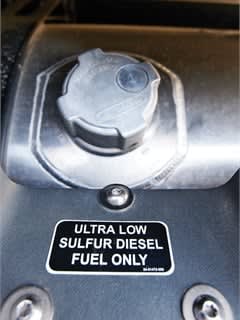
Carrying around extra weight costs money in itself and in lost load capabilities, and the “fresher” fuel is, the higher the energy content. Energy wanes over time, largely due to water and/or algae that can accumulate in the stale fuel, says LinkeDrive’s Jeff Baer.
47. Use technology to navigate market pricing
Roller coaster market conditions make it extremely difficult for fleet owners to keep fuel costs down and manage their businesses.
“Being on the wrong side of a swing can costs hundreds of dollars or more per load of fuel,” says Ryan Mossman, vice president and general manager of fuel services for FuelQuest. “However, by implementing advanced fuel strategies such as load shifting, fleet owners can adjust the timing of deliveries to take advantage of market movements. With an increased focus on the timing of fuel deliveries, fleet owners will be able to make more purchases on the right side of a price swing and turn volatility into a competitive advantage.”
48. Watch out for fuel quality
Fuel quality should be carefully considered, according to J.J. Keller. “If you are consistently getting poor fuel mileage from fuel purchased at one vendor, when compared to another, consider trying to locate a better fuel source.”
49. Consider buying bulk
No fuel storage tank on your premises? Do the math to see if it makes sense to install one, says commodities-management firm Stewart Peterson. Construction costs might be paid for by savings through bulk purchasing.
50. Audit bulk fuel bills
If you do have your own tank, do a fuel bill audit to look for savings, says Stewart Peterson. Do you know what that brokerage charge is for and how to work with your jobber to eliminate it.
51. Examine your inventory
Successful fuel purchasing requires looking not only into inventories, but also into deliveries and historical usage, says Ryan Mossman, vice president and general manager of fuel services for FuelQuest.
“Lack of complete visibility can lead to inventory shortages, run-outs, or delivery retains (too much inventory in the tank) incurring costly fees. To avoid these profit-draining mistakes, fleet owners should consider moving closer to a just-in-time delivery method, with increased visibility into fuel inventory across the network. Just-in-time inventory levels also allow fleets to take advantage of [cheaper] purchasing opportunities.”
52. Let the fuel come to you
For fleets where all the vehicles come back to one location every night, mobile fueling may be a viable alternative.
“A lot of major companies use this service, like FedEx, Coca Cola and Pepsi Cola,” says fuel management consultant Glen Sokolis. Not only do companies save money on not having to put in bulk fuel tanks, but they also don’t have the environmental and regulatory liability for those tanks. As an alternative to sending drivers to fill up at a retail station, he says, you’re saving the time it takes the drivers to do that — time that can better be spent making deliveries.
53. Use risk management tools
Indiana-based Reilley Trucking uses a “flex contract” type of risk management tool from its fuel provider, CountryMark. “I target a fuel price I’m comfortable with,” says Brandon Reilley, the fuel buyer for the fleet. “It’s that fuel price where I’m confident that we, as a trucking company, can make money. I then share that target price with my local CountryMark cooperative. They know when we get to that target fuel price or close to it; they call me so I can lock in a contract.”
“With the flex contract, I lock in a fuel price and a number of gallons, and then I have 11 months to buy the gallons I have contracted,” Reilley explained. “During those 11 months, I am able to evaluate with each load of fuel to determine whether I want to use my contract price, or the cash price. That flexibility has made all the difference in my ability to profitably manage my fuel costs.”
Or try something different, suggest the advisors at Stewart Peterson: Use risk management tools like futures and options contracts on your gasoline or ULSD fuel. These seldom-used tools may allow you to place a cap on prices over a time horizon or to capture additional savings on supplier contracts. These tools, if used properly, can help to take a variable expense like fuel and create a more predictable expense. Of course, futures and options trading does involve risk of loss, they note.
54. Buy fuel close to where the route terminates
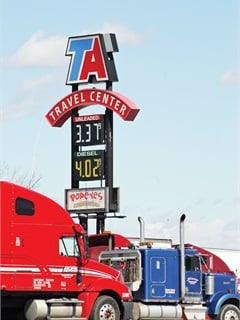
This way you will be more likely to buy the proper fuel for the region, LinkeDrive’s Jeff Baer. For example, taking on full load of thin winter diesel in Pennsylvania in late March means you are handicapping your mpg for a run south into warmer climates.
55. Re-evaluate your fuel purchase strategy on a regular basis.
“Business, markets and regulations change,” says Deanne Smith from WEX Fuel Management. “There is no cruise control button for managing fuel costs.”
56. Build your own biodiesel plant
That’s what Mesilla Valley did. It converts mostly used cooking oil into biodiesel. The company uses more than 500,000 gallons a month of B20 biodiesel at its main terminal in El Paso, Texas.
57. Move to natural gas if it makes sense
Although natural gas has a higher up-front cost in terms of infrastructure, some fleets have discovered the return on investment is fast enough to yield real savings. The refuse industry has been a major adopter of compressed natural gas, since trucks return to a central location every night and can be fueled by less-expensive slow-fill facilities, not to mention low-cost landfill gas.
58. Consider additives carefully
Some people recommend fuel additives to help prevent injector deposits and to improve cold-weather performance, both of which will help the engine run on less fuel. Some additives also enhance the cetane number. However, engine makers are leery of additives because of the sophistication and complexity of today’s engines and emissions systems.
Ask for proof of testing from independent laboratories such as Southwest Research Institute that not only demonstrate fuel economy gains but also prove that the additive does not have any damaging side effects. And be sure to use the correct amount. Like medicine, overdosing with additives can be dangerous.
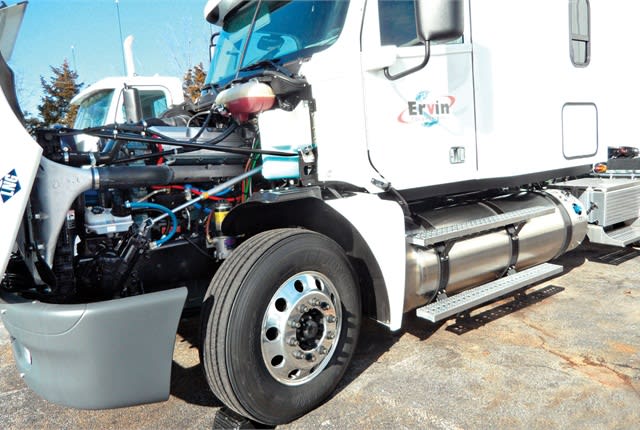
59. Retrofit with dual-fuel aftermarket systems
You can reap some of the benefits of cheaper natural gas through dual-fuel conversion systems that run on a combination of diesel and natural gas, with the ability to switch to straight diesel if a natural gas station is not available.
Such systems are available from companies such as American Power Group, Diesel 2 Gas, EcoDual and Fyda Energy Solutions. Some fleets are using glider kits to pursue this strategy.
RELATED: 121 Ways to Save Fuel
More Fleet Management

Color Match Smarter: Tools That Restore & Perform
For fleet managers and collision repair professionals keeping heavy-duty trucks on the road, getting the color right the first time isn't just about appearance — it's about efficiency, turnaround time, and bottom-line results. Discover how today's digital color tools are transforming the repair process from guesswork to precision.
Read More →
FMCSA Pauses Biennial-Update Enforcement Amid Motus Transition
Carriers whose updates were due on or after June 1 have more time, while FMCSA works to stabilize its new registration system and warns of phishing sites impersonating its new carrier registration system, Motus.
Read More →
2026 Blueprint for Countering Smarter Supply Chain Theft
Cargo theft is no longer just the cost of doing business. It's a multi-billion-dollar criminal enterprise exploiting vulnerabilities across your fleet, drivers, and supply chain.
Read More →


How Telematics Improves Visibility, Control, and Performance in Refrigerated Fleets
Explore how telematics help refrigerated fleets improve visibility, uptime, efficiency, compliance, and cargo protection across connected cold chain operations.
Read More →
What the U.S.-Canada Trade War Means for Trucking
Escalating U.S.-Canada tariffs could disrupt cross-border freight, reduce truck volumes, raise costs, and create new uncertainty for carriers on both sides of the border.
Read More →
What Are Trucking’s Top Concerns for 2026?
The American Transportation Research Institute wants to know what's worrying trucking fleet managers, drivers, and other stakeholders in its annual Industry Issues survey.
Read More →
American Trucking Associations Looks for a New Leader
ATA President and CEO Chris Spear abruptly left his job at the association on August 21, at a pivotal time for the trucking industry.
Read More →
Public Wi-Fi Cybersecurity Risks: How Truck Drivers and Fleets Can Protect Their Data
Public Wi-Fi can expose truck drivers and fleets to credential theft, malware, and other cyber threats. Here’s how to reduce the risk on the road.
Read More →
For Nicky Cupp, Fleet Innovation Starts With Frustration
HDT Truck Fleet Innovator Nicky Cupp turns everyday pain points at Fraley & Schilling into opportunities for better technology and smarter processes.
Read More →
Adam Buttgenbach’s Approach to Electric Trucks: Start With Where They Fit
HDT Truck Fleet Innovator Adam Buttgenbach helped PepsiCo build one of North America’s largest EV fleets by focusing on where electric trucks make operational sense.
Read More →