




11 Trends to Watch for 2011
1. CSA will demand better safety performance The federal truck safety program formerly known as CSA 2010, now simply CSA for Compliance, Safety and Accountability, is widely viewed as a game-changer for trucking. It kicked into gear this month and will get up to speed over the coming year.
1. CSA will demand better safety performance
The federal truck safety program formerly known as CSA 2010, now simply CSA for Compliance, Safety and Accountability, is widely viewed as a game-changer for trucking. It kicked into gear this monthand will get up to speed over the coming year.
The program uses data collected from roadside inspections, truck crash reports and traffic reports on moving violations to highlight weaknesses in a carrier's safety performance. Then it follows up with a robust and far-reaching enforcement scheme.
This month, the Federal Motor Carrier Safety Administration started mailing warning letters to carriers with deficient safety numbers, and states have begun a year-long process of training enforcement personnel in the new system. A key element of the program, a new rule shaping the way the agency determines safety fitness, will be put out for public comment in the spring. And the agency continues to make adjustments in response to concerns about the details of the program that have been raised by the industry and the enforcement community.<!break>
Carriers that have experience with the program, either as participants in the pilot tests that were run in a number of states or as early adapters, say the key to compliance begins with getting on top of your data (go to www.fmcsa.dot.gov and click on "CSA"). They also recommend paying close attention to operational matters such as pre- and post-trip inspections and driver training.
Some carriers are learning how to use the agency's data system, but many others are using third-party service providers who offer easy-to-use scorecards based on CSA data, coupled with management tools such as driver performance analysis.
(Learn more about CSA in our Safety & Compliance section)
2. Hours of service: The never-ending story
The 10-year effort to reform the truck driver hours of service rules will continue into 2011 as the Federal Motor Carrier Safety Administration labors to come up with a revised final rule that is satisfactory to all sides.
These rules, which dictate safety requirements and set key operational parameters for the industry, have been in flux since 2000 when the agency proposed the first major changes in the rules since 1937.
Revisions to that initial proposal have been the target of repeated lawsuits by safety advocates complaining that FMCSA needs to address concerns about driver health, the 11-hour limit on driving time and the 34-hour restart.
The current revision is a consequence of an agreement between FMCSA and a coalition of safety advocacy groups led by Public Citizen, under which the agency agreed to take another look at the rule if Public Citizen and its allies will hold off on their suit.
The advocacy groups may drop the suit if they get what they want from the revision, but this creates a Catch-22 situation. If they get the substantially more restrictive rule that they want, then trucking interests may feel they have to take the new rule to court. The industry's position has been that there is no evidence to suggest that the current rules have harmed safety, or that supports a conclusion that more revisions will improve safety.
"It's hard to understand and imagine what new information the agency may have to propose something different, after building a record over past five or six years - or longer - that supports the current rule," said Dave Osiecki, senior vice president for policy and regulatory affairs at the American Trucking Associations, when the agency announced its agreement with Public Citizen last year.
As Heavy Duty Trucking went to press, the industry was waiting to see the agency's proposal. The proposal will be open for public comment pending a final decision due at the end of July 2011.
3. Recovery and the coming capacity crunch
Most economists seem to believe that the chances of a double-dip recession are dwindling. We're still looking at a sluggish recovery, with unemployment, the housing sector, and the tight availability of credit continuing to be concerns. Most economists predict it will continue to be sluggish until at least late 2011. In mid-November, the Philadelphia Fed released the results of its fourth-quarter survey of 43 economic forecasters. The forecasters predict real GDP will grow 2.5 percent in 2011.
However, there are several factors that bode well for trucking.
One, this recovery has been a manufacturing-driven one, helped by increases in exports. Despite offshoring, the U.S. manufacturing sector remains the largest in the world. This has helped trucking, as compared to a service-driven recovery, which would not generate as much freight.
The other good news for trucking is that a tremendous amount of capacity has come out of the industry. Many companies have gone out of business, and it's likely we will see more bankruptcies as used-truck prices have risen to the point where banks are less likely to allow "zombie fleets" to keep going. Those that survived typically had to lay off people, cut fleet size and become far more efficient.
This means it doesn't take a large increase in freight to drive major improvements in the trucking industry. Trucking experts are predicting a major capacity crunch, perhaps starting by mid-2011. This will be largely driven by a driver shortage (see next section). While this will mean headaches for recruiting departments, it also should give fleets the clout they need to raise rates enough to cover the extra costs of getting drivers and see some increased profits as well. Shippers who beat up on trucking companies during the recession to get cutthroat rates will "are about to be yanked into supply chain reality," according to Noel Perry, principal of Transport Fundamentals and former economist for Schneider National and Cummins.
4. The mother of all driver shortages
By 2012, the industry will be looking at shortage of 400,000 drivers, according to Eric Starks, president of FTR Associates.
The issues the industry has been facing for years have not gone away, including an aging driver population and a minimum driving age that precludes recruiting recent high-school graduates.
Add to that a shrunken recruiting pipeline. During the recession, fleets slashed recruiting, human resources and training departments. Driving schools closed down. As a result, Starks says the industry can hire only about 100,000 drivers into the market each quarter. It's like a funnel. Even if you have a million people that want to be truckers, only a certain number can fit through that hiring/processing funnel at a time.
Then there's the regulatory issue. CSA 2010 will result in drivers who appear to be unsafe getting pushed out of the system as carriers refuse to hire them. Likely changes to hours of service regulations could affect productivity by 6 percent, FTR estimates - meaning an extra 150,000 trucks, and drivers, needed to move the same amount of freight.
Crackdowns in documentation required to get a commercial driver's license, designed to address the hot-button issue of illegal immigrants, also will pull a significant number of drivers out of the available labor pool. Some believe this could have an even more chilling effect than hours of service changes.
Further complicating the driver situation are attacks by the federal government and state agencies on the use of independent contractors. Although these efforts aim to crack down on the improper "misclassification" of employees as contractors to avoid taxes, many legitimate owner-operators could be affected. The Obama administration has upped its efforts to ferret out such "misclassification." And one bill has been introduced in Washington, D.C., that would
More Fleet Management

How Innovative Trucking Leaders Turn Change Into an Advantage
As the pace of change accelerates in trucking, the fleets that adapt best have more than the latest technology. They have cultures that embrace improvement.
Read More →
Freight Broker Bonds Just Got Harder to Get. Here's What That Means for Your Fleet.
When it gets harder for a freight broker to prove they are financially sound, the ones who cannot clear that bar get pushed out of the market. And those are exactly the brokers who used to leave motor carriers holding the bag.
Read More →
Long-Awaited Canadian Border Bridge to Open in Detroit
For trucking, the bridge opening should offer immediate improvements in efficiency and reliability, with new customs facilities, expanded inspection capacity, and direct freeway-to-freeway connections.
Read More →
Aurora Rolls Out Next Generation of Driverless Trucks for Commercial Freight
Aurora's latest autonomous trucks it's rolling out with International feature lower-cost hardware designed for a million miles as the company expands commercial driverless freight operations across the U.S. Sun Belt.
Read More →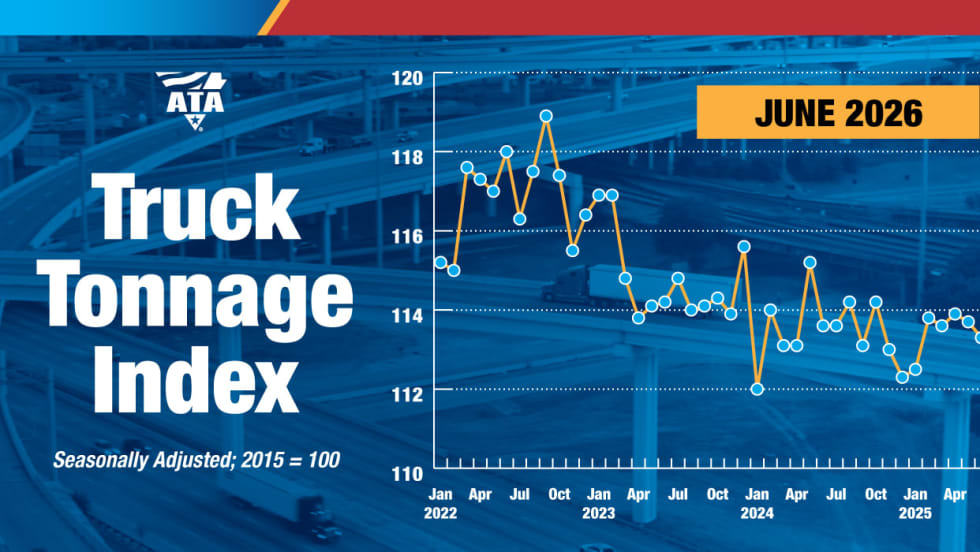
Freight Tonnage Down, Rates up, as Lower Capacity Powers Trucking Recovery
The recovery from the freight recession continues to be driven by reduction in capacity rather than by increased demand.
Read More →
Think Your Trucking Fleet Isn't Using Much AI? Think Again
Shadow AI — the use of unauthorized artificial intelligence tools at work — is becoming increasingly common, putting sensitive company data at risk. Learn how trucking fleets can protect sensitive data while embracing AI.
Read More →
ArcBest Consolidates Brands, Cuts Workforce
The company will bring three business units under the ArcBest brand, eliminate about 2% of positions, and expects the changes to generate $40 million in annual savings.
Read More →
Trucking Fleets Faced Record Operating Costs During Third Year of Freight Recession
ATRI's annual operational cost report shows carriers trimmed fleets, delayed equipment purchases, and ran older trucks as expenses continued to outpace freight rates.
Read More →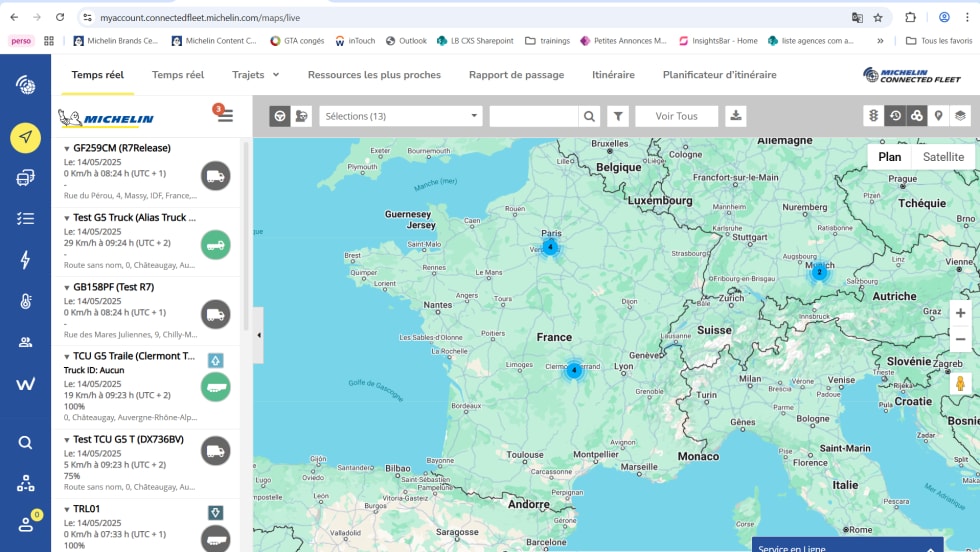
Michelin Adds AI Assistant to MyConnectedFleet Platform
Michelin’s new generative AI tool delivers instant fleet insights, helping managers analyze fuel use, tire maintenance, vehicle status, and operational performance without manually creating reports.
Read More →
LytxOne Platform Now Features AI, Compliance, and Asset Tracking Tools
New enhancements add AI-powered insights, asset tracking, compliance automation, and configurable privacy controls to Lytx's all-in-one fleet management platform.
Read More →