




10 Tips to Improve HD Vehicle Lift Safety
With an early fall and winter predicted by more than one weather service, one heavy-duty-vehicle lift manufacturer recommends 10 tips to improve safety for fleet technicians on the shop floor.

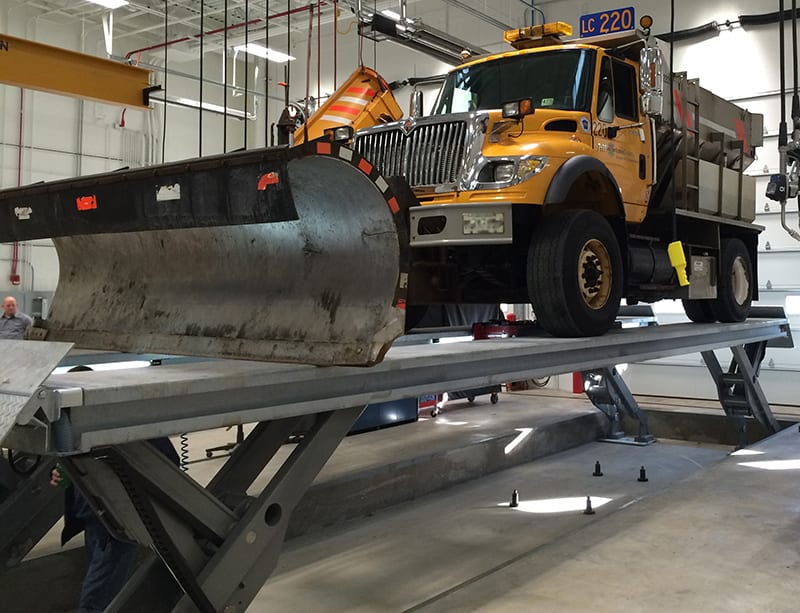
Know in advance the weight of the heaviest vehicle to be lifted and make certain that the lift selected is certified to meet or exceed that capacity.
Photo courtesy Stertil-Koni
With an early fall and winter being predicted by more than one weather service, heavy-duty vehicle lift manufacturer Stertil-Koni recommends 10 tips to improve safety for fleet technicians on the shop floor. These tips from the company offer insight into improving the operation of vehicle lifts during the winter months.
1. Certification is Significant: Consider purchasing lifts certified by the American Lift Institute. The ANSI/ALI ALCTV (current edition) is the standard for automotive lifts. This lift certification program makes it easy for buyers to choose lifts that meet all safety requirements for construction, testing and validation. The ALI gold label is the only guarantee that a lift has been independently proven to meet stringent industry standards.
2. Lift Choice and Capacity: Know in advance the weight of the heaviest vehicle to be lifted and make certain that the lift selected is certified to meet or exceed that capacity. Also, confirm the height of the vehicle is appropriate for your shop’s ceiling height.
3. Learn the Lift: Well-trained lift operators should know the lift’s use and abilities, prior to powering up. Proper training ensures safe and efficient operation and prepares the user for an emergency situation. Keep a copy of the manufacturer’s lift manual nearby at all times.
4. Safety First: During lift set up check the perimeter of the lift to confirm that nothing is obstructing its path and there are no hazards in the lifting area. Lift the vehicle no more than 12 inches off the ground, pause, and do another sweep of the area to further check that there are no impediments.
5. Stability is Key: Always place lifts on a firm foundation and on level ground. This is especially important with mobile column lifts, which can be relocated for operation both inside and outside of the maintenance shop. When outside, check for wind loads. Further, select a lift with an “electronic synchronization” system. As the lift goes into motion and continues through the full-range up to its maximum height, vehicles should rise smoothly, even those with unequal weight distribution, such as fire trucks and pumpers. Assure that the lifted vehicle itself is level.
6. Adhere to Proper Lifting Points: At all times use designated lifting points on the vehicle. For inground lifts, operators should check that the contact points are properly positioned.
7. Technician Protection: Lift vehicles to a proper height so technicians can move about freely, safely and comfortably underneath the vehicle. Verify lifts are locked in position before standing under the vehicle.
8. Maintain a Lift Maintenance Schedule: Make sure lifts receive annual inspections by a certified ALI lift inspector. Also, use factory or manufacturer-authorized technicians to service and repair your lifts.
9. Create a Culture of Safety: Publicly and prominently post service bulletins, safety messages, and continuously update the skills of all technicians. This is vital to a smooth-running maintenance facility.
10. Accessorize your Lift: Use lift accessories specifically designed to help ensure fleet maintenance operator safety and proper ergonomics. One example is a high lift wheel dolly, which allows wheel removal and adequate alignment of dual tire assemblies and brake drums to be completed efficiently and accurately, without back strain.
“Safety is always mission No. 1 in the service bay,” says Jean DellAmore, Stertil-Koni USA president. “That is precisely why we suggest using a well-planned, safety-first approach so that shop technicians can perform their duties efficiently, ergonomically and with complete confidence. It also creates a positive workplace atmosphere, helps improve worker retention, and contributes to greater longevity of the vehicles being serviced and the maintenance equipment the techs operate.”
More Maintenance

Color Match Smarter: Tools That Restore & Perform
For fleet managers and collision repair professionals keeping heavy-duty trucks on the road, getting the color right the first time isn't just about appearance — it's about efficiency, turnaround time, and bottom-line results. Discover how today's digital color tools are transforming the repair process from guesswork to precision.
Read More →
Wrong Repair Prompts Recall of Freightliner, Western Star 4x2 Trucks
DTNA is recalling more than 2,400 trucks that received an incompatible software fix instead of the hardware repair required to address brake valve corrosion.
Read More →
Truck Drivers Need More Than Another Alert
Fleets have more visibility into truck health, safety events, and driver activity than ever. The next challenge is turning all that information into useful guidance for the person who has to decide what to do next.
Read More →

The Maintenance Checks Trucking Fleets Should Prioritize Before Fall Freight Picks Up
Making it through August isn’t the same as being ready for the next several months of operation. Find out what systems may have suffered from summer heat and need to be checked out before fall.
Read More →
What Three Fleets Are Doing Differently When Buying Truck Parts in 2026
With freight improving but costs still climbing, fleet maintenance executives explain how they're balancing price, quality, and supplier relationships.
Read More →
Paccar Recalls 2027 Trucks Built This Summer for Possible Electrical Problem
The nearly 6,000 Kenworth and Peterbilt trucks in the recall could potentially lose engine power, among other things.
Read More →
Will API PC-12 Oil Change Trucking Fleet Maintenance?
The new API PC-12 heavy-duty engine oil category reflects the changing demands of modern diesel engines. But fleets like Foodliner are looking to getting their own data before making decisions on adopting the new oils and questions such as extending oil drain intervals.
Read More →
Brake Safety Week to Focus on Drums and Rotors
Commercial vehicle inspectors are focusing on truck brakes during CVSA's Brake Safety Week, August 23-29.
Read More →Possible Battery-Cable Fires Prompt Recall of 15,000+ International MV and HV Trucks
On the recalled vehicles, manufacturing variations can cause the battery interconnect cable to contact the auxiliary stud and hold down the bracket.
Read More →
Rush, MCT Team Up to Grow Refrigeration Service Network
The joint venture will operate MCT's network of Carrier Transicold dealerships and mobile service locations, with the companies promising greater service capacity and uptime for refrigerated fleets.
Read More →