





Related: FTR, ACT Research Report on Historic Class 8 Order Drop
Trucking Loses 88,000 Jobs in April
More than 88,000 jobs disappeared in the truck transportation sector in April, a 5.8% drop from March, both the steepest drops on record – part of a record-setting 20.5 million job loss across the country, as the nation’s unemployment rate rose to 14.7%.
May 8, 2020

Pickup and delivery was one of only a handful of industries that did not report job losses in April.
Photo: Deborah Lockridge
3 min to read
More than 88,000 jobs disappeared in the truck transportation sector in April, a 5.8% drop from March, both the steepest drops on record – part of a record-setting 20.5 million job loss across the country, as the nation’s unemployment rate rose to 14.7%.
According to a May 8 Bureau of Labor Statistics report, 88,300 jobs were lost in the truck transportation, a 6.2% year-over-year decline, as the entire economy suffered due to COVID-19 pandemic lockdowns and stay-at-home orders.
Those are not all drivers, noted Avery Vise, vice president of transportation at FTR, in preliminary observations shared with HDT, “though most surely are, given that around 60% of trucking payroll jobs are drivers.”
Since the government started reporting employment data for truck transportation in 1990, Vise said, the closest we have come to this degree of job loss in trucking was 49,700 jobs, a 4.2% reduction, in April 1994 due to a Teamsters strike against 22 trucking companies. "Aside from that outlier, the biggest decline was 26,000 jobs, a 1.9% reduction, in January 2009.”
The April decline instantly sent trucking back to the industry's employment level in September 2014, he said – “Astonishing, given that as late as February, the industry was only 0.5% off its all-time high in July of last year.”
In just one month, Vise said, trucking has shed a larger percentage of its payroll force than it did during the industry's five worst consecutive months of the Great Recession.
He also noted that the numbers don’t tell us are what’s going on with leased and independent owner-operators. “We know that a large share of them are idled, but that does not necessarily mean they are out of business,” Vise said. In addition to the Paycheck Protection Program and other federal assistance, many creditors are putting near-term obligations on hold.
In addition, these numbers do not include private fleets, only firms that are in the business of moving goods for compensation.
Parcel and Delivery Bucks the Trend
Meanwhile, parcel and local delivery so far is holding up well. The segment formally known as couriers and messengers added 1,800 jobs in April, making it the U.S. industry with the second-strongest job growth in April.
Only seven "industries" posted any job growth at all, and two of those are the U.S. government and the U.S. Postal Service.
“The slight job growth squares with the underlying dynamics of families having goods delivered that they otherwise would have bought in stores and businesses sending items to newly-remote workers,” Vise noted.
However, warehousing and storage shed more than 74,000 jobs in April, down 6.1%.
“Warehousing and storage is interesting because it was one of just a handful of industries that recorded significant job growth in March,” Vise noted. “The pattern resembles what we saw with truck spot freight volumes. The early stages of the COVID-19 crisis likely saw greater demand due to the depletion and restocking cycle for food and paper products. Since late March, though, the overall demand destruction has become a much greater issue. Some might have expected this sector to hold up better because of online purchasing, but while e-commerce probably has grown dramatically in the past couple of months, it cannot offset the broader economic hit as more than 30 million people have filed for unemployment benefits.”
More Fleet Management

Nomination Deadline Extended for HDT Emerging Leaders
Just a few more days to nominate accomplished trucking fleet professionals under 40 who are making an impact and helping lead the industry forward for the HDT Emerging Leaders award. Deadline extended to October 20!
Read More →
What Will ATA’s New Leader Bring to Trucking's Table?
Incoming President and CEO Mark Colson’s record in Alabama offers clues about his priorities and approach following Chris Spear’s abrupt departure as the head of the American Trucking Associations.
Read More →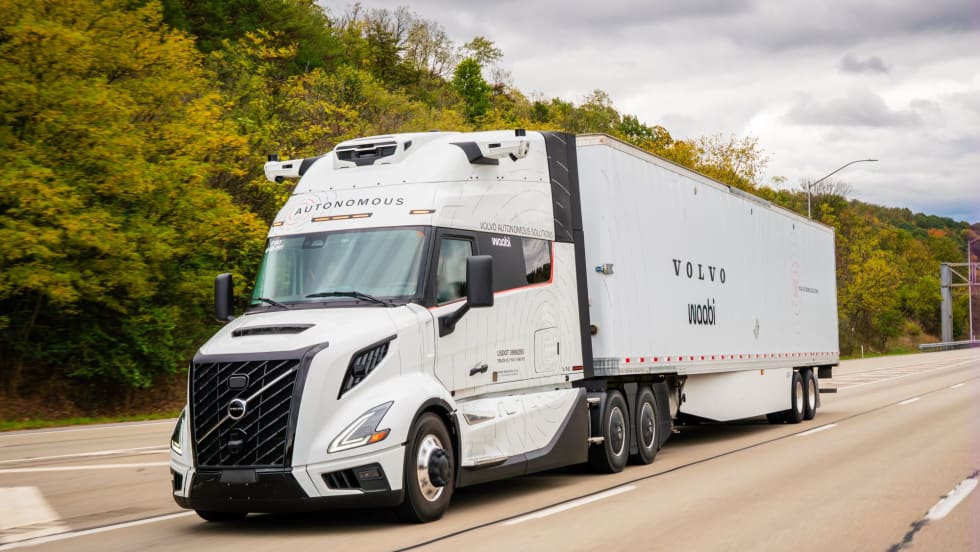
Volvo, Waabi Start Commercial Autonomous Operations in Texas
Volvo VNL Autonomous trucks, powered by the Waabi Driver, are hauling freight directly to third-party facilities for a customer in Texas.
Read More →
Samsara Launches Custom AI Agent Builder
Agent Studio lets fleets create AI tools for hours-of-service monitoring, reporting and driver support, including agents that communicate by phone.
Read More →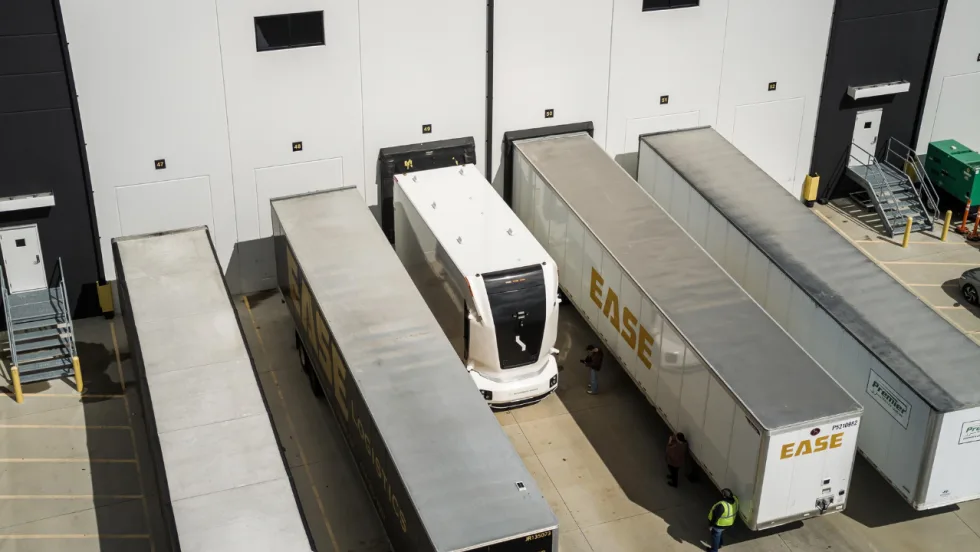
Einride Driverless Electric Trucks Begin Daily Freight Operations in Ohio
Two cabless electric trucks are hauling freight between EASE Logistics facilities in Marysville, Ohio, as part of a multi-state truck automation project.
Read More →
Geotab Links Fleet Card to Vehicle Data
The new card combines fuel discounts with telematics-based purchase controls. Geotab’s analysis also points to potential savings from choosing lower-priced fuel stops.
Read More →
How MFA Helps Protect Trucking Fleets
Multi-factor authentication adds protection when passwords are stolen. Here’s how it works and where fleets should start.
Read More →
How Better Freight Data Helps Trucking Teams Get Ahead of Disruption
Trucking and logistics teams have plenty of data. The problem is getting the right information in front of the right people soon enough to act. Better-connected data can help teams spot trouble earlier and make smarter decisions before small problems become big ones.
Read More →
Trimble: Taking Artificial Intelligence in Trucking Beyond Faster Tasks
At Insight 2026, Trimble executives argued that fleets may need to redesign workflows to get more from AI as it introduced new products and enhancements. AI’s value will depend on how fleets combine automation with their people's knowledge.
Read More →
Sponsored•September 28, 2026
Build a bulletproof fleet: Uniting ELDs and dash cams for total compliance
An ELD can prove compliance, but it cannot always prove what happened on the road. Discover how uniting accurate ELD data with AI-powered dash cam video can help your fleet strengthen compliance, defend against liability, protect drivers and reduce operational costs.
Read More →