




How Will COVID-19 Affect the Development of Electric Trucks?
There has been some talk about the impact the COVID-19 pandemic will have on the development of alternative-fueled trucks, specifically commercial battery-electric vehicles. The North American Council for Freight Efficiency weighs in with this Guest Voices commentary.
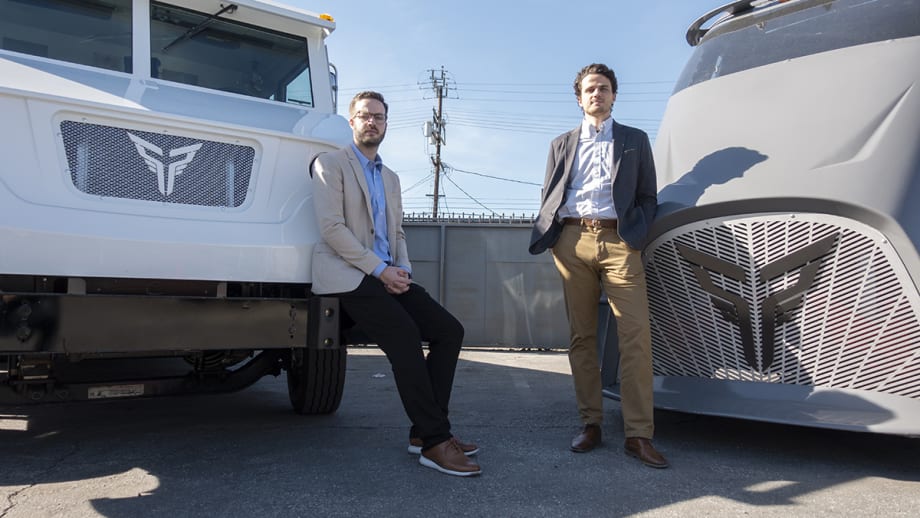
Electric-truck startups like XOS could be in a good growth position after the COVID-19 outbreak begins to settle out.
Photo: Vince Taroc
COVID-19 has turned our world upside down and will have ramifications throughout the economy and the trucking industry for months and years to come. There has been some talk about the impact the pandemic will have on the development of alternative-fueled trucks, specifically commercial battery-electric vehicles, and also whether there will be any environmental benefits to lifestyle changes that have been made as a result of the pandemic.
With millions of us now at home rather than at our businesses under stay-in-place orders, we are starting to notice some improvements to air quality. And less congestion on the roads allows freight to get through cities at near-posted speed limits.
In addition, Americans have been made very aware of the dangers of respiratory issues, and may be making a connection between air quality and respiratory health. As a result, we could see local and state regulators look at flowing money into projects that will positively impact air quality.
Electric trucks will certainly allow us to continue the move toward reduced carbon emissions and therefore cleaner air.
Electric-Truck Startups Could Be in Good Position
COVID-19 could be the impetus for more development in the electric truck arena, especially from some of the new players to the truck market, but might cause challenges for the existing truck makers. Startups that do not have existing product lines will be less impacted by the economic slowdown resulting from COVID-19. They are working on intellectual property development and getting designs firmed up and prototypes in development. They may even be able to pick up some of the key talent that has been laid off by other trucking-related businesses, thereby strengthening their brain trust.
We are not choosing sides here, but the startups are in a unique position. Funded by venture capital in many instances, they were not expected to have product available until 2021 or 2022. Meanwhile, traditional truck builders have existing product lines they need to support and now are having cash flow issues as truck purchasing has slowed down significantly.
The current situation presents an opportunity for alternative fuel startups, as they can accelerate the production of their products and get them into the market sooner rather than later. There is something to be said for having products out on the road in testing, even if they are not 100% reliable, so we can learn how they perform and adjust as final production plans are finalized.
The other big issue that anyone can capitalize on is the fact that borrowing money today is cheap. When interest rates are low, companies borrow money and are more willing to invest it in things that they may have been holding off on. Electric trucks still have a higher price tag than their internal-combustion-engine-powered counterparts, but between grant money available for commercial battery electric vehicles and the cheap cost of money, more fleets may be willing to jump into the electric truck space and get a few trucks to test.
It is also likely that testing services and analytical groups will be hungry for work, because the traditional OEMs likely will have less work for them. This could mean there will be more availability for new entrants to get testing time potentially at a reduced price.
Cleaner-burning trucks and a more sustainable world may not be enough of an incentive for some. However, job creation is priority for many governmental entities, and many of the poorer regions of the country are also the ones that are more environmentally challenged. Building an electric truck- or components-manufacturing facility in an impoverished neighborhood could mean access to more money, lower interest on borrowed money, or other incentives because of the jobs-creation element of bringing a new business into an area that desperately needs jobs.
But Diesel is Cheap
Some might argue that today’s low fuel prices will work against the growth of electric vehicles. With low fuel prices, some fleets and manufacturers may move onto other priorities rather than focusing on improving fuel economy. One thing we know about diesel fuel prices is that they are volatile. While they may be low now, history has shown us that they are likely to go up post-pandemic. Demand for fuel is low now with many people out of work or working from home and curtailing other activities, but this will not last forever. Once people return to work and start going about their normal routines, demand for fuel will increase and prices will rise.
LISTEN: NACFE's Rick Mihelic talks about electric trucks on the HDT Talks Trucking Podcast.
On the other hand, the price of electricity has been stable over the past several decades. When it comes to fuel choice, it is a matter of assessing risk. Investors will be asking themselves: Do I invest in something where the price is going to go up, or do I invest in something that has had stable pricing?
Solar energy and wind power had naysayers that predicted that solar and wind would never scale because the economics did not add up. Consider this: The U.S. now produces more than 40 times the solar power it did just a decade ago, according to the report, Renewables on the Rise — A Decade of Progress Toward A Clean Energy Future. Today, some Midwest states see 20% to 40% of electric power demand from wind. And the cost of solar panels has come down. We will get to a point in the not too distant future where electric trucks will make economic sense on their own.
COVID-19 has all of us re-evaluating everything we do. Rather than being seen as a threat to the further development of electric vehicles, it should be viewed as an opportunity to push development forward. Savvy companies will seize the opportunity.
About the Authors:

Mike Roeth, North American Council for Freight Efficiency
Photo: NACFE
Mike Roeth is the executive director of the North American Council for Freight Efficiency. Roeth has worked in the commercial vehicle industry for over 30 years, and his specialty is brokering green truck collaborative technologies into the real world at scale. He has a Bachelor of Science in Engineering from the Ohio State University and a Master’s in Organizational Leadership from the Indiana Institute of Technology. Roeth served on the second National Academy of Sciences Committee on Technologies and Approaches for Reducing the Fuel Consumption of Medium- and Heavy-Duty Vehicles, is a Department of Energy Merit Reviewer for the SuperTruck programs, and served as Chairman of the Board for the Truck Manufacturers Association. He understands the customers, operations and intricacies of the commercial vehicle industry, having held various positions in product development, engineering, reliability and quality, sales, materials and plant management with Navistar and Behr/Cummins.

Rick Mehlic, North American Council for Freight Efficiency
Photo: NACFE
Rick Mihelic is NACFE’s director of emerging technologies. He has authored Guidance Reports on electric medium- and heavy-duty trucks and Confidence Reports on Determining Efficiency, Tractor Aerodynamics, Trailer Aerodynamics, Two Truck Platooning. President of Mihelic Vehicle Consulting, he has 38 years’ experience in the trucking and aerospace industries including 20 years in commercial vehicle development for Peterbilt. He was involved in the development of aerodynamic vehicles and groundbreaking systems including the Peterbilt/Cummins DOE SuperTruck. He received the prestigious SAE L. Ray Buckendale Award in 2016.
More Blog Posts

Fragmented AI: Why Trucking Must Take Security More Seriously
As AI becomes embedded throughout transportation operations, the result can be a tech environment that looks more advanced on paper, but isn't necessarily more efficient, secure, or manageable in practice.
Read More →
We've Been Thinking About Truck Uptime Backward
The truck repair operations that minimize downtime aren’t necessarily the ones with the fastest technicians. They’re the ones who have the part.
Read More →
The Real Cost of Trailer Tires: Why It's Not Just a Maintenance Problem Anymore
Tire wear isn't random. The trucking fleet with a tire program that knows which trailers, positions, and routes are punishing tires the hardest is the one that buys fewer of them.
Read More →
A New Argument for Electrification: Managing Fuel Volatility
As oil prices surge amid Middle East conflict and a blocked Strait of Hormuz, fleets are feeling the squeeze in real time. In this guest column, Geotab's Neil Cawse argues electrification is no longer just about sustainability or ROI — it’s about insulating operations from what he calls a "volatility tax."
Read More →
The Time is Now to Expand Longer Combination Vehicles [Opinion]
The reauthorization of the federal highway bill offers a rare chance to advance double 53-foot LCVs. Industry leaders shouldn’t miss it, says a longtime trailer industry professional in this Guest Voices blog post.
Read More →
The Hidden Costs of 'Free' Smart Trailer Tech Installations [Commentary]
Free installation of smart trailer technologies may sound good on paper, but you could end up paying down the road.
Read More →
Protecting Small Trucking Fleets from Scammers: Lessons from the Insurance Frontlines
Hijacked DOT numbers, fake invoices, and high-tech cargo theft are on the rise. A veteran trucking insurance broker shares how to spot trouble early — and why a trusted advisor may be your strongest defense.
Read More →
Tire Retreading Makes Sense for Trucking Fleets. H.R. 3401 Could Make It Even Smarter.
Retreaded tires offer trucking fleets cost savings, sustainability gains, and supply chain security. New legislation, H.R. 3401, could make retreads even more attractive and support U.S. jobs.
Read More →
Hydrogen Fuel Cell Trucks Are Ready for the Long Haul. Now Policymakers Must Act
Accelerating the growth of hydrogen-fuel-cell-truck adoption would help make zero-emission trucking is not only possible, but practical and profitable, argues the Center for Transportation and the Environment in this Guest Voices blog.
Read More →
A New Definition for Long-Haul Heavy-Duty Trucking
Understanding the various routes that make up long haul is important as we move through trucking’s Messy Middle — a time when fleets have a variety of powertrain solutions to choose from, writes NACFE's Mike Roeth.
Read More →