




Microdea Offers Back-Office Automation with Origin Platform
Origin is a simple back-office automation platform that allows companies to bill customers on the same day that loads get delivered.

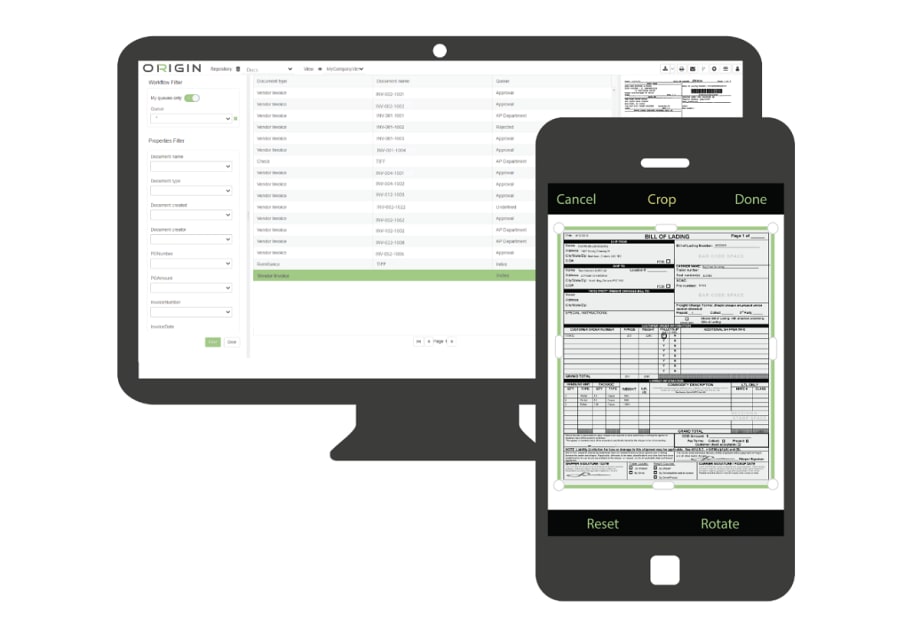
Origin is a simple back-office automation platform that allows companies to bill customers on the same day that loads get delivered.
Image courtesy Microdea
Microdea, a document management and back-office automation solutions provider for the transportation and logistics industries, has launched the Origin Platform.
Origin is a simple back-office automation platform that allows companies to bill customers on the same day that loads get delivered. Drivers can capture trip documents through the mobile capture app and the images can then be sent to the office to be stored digitally, kick starting the billing process.
With the capability for same day billing, fleets don’t have to worry about missing documents during audits. Operations can be streamlined in a paperless process improving the efficiency of the back office.
Origin requires no upfront investment in hardware or infrastructure and new customers are offered the first 30 days, or 1,000 loads, for free.
“To meet customer demands and keep up with the competition, carriers and brokers require software solutions that are faster, more modern, and easier to use,” said Steve Divitkos, CEO of Microdea. “As the trends in digital, mobile, and process automation continue to converge, Origin will help position forward-looking companies for success in the years to come. It’s a next-generation solution for the next generation of transportation and logistics companies.”
More Fleet Management

FMCSA Pauses Biennial-Update Enforcement Amid Motus Transition
Carriers whose updates were due on or after June 1 have more time, while FMCSA works to stabilize its new registration system and warns of phishing sites impersonating its new carrier registration system, Motus.
Read More →
2026 Blueprint for Countering Smarter Supply Chain Theft
Cargo theft is no longer just the cost of doing business. It's a multi-billion-dollar criminal enterprise exploiting vulnerabilities across your fleet, drivers, and supply chain.
Read More →
How Telematics Improves Visibility, Control, and Performance in Refrigerated Fleets
Explore how telematics help refrigerated fleets improve visibility, uptime, efficiency, compliance, and cargo protection across connected cold chain operations.
Read More →

What the U.S.-Canada Trade War Means for Trucking
Escalating U.S.-Canada tariffs could disrupt cross-border freight, reduce truck volumes, raise costs, and create new uncertainty for carriers on both sides of the border.
Read More →
What Are Trucking’s Top Concerns for 2026?
The American Transportation Research Institute wants to know what's worrying trucking fleet managers, drivers, and other stakeholders in its annual Industry Issues survey.
Read More →
American Trucking Associations Looks for a New Leader
ATA President and CEO Chris Spear abruptly left his job at the association on August 21, at a pivotal time for the trucking industry.
Read More →
Public Wi-Fi Cybersecurity Risks: How Truck Drivers and Fleets Can Protect Their Data
Public Wi-Fi can expose truck drivers and fleets to credential theft, malware, and other cyber threats. Here’s how to reduce the risk on the road.
Read More →
For Nicky Cupp, Fleet Innovation Starts With Frustration
HDT Truck Fleet Innovator Nicky Cupp turns everyday pain points at Fraley & Schilling into opportunities for better technology and smarter processes.
Read More →
Adam Buttgenbach’s Approach to Electric Trucks: Start With Where They Fit
HDT Truck Fleet Innovator Adam Buttgenbach helped PepsiCo build one of North America’s largest EV fleets by focusing on where electric trucks make operational sense.
Read More →
Deen Albert: Let Automation Do the Math, People Make the Decisions
HDT Truck Fleet Innovator Deen Albert makes sure people are still at the heart of operations at Grand Island Express, even while adopting artificial intelligence tools. AI-assisted dispatch helped boost revenue 25% with the same number of trucks.
Read More →