




Spot Flatbed Rates Continue Increasing as Vans, Reefers Remain Stable
Flatbed load availability and rates made big gains and the flatbed load-to-truck ratio hit a new record during the week ending March 10, according to DAT Solutions and its network of load boards, while a separate report for last month showed a drop in rates but they remained above year-ago levels.

Flatbed load availability and rates made big gains and the flatbed load-to-truck ratio hit a new record during the week ending March 10, according to DAT Solutions and its network of load boards, while a separate report for last month showed a drop in rates but they remained above year-ago levels.
The number of flatbed load posts increased 10.8% while truck posts dipped 1% compared to the previous week. There were 88.5 available loads for every flatbed truck posted on DAT load boards, up 11%. It was 61.8 a month ago and below 30 in November.
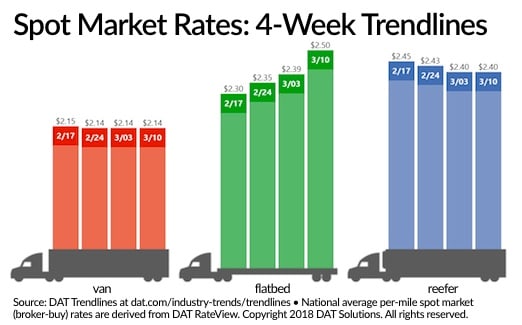
Flatbed freight includes construction materials, machinery, and other heavy loads. The national average flatbed rate was $2.50 per mile, 11 cents higher compared to the previous week and compared to $2.30 per mile three weeks earlier. All reported weekly rates include fuel surcharges.
Houston was the largest market in terms of outbound flatbed freight volume. The number of available loads in Houston jumped 11.4% and the average outbound rate was up 6 cents to $2.70 per mile.
Meantime, in the van sector, after two weeks of rising volumes, the number of loads slipped 0.6% last week while truck posts increased 3.1%. The result was a mostly neutral week in terms of rates, as the national average spot van rate was $2.14 per mile, unchanged for the third straight week. The van load-to-truck ratio was down slightly to 6.8 loads per truck.
Reefer load posts increased 4% while truck posts increased 5%. That caused the national load-to-truck ratio for reefers to decline from 10.6 to 10.5 loads per truck. The national average reefer rate held steady at $2.40 per mile for the second week in a row.
During this time period the national average retail prices of diesel fell 0.3% to $2.98 per gallon.
DAT North American Freight Index Posts February Drop
This followed the release earlier in the week of a report from DAT that showed spot truckload freight volume and rates declined seasonally in February, which is typically the slowest month for freight.
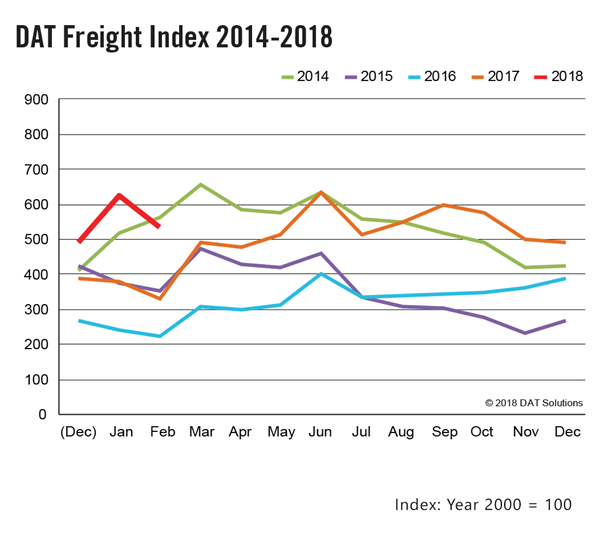
The DAT North American Freight Index fell 14% compared to January but this was the second-strongest February in 20 years. The index of available loads rose 62% compared to February 2017.
Spot market rates for van, refrigerated, and flatbed freight slipped lower month-over-month but continued to exceed 2017 levels.
The national average spot van rate was $2.13 per mile in February, down 11 cents compared to January but 52 cents higher than February 2017.
At $2.42 per mile, the national average spot reefer rate was 22 cents lower month-over-month but 56 cents higher compared to February 2017. The spot rate for reefers exceeded the average contract rate for the sixth consecutive month, indicating extraordinary pressure on reefer capacity nationwide, according to DAT.
The national average flatbed spot rate was $2.36 per mile, 1 cent lower than the January peak, but 40 cents higher year-over-year. The spot rate for flatbeds matched the average contract rate in February.
Increased volume at the end of the month and the first few days of March signaled an early start to the spring freight season, according to DAT.
“We expect rates to rebound well before the end of March,” said DAT Industry Analyst Mark Montague. “The end of the month and quarter coincide with Easter weekend as well as the start of the full penalty phase of the Electronic Logging Device (ELD) mandate on April 1. Shippers will want to move freight ahead of these key dates, and the additional demand will intensify the strain on capacity, driving rates up.”
Referenced rates for the monthly index are based on $45 billion of annual transactions with DAT, that include fuel surcharges, but not accessorials or other fees.
More Fleet Management

Motive Adds AI Agents for Fleet Operations
New tools automate follow-up on fleet data, from maintenance work orders to driver alerts, with two-way voice conversations planned for later this year.
Read More →
Can You Beat Our Trucking Trivia Challenge?
Test your truck knowledge with 19 trivia questions from Heavy Duty Trucking Exchange. Can you keep up with the fleet pros?
Read More →
BeyondTrucks Adds Rules Checks to Dispatch
New Compatibility Engine checks driver qualifications, equipment requirements and fleet policies before loads are dispatched.
Read More →
Diesel Prices Hijack Trucking’s Worry List
ATRI’s annual survey finds cautious optimism about freight, but diesel costs, litigation, and insurance continue to squeeze fleets. Drivers have different priorities on several issues.
Read More →
Nomination Deadline Extended for HDT Emerging Leaders
Just a few more days to nominate accomplished trucking fleet professionals under 40 who are making an impact and helping lead the industry forward for the HDT Emerging Leaders award. Deadline extended to October 20!
Read More →
What Will ATA’s New Leader Bring to Trucking's Table?
Incoming President and CEO Mark Colson’s record in Alabama offers clues about his priorities and approach following Chris Spear’s abrupt departure as the head of the American Trucking Associations.
Read More →
Volvo, Waabi Start Commercial Autonomous Operations in Texas
Volvo VNL Autonomous trucks, powered by the Waabi Driver, are hauling freight directly to third-party facilities for a customer in Texas.
Read More →
Samsara Launches Custom AI Agent Builder
Agent Studio lets fleets create AI tools for hours-of-service monitoring, reporting and driver support, including agents that communicate by phone.
Read More →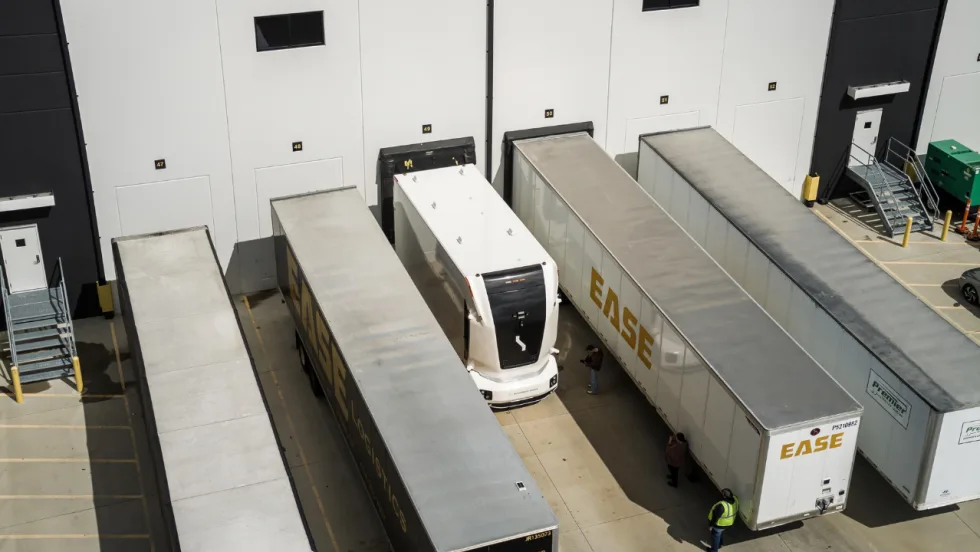
Einride Driverless Electric Trucks Begin Daily Freight Operations in Ohio
Two cabless electric trucks are hauling freight between EASE Logistics facilities in Marysville, Ohio, as part of a multi-state truck automation project.
Read More →
Geotab Links Fleet Card to Vehicle Data
The new card combines fuel discounts with telematics-based purchase controls. Geotab’s analysis also points to potential savings from choosing lower-priced fuel stops.
Read More →