




Peterbilt Unveils Model 579 UltraLoft Integrated Sleeper Truck
Peterbilt has introduced its new Model 579 UltraLoft, an integrated high-loft sleeper truck designed to give driver teams and solo truck drivers extra space and amenities, with a fuel efficiency boost as well.
February 15, 2018

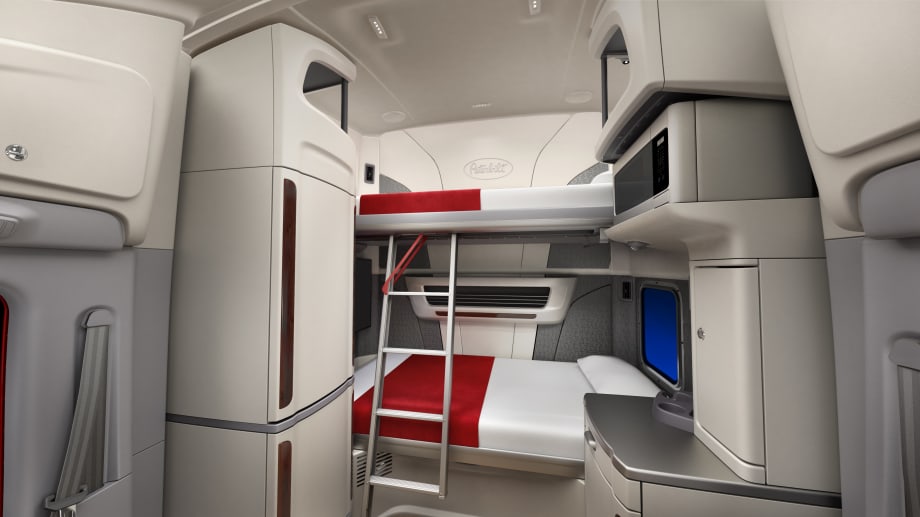
A fold-down ladder offers easy access to the Model 579 UltraLoft's upper sleeper bunk. Photo: Peterbilt
3 min to read
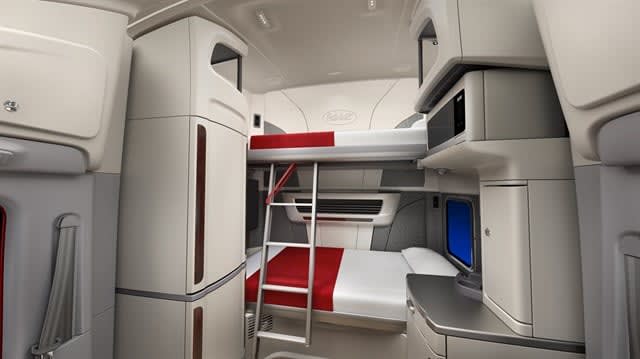
A fold-down ladder offers easy access to the Model 579 UltraLoft's upper sleeper bunk.Photo: Peterbilt
Peterbilt has introduced its new Model 579 UltraLoft, an integrated high-loft sleeper truck designed to give driver teams and solo truck drivers extra space and amenities, with a fuel efficiency boost as well.
Unveiling the new truck to reporters in Scottsdale, Arizona, Peterbilt officials explained that the latest addition to the company’s on-highway lineup was developed with extensive driver input and feedback.
"The 80-inch integrated UltraLoft sleeper provides plenty of space for drivers who spend multiple weeks on the road or for team drivers," said Peterbilt Chief Engineer Scott Newhouse, adding that it’s ideal for driver trainer operations as the industry struggles with a shortage of experienced truck drivers.
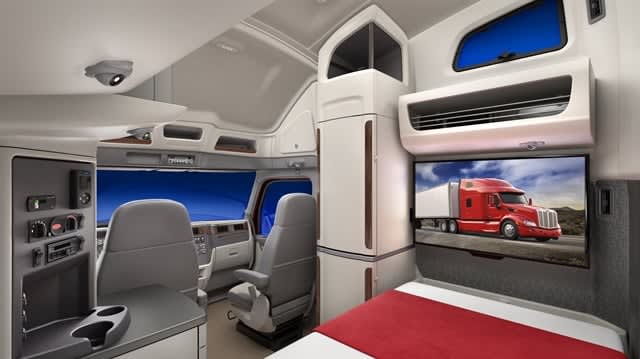
There's space for a large TV at the end of the lower bunk.Photo: Peterbilt
Inside the Sleeper
A new HVAC system increases air flow to both upper and lower bunks. A fold-away ladder makes it easy to climb to the upper bunk, and there’s enough height between the upper and lower bunk that a driver can sit upright in the lower bunk without hitting his or her head.
And those bunks are the largest available, according to Peterbilt. With the sleeper built on the wider 2.1-meter cab platform of the Model 579, the bunks are 85 inches long on the lower one and 82 on the upper, with the lower bunk 42 inches wide and the upper bunk 36 inches wide.
Single-bunk configurations provide 70 cubic feet of storage, with 64 in the double bunk. A split upper bunk design allows for another 14 cubic feet of storage; the forward portion flips up to create a secure, clean storage space for items when it’s not being used as a bed.
A large wardrobe offers 42 inch-long hanging space for long shirts and jackets. Large storage areas above the cabinets on both the driver and passenger side are large enough to store two CPAP machines for treating sleep apnea if needed, with the storage open to the rear so it’s easily accessed from the upper bunk .
And there’s easily accessible power ports, with 12-volt, 110-volt and USB power ports located in the panel right behind the driver’s seat. When you have an upper bunk, it’s duplicated so that driver has the same power access without having to run extension cords and the like. There’s also a slide-out table on the driver’s side for working or eating.
It offers space to accommodate a 1.1-cubic-foot microwave oven and enough room to fit a 32-inch flat screen TV in the lower bunk.
In the front of the cab, noted Newhouse, there’s plenty of headroom as you transfer from the driver’s seat to the sleeper, as well as more storage, with the addition of cubbies above the driver and passenger doors.
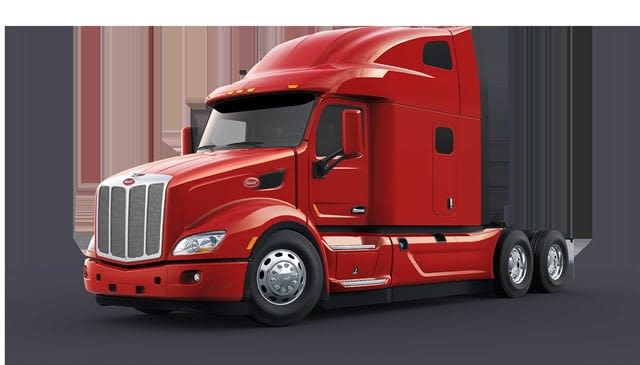
Peterbilt designed the UltraLoft to look like its popular Model 579 on-highway Class 8 truck, but also improved aerodynamics.Photo: Peterbilt
Fuel Economy Improvements
The UltraLoft also provides an estimated 2% aerodynamic improvement while maintaining the styling of the Model 579. The new sun visor acts as an aerodynamic airfoil, explained Wesley Slavin, marketing manager, on-highway products. “As the wind goes over the sun visor, it creates a low pressure zone and almost tries to pull the cab forward.”
At the same time, Slavin said, the sculpted aerodynamic roof maintains the look of the Model 579.
The 579 UltraLoft is available for order now and production is scheduled to begin in July.
Robert Woodall, assistant general manager of sales and marketing, told HDT that the new Model 579 UlraLoft will allow Peterbilt “to grow into fleets we’ve never been able to sell into,” who want that kind of big, open sleeper for their drivers.
More Drivers

Truck Drivers Need More Than Another Alert
Fleets have more visibility into truck health, safety events, and driver activity than ever. The next challenge is turning all that information into useful guidance for the person who has to decide what to do next.
Read More →
FMCSA Removes 110 Truck Driver Training Schools from Certified ELDT List
Federal regulators also are targeting more than 160 additional training providers and launching a nationwide audit of third-party CDL skills testers as part of a broader crackdown on trucking fraud.
Read More →
Hours of Service Pilot Programs: FMCSA Readies for 2027 Rollout
Two pilot programs could eventually reshape hours-of-service rules, giving truck drivers options to pause their 14-hour clock or use longer split sleeper rest periods.
Read More →
Medical Cards, English Proficiency Reshape Roadcheck Violations
Medical-card violations jumped to the top of the driver out-of-service list during CVSA’s 2026 International Roadcheck, while English-language proficiency violations appeared among the leading violations for the first time.
Read More →
Driver Trust Can Make or Break the Success of Fleet Safety Technology
New Teletrac Navman research suggests that onboarding, transparency about driver data, and positive feedback can play a significant role in how commercial drivers respond to safety and coaching technology.
Read More →
EEOC Sues KLLM Over Alleged Sex Discrimination in Driver Training
KLLM is facing a federal sex-discrimination lawsuit over policies the EEOC alleges put female truck driver trainees at a disadvantage.
Read More →
FMCSA Moves to Codify English Language Requirements for Commercial Drivers
By changing regulations on English-language proficiency requirements for commercial drivers, rather than relying on a guidance memo, the FMCSA said future administrations won't be able to walk back the Trump administration's stricter enforcement with just a memo.
Read More →
Drivers Put Western Star Trucks to the Test at Star Nation Experience
Watch to get an inside look at the Western Star trucks, technology, and community behind the Star Nation Experience 2026!
Read More →
Trump Administration Looks to Put More Veterans Behind the Wheel
The Freedom Haulers program pulls together existing and expanded programs at several federal agencies to recruit veterans to drive commercial heavy-duty trucks and cut the red tape for them to get a CDL, training, and employment.
Read More →
Putting Mack’s Command Steer to the Test
A test drive of Mack’s Command Steer active steering system evaluates how it can make truck driving easier and less tiring.
Read More →