




Related – Analysis: Will We Avoid the First-Quarter GDP Blues?
Economic Watch: GDP Slows in Final Quarter, Durable Goods Remain Strong
The nation’s overall economic performance slowed in the final quarter of last year but turned in better performance for all of 2017 than it did for all of 2016, according to new Commerce Department figures.

Evan Lockridge・Former Business Contributing Editor
3 min to read
The nation’s overall economic growth slowed in the final quarter of last year, but turned in better performance for all of 2017 than it did for all of 2016, according to new Commerce Department figures.
The first government estimates for fouth-quarter gross domestic product (GDP) show it increased at an annual rate of 2.6% in October through December, a little lower than market expectations and down from the 3.2% pace in the third quarter and a 3.1% rate in the second quarter.
The final quarter was held back due to a downturn in inventory spending and a big rise in imports, which are a subtraction to total GDP numbers. In contrast, consumer spending expanded at its best pace in three years.
When 2017 is looked at as a whole, the GDP expanded at an annual rate of 2.3%, better than the 1.5% rate for all of 2016. It was the best year for economic growth since 2014 when the full-year GDP grew 2.7%. However, it remained close to the average post-Great Recession growth rate of 2.2% annually.
“The pace of fourth-quarter GDP growth is still well above most estimates of the economy’s long-run potential growth rate at a time when the economy is probably already bumping up against capacity limits, and with tax cuts likely to provide at least a modest further lift going forward,” said Nathan Janzen, senior economist at RBC Economics Research.
He said the economy looks clearly strong enough to absorb further rate interest rate hikes from the Federal Reserve.
"With inflation still tracking below the central bank’s 2% objective, though, the pace of tightening is expected to remain gradual. We don’t expect a rate hike at next week’s Federal Open Market Committee meeting but do expect the Federal Reserve will eventually raise the fed funds range by 100 basis points (1%) over the course of 2018."
Orders, Shipments for Durable Goods Improve
A separate report from the Commerce Department showed the market for manufactured durable goods continued to improve in December, although there was a decline in the gauge that measures business investment.
New orders for durable goods, high-ticket items designed to last three years or more, increased 2.9% from the month before, the best pace since June. It was driven by a surge in the volatile transportation category. When it is removed, December orders improved by 0.6%.
Orders for durable goods have risen the last four out of five months and increased 5.8% for all of 2017, the best performance in six years.
Shipments of manufactured durable goods increased 0.6% in December and are up seven out of the past eight months. For all of 2017, durable goods shipments were up 4.1% from 2016.
The one downside to the report was a decline in orders for nondefense capital goods minus aircraft, an indicator of business investment, which showed a 0.3% drop in December. However, the sector showed a 5.3% improvement for all of last year, not surprising when you consider that manufacturing rebounded in 2017. Also, shipments of these so-called “core capital goods” improved 0.6% in December and were up nearly 5% for all of 2017.
Analysts at Econoday said the weakness in capital goods was not widespread, coming mainly from computers, electrical equipment, and especially communications equipment. They noted the December hike in shipments “are reflected in the solid showing for nonresidential fixed investment in this morning's fourth-quarter GDP report.”
“The dip in core capital goods orders does point to a slow start for first-quarter business investment,” Econoday said. “Nevertheless, this report, which also includes upward revisions to November, points to a factory sector that is being driven by aircraft and vehicles and which is humming along nicely.”
More Fleet Management
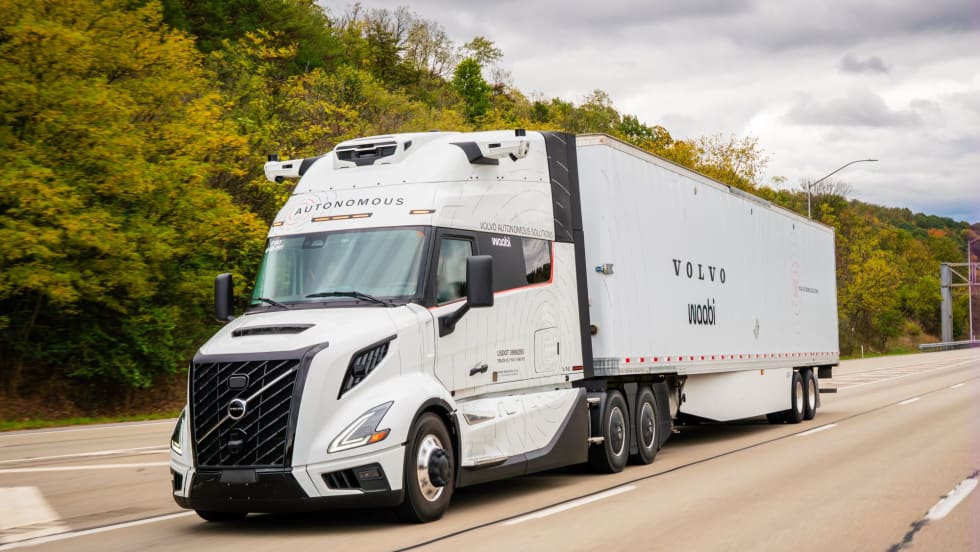
Volvo, Waabi Start Commercial Autonomous Operations in Texas
Volvo VNL Autonomous trucks, powered by the Waabi Driver, are hauling freight directly to third-party facilities for a customer in Texas.
Read More →
Samsara Launches Custom AI Agent Builder
Agent Studio lets fleets create AI tools for hours-of-service monitoring, reporting and driver support, including agents that communicate by phone.
Read More →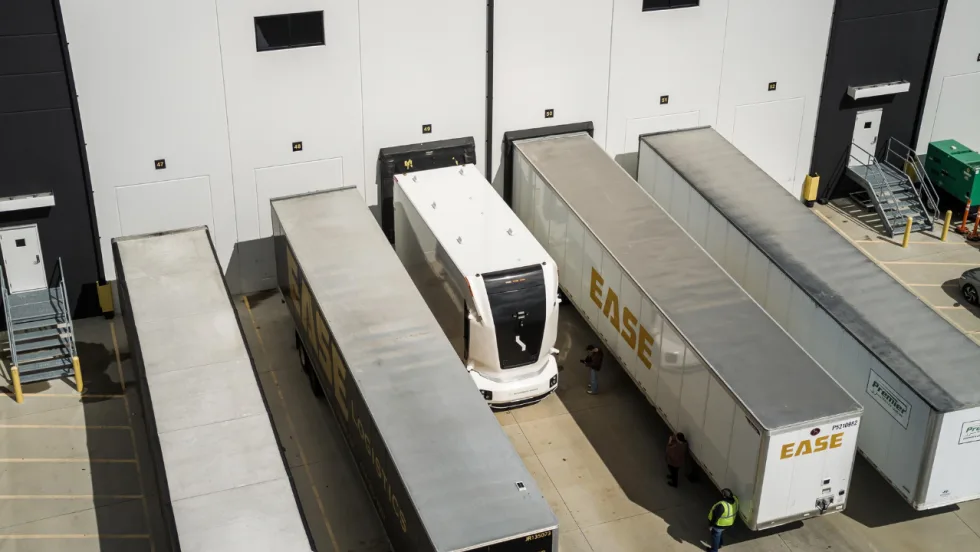
Einride Driverless Electric Trucks Begin Daily Freight Operations in Ohio
Two cabless electric trucks are hauling freight between EASE Logistics facilities in Marysville, Ohio, as part of a multi-state truck automation project.
Read More →
Geotab Links Fleet Card to Vehicle Data
The new card combines fuel discounts with telematics-based purchase controls. Geotab’s analysis also points to potential savings from choosing lower-priced fuel stops.
Read More →
How MFA Helps Protect Trucking Fleets
Multi-factor authentication adds protection when passwords are stolen. Here’s how it works and where fleets should start.
Read More →
How Better Freight Data Helps Trucking Teams Get Ahead of Disruption
Trucking and logistics teams have plenty of data. The problem is getting the right information in front of the right people soon enough to act. Better-connected data can help teams spot trouble earlier and make smarter decisions before small problems become big ones.
Read More →
Trimble: Taking Artificial Intelligence in Trucking Beyond Faster Tasks
At Insight 2026, Trimble executives argued that fleets may need to redesign workflows to get more from AI as it introduced new products and enhancements. AI’s value will depend on how fleets combine automation with their people's knowledge.
Read More →
Sponsored•September 28, 2026
Build a bulletproof fleet: Uniting ELDs and dash cams for total compliance
An ELD can prove compliance, but it cannot always prove what happened on the road. Discover how uniting accurate ELD data with AI-powered dash cam video can help your fleet strengthen compliance, defend against liability, protect drivers and reduce operational costs.
Read More →
Nominations Open for HDT Emerging Leaders
Heavy Duty Trucking is looking for accomplished trucking fleet professionals under 40 who are making an impact and helping lead the industry forward.
Read More →
Why Private Fleets Are Taking More Freight
Private fleets are putting their own trucks on demanding customers and high-cost lanes as companies seek greater control over service, costs, and capacity.
Read More →