




Weigh Station Bypass Saves Time for Car Hauler
One of the biggest challenges for Ohio-based Moore Transport, a fast-growing auto carrier, is getting experienced drivers. But wasted time pulling into weigh stations multiple times a day was wearing on driver satisfaction.

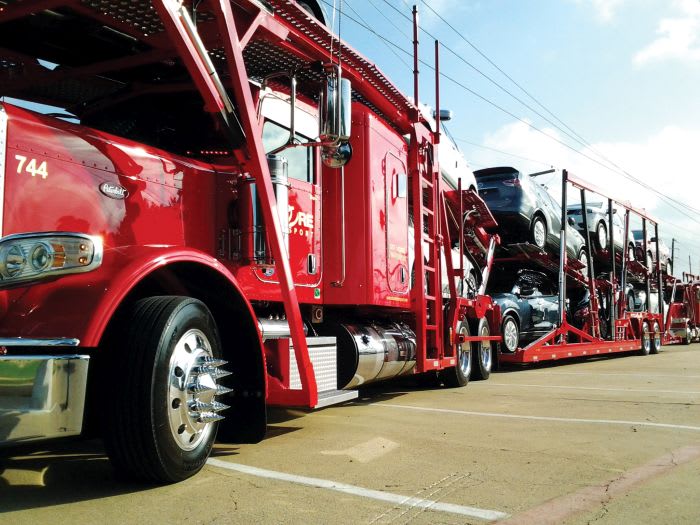
Moore Transport has been successful recruiting drivers for its fast-growing fleet, but long waits at weigh stations were taking a toll on driver satisfaction. Photos: Courtesy Drivewyze
Moore Transport has been successful recruiting drivers for its fast-growing fleet, but long waits at weigh stations were taking a toll on driver satisfaction.Photos: Courtesy Drivewyze
One of the biggest challenges for Ohio-based Moore Transport, a fast-growing auto carrier, is getting experienced drivers. Its emphasis on a safety mindset and running late-model equipment of the type more favored by independent owner-operators means they’re able to attract a lot of drivers by word of mouth. But wasted time pulling into weigh stations multiple times a day was wearing on driver satisfaction.
Treasure Phillippi, safety supervisor, says the company knew it had to address the problem when she learned in 2015 that exit surveys found one out of every five drivers who left did it because the company was not making good on its promises of free weekends.
“Because some of our lanes are local lanes, drivers go through the same scales two and three times a day,” Phillippi explains. “We would go through at peak hours and have to get in line and go through the scales. For the most part, we have pretty good CSA scores, so we weren’t getting pulled in a lot, but it was just the slowing down, the creeping through the scales — drivers were losing 20, 25 minutes each time they went through a scale. They would tell me, ‘I don’t have time to reload because I spent two hours crossing scales.’”
The company researched traditional transponder-based weigh station bypass systems but eventually chose to use Drivewyze PreClear, a bypass system that works on a mobile device or telematics system.
“I took 15 or 20 trucks and had them download the Drivewyze app after some drivers said they had been using it and paying for it out of their own pocket,” she says. “After a month or so, some were able to do a complete second turn in a day,” allowing them to load cars for delivery for the following day before their on-duty hours expired. And drivers weren’t having to work into the evenings on Fridays or Saturday mornings nearly as often.
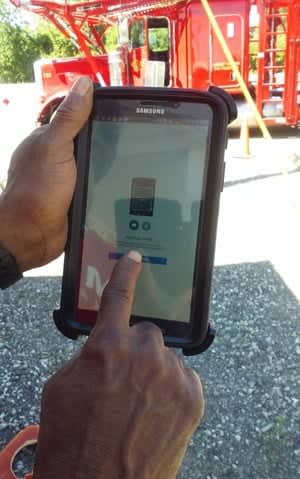
The Drivewyze PreClear weigh station bypass app works on mobile devices the fleet already was using to run delivery applications.
One problem with transponders, Phillippi explains, is that the signal can be blocked by the cars stacked over the cab. “We use [transponders] for tolls in Canada, and there are times when those don’t work. It holds the driver up for hours trying to get it straight. So, I had drivers hesitant to rely on that type of system for bypass.”
In addition, Moore drivers already were using tablets for their electronic delivery systems, so no additional hardware was needed. Customer service and cost were also issues.
After making the decision, they rolled Drivewyze out to the entire fleet. The bypass has been a big success, Phillippi says. In January, the system reports the fleet bypassed 92% of a potential 3,127 weigh station visits, for an estimated savings of $156 per truck.
“If you take the 2,891 times we bypassed the scale and multiply that by just 7 minutes, that’s more than 300 hours” saved in a month, she says. “It’s a big selling point [to drivers]. It’s another tool we give the drivers to be successful on their daily commute.”
Fleet Snapshot
Who: Moore Transport LLC
Where: Toledo, Ohio
Fleet: 260 late-model, traditionally styled Peterbilts
Operations: Car-hauling, primarily east of the Mississippi
Fun Fact: Company was started by an auto dealer who felt he could deliver the kind of auto transportation he knew dealers wanted
Challenge: Wasted time at weigh stations affecting productivity and driver satisfaction
More Fleet Management

Color Match Smarter: Tools That Restore & Perform
For fleet managers and collision repair professionals keeping heavy-duty trucks on the road, getting the color right the first time isn't just about appearance — it's about efficiency, turnaround time, and bottom-line results. Discover how today's digital color tools are transforming the repair process from guesswork to precision.
Read More →
FMCSA Pauses Biennial-Update Enforcement Amid Motus Transition
Carriers whose updates were due on or after June 1 have more time, while FMCSA works to stabilize its new registration system and warns of phishing sites impersonating its new carrier registration system, Motus.
Read More →
2026 Blueprint for Countering Smarter Supply Chain Theft
Cargo theft is no longer just the cost of doing business. It's a multi-billion-dollar criminal enterprise exploiting vulnerabilities across your fleet, drivers, and supply chain.
Read More →


How Telematics Improves Visibility, Control, and Performance in Refrigerated Fleets
Explore how telematics help refrigerated fleets improve visibility, uptime, efficiency, compliance, and cargo protection across connected cold chain operations.
Read More →
What the U.S.-Canada Trade War Means for Trucking
Escalating U.S.-Canada tariffs could disrupt cross-border freight, reduce truck volumes, raise costs, and create new uncertainty for carriers on both sides of the border.
Read More →
What Are Trucking’s Top Concerns for 2026?
The American Transportation Research Institute wants to know what's worrying trucking fleet managers, drivers, and other stakeholders in its annual Industry Issues survey.
Read More →
American Trucking Associations Looks for a New Leader
ATA President and CEO Chris Spear abruptly left his job at the association on August 21, at a pivotal time for the trucking industry.
Read More →
Public Wi-Fi Cybersecurity Risks: How Truck Drivers and Fleets Can Protect Their Data
Public Wi-Fi can expose truck drivers and fleets to credential theft, malware, and other cyber threats. Here’s how to reduce the risk on the road.
Read More →
For Nicky Cupp, Fleet Innovation Starts With Frustration
HDT Truck Fleet Innovator Nicky Cupp turns everyday pain points at Fraley & Schilling into opportunities for better technology and smarter processes.
Read More →
Adam Buttgenbach’s Approach to Electric Trucks: Start With Where They Fit
HDT Truck Fleet Innovator Adam Buttgenbach helped PepsiCo build one of North America’s largest EV fleets by focusing on where electric trucks make operational sense.
Read More →