





Related: Data Analysis Is Lowering Fleet Costs, Survey Shows
Using Technology to Improve Workflow
Workflow can take automation way beyond simply replacing the pen and paper with a smartphone into which a driver keys information.
October 15, 2015

It’s about more than automating manual processes.
4 min to read
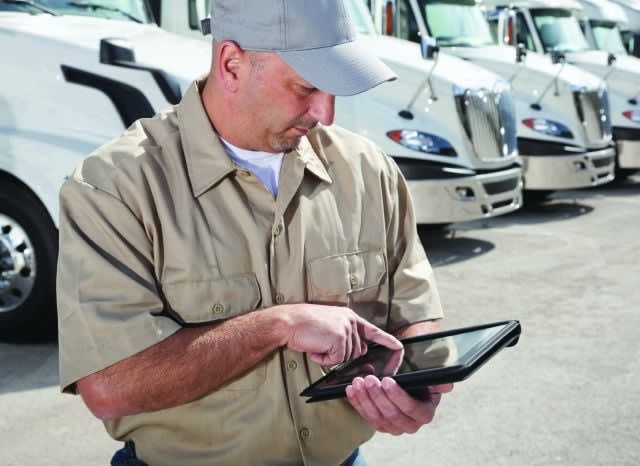
It’s about more than automating manual processes.
Southeastern Freight Lines began using handheld computers in 1991 (and have since gone through five generations of devices). But today’s devices, coupled with telematics, paperless documents and the like, allow the less-than-truckload carrier to “do so much more than what is obvious,” says Woody Lovelace, senior vice president corporate planning and development for the South Carolina-based fleet.
While drivers use their handheld devices for collecting real-time pickup and delivery information, “that data is then used for outbound load planning, mileage for fuel tax reporting, driver logs and vehicle inspections, just to name a few.”
Applying technology to workflow is “all about streamlining and automating processes,” explains Rick Ochsendorf, executive vice president of PeopleNet. “How can we take something that was a manual process with multiple people making manual entries and turn it into something automated?”
As Cyndi Brandt, senior director of product marketing and strategic alliances at Roadnet Technologies, explains it, workflow-related applications “guide an employee through a set grouping of tasks in order to provide a method to prompt tasks and the most efficient manner/sequence to accomplish tasks.”
Mobile workflow applications extend the capability to do pen and paper tasks via a smartphone, tablet or rugged device.
Some of the pen-and-paper tasks that workflow technology automates include paperless manifests and navigation, loaded cargo verification via scanning, off the truck scanning validation, electronic customer agreements and signature capture, customer surveys, electronic DVIR and automated logs.
Using the data
But workflow can take that automation way beyond simply replacing the pen and paper with a smartphone into which a driver keys information.
Many tools reduce data entry by the driver, which was seen as a problem with earlier in-cab automation. Earlier technology “burdened the driver with unnecessary data collection so that the back office could share with him what he was doing,” says Kelly Frey, vice president of product marketing for Telogis. “The thing with current technology is to not involve the driver,” he says. Instead, the technology takes the data collection into the background while the driver does his job.
And that data collection is key.
“We live in a time of very quick change,” SEFL’s Lovelace says. “Bringing technology into the workflow, you have visibility of the process that you did not have. So, when there are changes, that visibility makes you more agile.”
The data collected in the background can come from a variety of places: GPS data (location and geo-fencing alerts), engine and vehicle sensors including cargo sensors, flow meters (on tank trucks for instance) and other sensors. As Ochsendorf explains, that data can then be integrated with back office information such as dispatch, pickup information (including number of pieces, weight, etc.)
“What we do in workflow is take all that information and consolidate it into something we can show the driver,” he explains. “When a driver gets a message from dispatch, much of the data has been pre-populated, eliminating much of the data entry on the driver’s end. It’s all about making the driver’s life a lot easier and more automated.”
David Custred, vice president of core services, McLeod Software, says the company is “seeing a big rise in our customers moving to workflow products.” However, carriers should carefully consider the impact more technology will have on drivers, he cautions. Before deploying workflow tools, make sure drivers understand the tools will make their workday easier. “If you can make a driver’s life easier, his satisfaction level goes up,” he says.
Beyond the truck cab
Drivers and their dispatchers aren’t the only part of a fleet that can benefit from workflow technology.
For instance, in the shop, workflow applications define how a job will start: scheduled PM, service bulletin, recall, fault codes, breakdowns, etc.; what communications are required (scheduling, approval etc.) and rules for communicating updates on the job, says Michael Riemer, vice president products and channel marketing for Decisiv. Workflow, he says, does not have to be a rigid set of rules, but “a framework for improving visibility and decision-making” while measuring outcomes against clear targets.
No matter who’s using it, the key to workflow application success is the ability to integrate with a carrier’s transportation management system.
“Without the ability to integrate the TMS data into the workflow, there would be no real gain,” says Glynn Spangenberg, executive vice president and general manager, MacroPoint. Once vendors started creating an integration path between mobile communication devices and the back office, it allowed the data to be used in the decision-making process.
Perhaps the most important benefit for carriers is that with automated workflow systems communicating across a company’s various departments, “everything is far more connected, and the information that a truck generates penetrates far more deeply into an organization,” says William Salter, president/CEO Paragon Software Systems.
Down the road, all the data collected by workflow tools can find its way back to the driver, says Roadnet’s Brandt. That could be in the form of a video for training purposes or to provide real-time feedback to the driver on his or her performance for that day or week.
Another possible advance in workflow applications would be predicting what the dispatcher, the mechanic or the load planner will have to do next based on a combination of historical data and business forecasting, says Monica Truelsh, director of marketing, TMW Systems. That prediction would help ensure that the right tools and information presets are ready and waiting for them.
Subscribe to Our Newsletter
More Fleet Management

Sponsored•September 16, 2026
Color Match Smarter: Tools That Restore & Perform
For fleet managers and collision repair professionals keeping heavy-duty trucks on the road, getting the color right the first time isn't just about appearance — it's about efficiency, turnaround time, and bottom-line results. Discover how today's digital color tools are transforming the repair process from guesswork to precision.
Read More →
FMCSA Pauses Biennial-Update Enforcement Amid Motus Transition
Carriers whose updates were due on or after June 1 have more time, while FMCSA works to stabilize its new registration system and warns of phishing sites impersonating its new carrier registration system, Motus.
Read More →
Sponsored•September 14, 2026
2026 Blueprint for Countering Smarter Supply Chain Theft
Cargo theft is no longer just the cost of doing business. It's a multi-billion-dollar criminal enterprise exploiting vulnerabilities across your fleet, drivers, and supply chain.
Read More →


Sponsored•September 1, 2026
How Telematics Improves Visibility, Control, and Performance in Refrigerated Fleets
Explore how telematics help refrigerated fleets improve visibility, uptime, efficiency, compliance, and cargo protection across connected cold chain operations.
Read More →
What the U.S.-Canada Trade War Means for Trucking
Escalating U.S.-Canada tariffs could disrupt cross-border freight, reduce truck volumes, raise costs, and create new uncertainty for carriers on both sides of the border.
Read More →
What Are Trucking’s Top Concerns for 2026?
The American Transportation Research Institute wants to know what's worrying trucking fleet managers, drivers, and other stakeholders in its annual Industry Issues survey.
Read More →
American Trucking Associations Looks for a New Leader
ATA President and CEO Chris Spear abruptly left his job at the association on August 21, at a pivotal time for the trucking industry.
Read More →
Public Wi-Fi Cybersecurity Risks: How Truck Drivers and Fleets Can Protect Their Data
Public Wi-Fi can expose truck drivers and fleets to credential theft, malware, and other cyber threats. Here’s how to reduce the risk on the road.
Read More →
For Nicky Cupp, Fleet Innovation Starts With Frustration
HDT Truck Fleet Innovator Nicky Cupp turns everyday pain points at Fraley & Schilling into opportunities for better technology and smarter processes.
Read More →
Adam Buttgenbach’s Approach to Electric Trucks: Start With Where They Fit
HDT Truck Fleet Innovator Adam Buttgenbach helped PepsiCo build one of North America’s largest EV fleets by focusing on where electric trucks make operational sense.
Read More →