





Related: Fuel Savings vs. Shorter Tire Life
Tracking Lifetime Tire Costs
We offer two opposing views on tracking tire costs. One holds that life-cycle costing is a waste of money and effort, and that close enough is good enough most of the time. The other suggests that nearly all costs associated with tires should be accounted for and built into the cost structure.
September 15, 2015
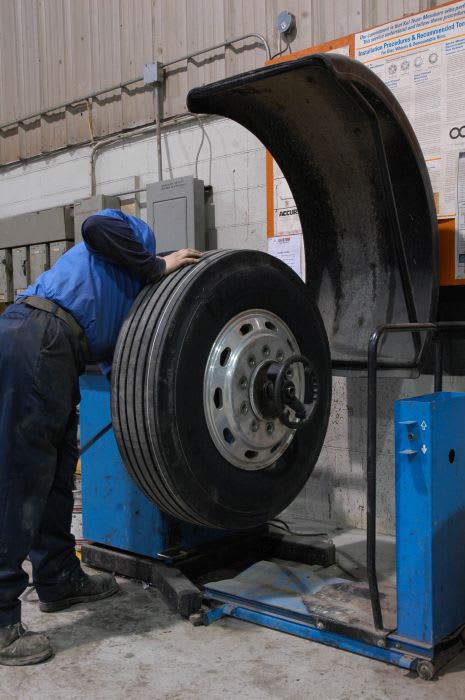
Is the lowest tire cost per mile the ultimate fleet objective? Not necessarily. Strive to keep the rubber costs down, but don’t scrimp on the maintenance. Photo: Jim Park
4 min to read
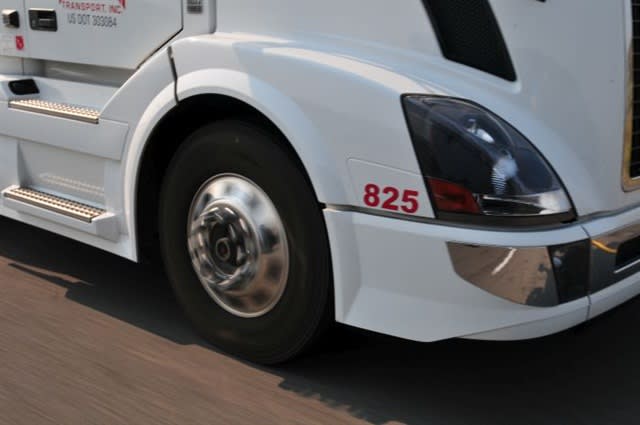
Different makes and models of tires respond differently to different conditions. What works for another fleet may not work for yours.
There are as many factors affecting overall tire cost as there are ways of measuring and tracking it. How you track tire costs might have more of an impact on the number than your actual maintenance practices. And some may ask, why do you need to know your lifetime tire cost?
This month, we offer two opposing views on tracking tire costs. One holds that life-cycle costing is a waste of money and effort, and that close enough is good enough most of the time. The other suggests that nearly all costs associated with tires should be accounted for and built into the cost structure.
Interestingly, holders of either view on tire costing come to a similar conclusion: “If you’re doing all the right things, the cost is going to be okay.”
“If you’re looking at the cycle of the individual tire, I don’t know that it matters,” says Darry Stuart, a former fleet maintenance director now offering maintenance consulting services under the DWS Fleet Management Services banner. “What really matters is the vehicle’s overall tire cost per mile.”
That, Stuart insists, can be averaged out over the life of the tire, and it will vary with the application and number of times it is repositioned and retreaded. For example, he suggests a drive tire in linehaul service should last about 250,000 miles on average. At that point, you take the tires off and retread them and put them back at a drive position where they’ll run another 200,000 miles. By the time the first retread is worn out, the original casing might be five or six years old, so you cap it again and move it to a trailer position where it runs about 50,000 miles a year (depending on the ratio of trailers per tractor) for another three years.
At that point the casing is eight or nine years old and probably too old, damaged or tired to be capped again, so it’s sold or scrapped. The overall cost for those tires could look something like this:
Acquisition cost - $400
First retread - $200
Second retread - $150
Total miles on the original casing - 600,000
Overall cost is dollars divided by miles - $0.00125
That’s a pretty good number, but it’s only the cost of the rubber. If you add in the cost of maintaining that tire over its life the number will be higher, and that’s where your maintenance practices come into play.
“If you fail to maintain the tire, your costs will be higher,” Stuart notes.
The sad part is some of the tires (up to 60% of them in the real world) will be damaged in ways that are beyond your control, and that can wipe out all the time and effort you have put into maintaining that tire.
“How much energy and data are you willing to put into tracking a tire that already has a predetermined life?” Stuart asks.
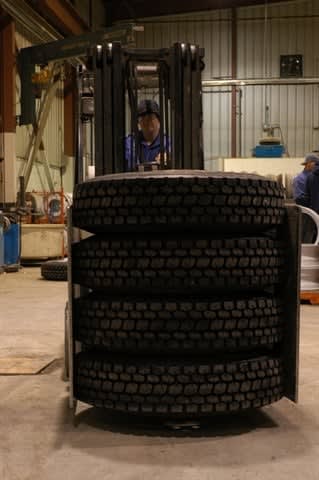
Consider the cost of the time and effort that goes into tracking and managing tires. Ask yourself how many tires could be purchased with that money. Photo: Jim Park
Some fleets only track the first life of the tire, from new to the first reposition or recap. That will get you a vastly different number.
Acquisition cost - $400
Total miles to removal - 250,000
Overall cost is dollars divided by miles - $0.002
Is the tire really nearly double the cost per mile? No, it’s just how you do the accounting.
At the other end of the spectrum we have Lloyd Hair, maintenance director at heavy-hauler Keen Transport. He can tell you to four decimal places what his tire costs are, and he has developed 120 codes to describe and account for why a tire might get pulled early from service.
Maybe key to the difference in Hair’s approach to tire management is the fact that Keen is a heavy-haul operation; the trucks can often run only during daylight hours, so stopping to fix a flat is out of the question. To Hair, tire maintenance is mission-critical. To that end, he tracks tires to within a 32nd of an inch of their lives.
“I want to identify where my problems are, what type of tire injuries I’m getting and where they occur, both the physical location as well as the spot on the tire,” says Hair. “Once you have identified the problems, you can start to manage them.”
Is the lowest tire cost per mile the ultimate fleet objective? Not necessarily. Strive to keep the rubber costs down, but don’t scrimp on the maintenance. Photo: Jim Park
Not many fleets can successfully manage tires at this level, so is it folly to even try?
Hair says the cost of his tires when you look at rubber only is about the same as everyone else’s, but the cost of his tire program is probably higher. He obviously sees value there, and on several fronts.
“I dig pretty deep to determine what the best tire is for my application,” he says. “And the extra effort also guides me in choosing the right tires.”
On the value of good tire maintenance, Hair and Stuart agree.
“You have to manage tires every day, every mile, every rotation,” says Stuart. “If you do everything right and you buy at the right price, you’re going to get the lowest possible tire cost.”
Subscribe to Our Newsletter
More Equipment

Help HDT Find Trucking’s Top Products
Have you come across a new product that could make a difference for trucking fleets? Nominate it for HDT’s 2027 Top 20 Products Awards by November 9.
Read More →
Volvo Unveils New VNX Heavy-Haul and Vocational Truck
Volvo Trucks has launched the VNX, a new vocational truck also available as a tractor in day cab and two sleeper configurations, with one heavy-haul model. The Volvo VNX is powered by Volvo's D13 platform, which delivers up to 540 horsepower and 1,950 pound-feet of torque and is EPA 2027-compliant.
Read More →
How GP Transco Cuts Trucking Fuel Costs, a Tenth of a Gallon at a Time
What’s another tenth of a mile per gallon worth? GP Transco shares how equipment upgrades and driver coaching turn small gains into meaningful fuel savings.
Read More →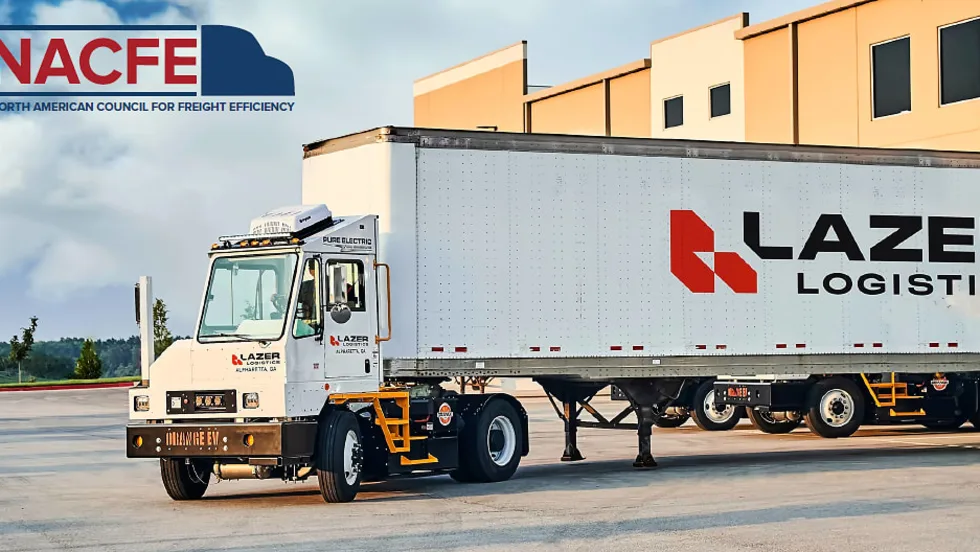
Electric Yard Tractors Move Beyond Pilots
Operating-cost savings have overtaken sustainability goals as the leading reason surveyed fleets are adopting battery-electric terminal tractors, according to new NACFE research.
Read More →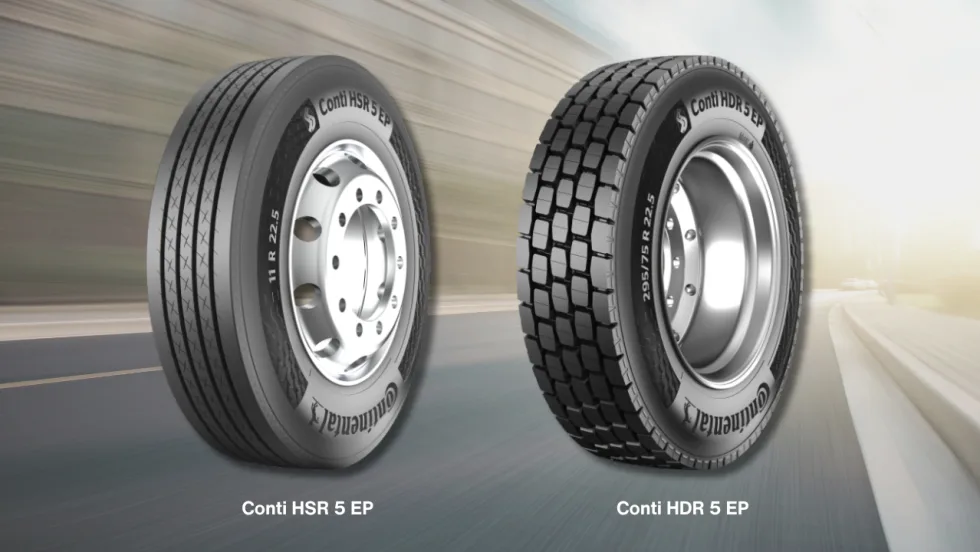
Continental Introduces New Regional Truck Tires
Continental says its new Generation 5 steer and drive tires for regional operations offer longer tread life, with estimated mileage gains of 22% and 19%, respectively.
Read More →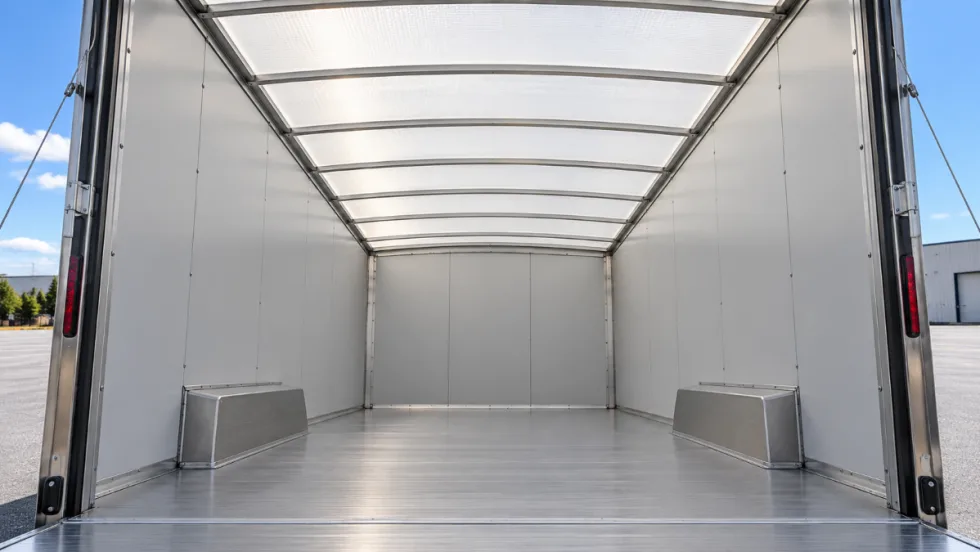
Tekmodo Introduces CargoBright Brand for Translucent Trailer Roofs
CargoBright is designed to diffuse daylight across the cargo area while performing as a working vehicle roof.
Read More →
Fleet Economics Shape Electric Truck Outlook
ACT Research expects costs, charging infrastructure, and technology improvements to drive zero-emission commercial vehicle adoption as federal regulations and incentives retreat.
Read More →
Kodiak Targets Dallas–Houston for Driverless Trucks
The company says its autonomous trucks are completing the I-45 run without a safety observer taking control. It plans to remove the observer by the end of 2026.
Read More →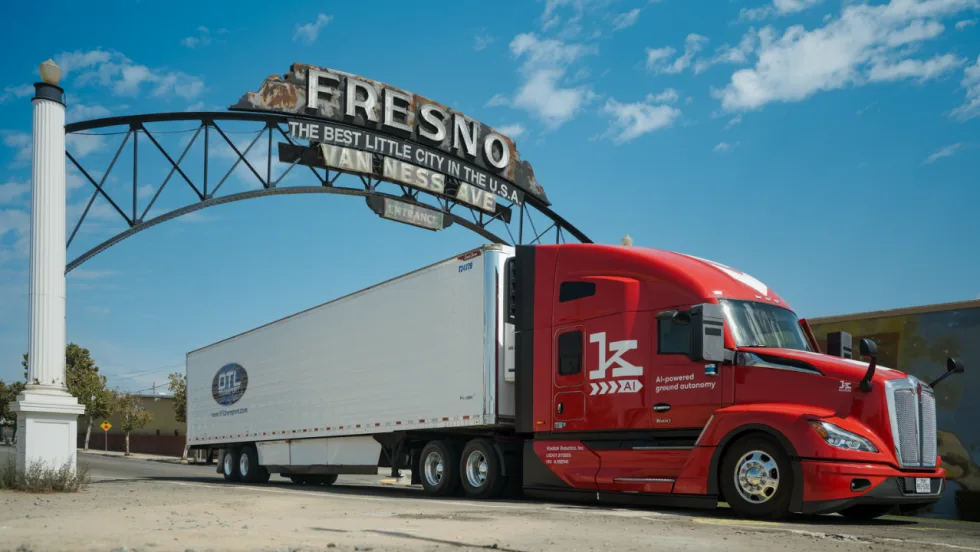
Kodiak Hauls Produce in California Autonomous Truck Pilot
Kodiak AI and DTL Transport have begun hauling produce between Fresno and Los Angeles under California’s new rules for testing heavy-duty autonomous trucks. A safety driver remains behind the wheel.
Read More →
Used-Truck Remarketing Math Is Changing
Used-truck value is no longer just a concern at trade-in. Decisions made throughout a truck’s first life can influence what it’s worth years later.
Read More →