We don't hear much these days about nitrogen tire inflation systems for heavy trucks. They are still out there, and some users are reporting good results from their installations. Still, the ROI is hard to quantify. Using nitrogen won't hurt your tires, but there might be better ways to spend your tire maintenance dollars.
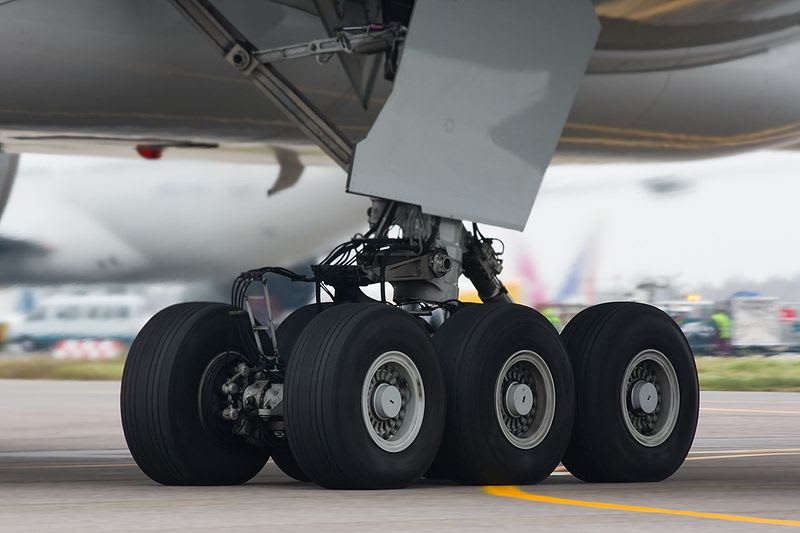
Nitrogen inflation is used in many specialty applications, but its ROI in heavy trucks is less clear. Photo by Dmirty A. Mottl, via Creative Commons.
6 min to read
Nitrogen inflation is used in many specialty applications, but its ROI in heavy trucks is less clear. Photo by Dmirty A. Mottl, via Creative Commons.
Nitrogen is not some magic gas with mystical properties, nor can it change the chemical properties of tire rubber. Yet relatively pure nitrogen has proven to be a superior medium for inflating tires compared to air. It's commonly used in special applications such as earth-mover tires, aircraft tires, high-speed racing tires and others.
The question is, can it be justified for truck fleets?
Ad Loading...
Before we answer that question, a little clarification. You're not putting anything new into your tires; the air we breathe and use to inflate truck tires is about 78% nitrogen -- along with about 21% oxygen and 1% trace elements.
The so-called nitrogen generators used in tire inflation systems don't "make" nitrogen. They use a membrane process to remove most of the oxygen from the air, leaving you with an inflation medium that is about 95%-98% pure nitrogen.
The key claimed benefit to nitrogen tire inflation is that it slows the natural pressure loss in tires.
According to Bill Hyatt of nitrogen inflation system provider Inflation Solutions Group, oxygen molecules are able to permeate tire rubber, producing the expected 1% to 5% loss of inflation pressure over a month or so.
"Nitrogen permeates more slowly because nitrogen molecules are physically larger than oxygen molecules," he says. "Barring leaks, poorly seated beads, bad valves, etc., a tire inflated with nearly pure nitrogen will retain a constant pressure longer than one filled with air. That minimizes the headaches caused by under-inflation or mis-matched inflation across sets of duals."
Ad Loading...
Additionally, nearly pure nitrogen is devoid of moisture, so you won't have water sloshing around in the tire, possibly corroding steel wheels, or freezing tire valves in winter. It is also believed that as it passes through the walls of the tire, oxygen causes minor degradation of the liner and casing rubber through oxidation. Benefits on this front would be difficult to quantify without a careful casing analysis, because all air-inflated tires would, presumably, exhibit such distress. If a nitrogen-filled tire showed no signs of oxidation damage, it would be another plus.
We wrote about nitrogen inflation back in 2011, and contacted three fleets that were then using nitrogen as a primary fill. Today, two of those fleets are still using it, and they still swear by the benefits.
Ronnie Adams, president of Adams Motor Express in Carnsville, Georgia, says he sees far fewer inflation-related blowouts than what might be considered an industry-wide average.
"We saw those numbers drop the first year after we installed the system," he says. The number has stayed very, very low since then."
Adams says it helps particularly on trailers he may not see for months at a time, and his rate of tire failures on tractors is almost zero.
Ad Loading...
"We see the power units far more often, so those tires are checked regularly and topped up with nitrogen when necessary -- and that's not very often."
Adams says the biggest challenge is getting drivers to notify the maintenance staff when they have used regular air to top off a tire.
In Adam's opinion, he's gotten his money back from the system. He installed in the days before automatic inflation systems had cracked the market, but says once you have the system, you have it for life.
Flanary and Sons Trucking (FAST) of Church Hill, Tennessee, has used nitrogen inflation for more than five years. Since we spoke with maintenance director Dan Roe in 2011, he has added automatic inflation systems to some of his trailers, but still uses nitrogen on the tractor tires.
"The first machine we bought came with a one-year money back guarantee, and bought a second machine before the year was out," he said. "We use wide-single tires on the tractors and we can't afford to lose one of them. It's the cost of tire and the downtime. Keeping the tires properly inflated seems to keep them running cooler and at the right pressure. We haven't had any problems with the tires running them on nitrogen."
Ad Loading...
The third fleet, Gypsum Express Ltd. of Baldwinsville, N.Y., was equally pleased, but said they got same results using an automatic tire inflation system.
Magic in the Air?
Peggy Fisher, president of Tire Stamp and long-time S.2 Tire and Wheel Study Group participant at the ATA's Technology & Maintenance Council, says some of the benefits of using nitrogen are real, but she questions the ROI of such systems.
"Some fleets report that nitrogen inflated tires run cooler and they get better fuel economy but these benefits can be obtained by maintaining air pressures better which is what the tire companies say as well," she notes. "On the other hand, I have never seen any data from fleet tests of nitrogen as an inflation medium."
Fisher says some of the benefits of nitrogen probably will not be recognized for several years, the primary one being that nitrogen does not carry moisture into a tire and initiate rust on steel wheels.
The other challenge is on-road top-offs.
Ad Loading...
Automatic tire inflation systems keep trailer tires inflated, too, with a proven ROI.
"The big difficulty for fleets that use nitrogen is finding nitrogen locations for 'topping off' tires that need additional pressure," Fisher points out. "Unless the fleet's tire maintenance is totally self contained, this is a major problem since any benefits of using nitrogen are lost when the purity of the gas drops below 95%."
The long and short of it comes down to the ROI.
"I believe there are benefits to using nitrogen to inflate tires, but I do not know whether they are cost effective," Fisher says. "A fleet that is considering nitrogen should consider all the other alternatives as well to improve its tire maintenance."
The Tire Maker's Perspective
None of the major tire manufacturers endorse nor prohibit the use of nitrogen as an inflation medium for heavy truck tires. Some who sell product into the above-mentioned specialty markets do second the use of nitrogen in those applications. Again, it comes down to ROI.
Continental's website has this to say about nitrogen tire inflation:
Ad Loading...
"Because of nitrogen’s inert properties, it is often used in highly specialized tire service applications and/or demanding tire service applications such as aircraft, mining, and commercial/heavy use. ... For normal everyday consumer tire service applications, nitrogen tire inflation is not required. However, nitrogen tire inflation does not harm tires and may marginally contribute to reductions in tire inflation loss by permeation.
Whether inflated with air or nitrogen, regular tire inflation pressure maintenance remains critical and necessary. Use of nitrogen alone is not a replacement for regular tire inflation pressure maintenance."
Goodyear, too, is more or less neutral on the subject.
"Over the years, nitrogen inflation has been proposed for various types of tires, including large earthmover tires down through small passenger tires. At the present time, Goodyear endorses nitrogen inflation for certain sizes of earthmover tires used in particular applications, and has issued detailed instructions for these tires. The issue of nitrogen inflation for over-the-road truck tires is not quite so clear. Various performance improvements have been claimed ... but little actual controlled test data exists.
Why Pay for Air?
On the surface, it might seem like that. Compressed air is basically free and available anywhere, but the quality of that air and its moisture content is certainly suspect at some locations. Shop air, generally, is clean and dry, but you have to invest a little money in a good shop air system.
Ad Loading...
Tire pressure monitoring systems will alert you to a low tire, but won't top it up. Automatic inflation systems will top up a tire for you, but not all of them will tell you which tire is leaking.
Fuel economy benefits arising from properly inflated tires are tangible, but nitrogen alone isn't the instrument of improvement. Nitrogen will slow a tire's rate of pressure loss relative to air, and thus maintain a set pressure for longer, but those tires can't be ignored either. They can always suffer a puncture, and that will let the air out of your tire maintenance plans as quickly as anything else.
America’s Service Line adopted Link’s SmartValve and ROI Cabmate systems to address whole-body vibration, repetitive strain, and driver turnover. The trucking fleet is already seeing measurable results.
Fleetio’s analysis of 1.2 million commercial vehicles finds older assets driving outsized service spend, while most fleets remain cautious on AI adoption.
Bendix Commercial Vehicle Systems will roll out its 2026 technical training calendar with expanded access to its Advanced Technology Training program, alongside its long-running Air Brake Training course.
After reports of corrosion and thermal events on trucks already repaired under a prior campaign, DTNA is recalling nearly 27,000 Western Star 47X and 49X models to address a battery junction stud defect.
This white paper examines how advanced commercial vehicle diagnostics can significantly reduce fleet downtime as heavy duty vehicles become more complex. It shows how Autel’s CV diagnostic tools enable in-house troubleshooting, preventive maintenance, and faster repairs, helping fleets cut emissions-related downtime, reduce dealer dependence, and improve overall vehicle uptime and operating costs.
Brakes are the final frontier for telematics on Class 8 trucks. But Hendrickson is close to a breakthrough that could change the game in getting real-time brake system information back to fleets.
Phillips Industries’ new Cincinnati-area distribution center is now shipping aftermarket trucking parts nationwide, aiming to speed up delivery times for customers.
Cummins used Heavy Duty Aftermarket Week (HDAW) to introduce a new brake pad platform aimed squarely at one of the aftermarket’s biggest pain points: Complexity.