




Five Easy Ways to Reduce Fuel Consumption
There are still legions of drivers who are not practicing even the most basic fuel-saving techniques. Just hang around an intersection with a lot of truck traffic and liste

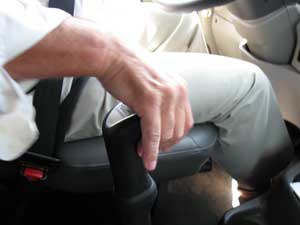
The basics of driving for better fuel economy include progressive shifting and taking advantage of downhill rides.
There are still legions of drivers who are not practicing even the most basic fuel-saving techniques. Just hang around an intersection with a lot of truck traffic and listen
to how drivers go through the gears coming away from a traffic light, or visit a truckstop on a mild spring or fall evening and listen for the idling engines.
Here are five easy ways to reduce fuel consumption without investing a penny in additional technology.
The idea is to use the lowest engine revs possible in each gear during an upshift sequence. Unfortunately, many drivers remain convinced that the fastest way to accelerate is to take every shift well into the high-teen range - 1,800 rpm and beyond. You can actually accelerate faster by getting into a higher gear sooner, and that's best accomplished by using minimum engine revs for each gear change. Besides, what's the rush? It's a big truck, not a drag racer.
Shifts from first to fourth can be accomplished between 800 and 1,000 rpm. Revs will need to go slightly higher in high range, between 1,200 and 1,400 rpm. In the top two gears, they could maybe go as high as 1,600 rpm, depending on the engine and how the truck is geared.
The bottom line is, keep the revs low for better fuel economy. It's quieter and smoother, too.
There are a surprising number of fleets that have yet to embrace some form of auxiliary climate control, and drivers continue to idle their trucks for extended periods. The need is understandable in extreme temperatures, but even in moderate weather, idling is surprisingly common. Fleets that idle a lot can see idle ime numbers in the 40% to 50% range. That means for half the time the engine is on, it's idling and producing no value at all for its owner.
By contrast, Josh Kaburick, CEO of Earl L. Henderson Trucking, reports his trucks, equipped with ComfortPro and TriPak APUs, are averaging just 7% idle time. Every hour of idle time in a long-haul operation can decrease fuel efficiency by 1%.
If cold is a problem, try warmer blankets or a plug-in electric blanket or mattress pad. In warmer weather, try fans, window screens and lighter covers. Anyone who can afford to idle a big diesel when it's 40 degrees outside is making way too much money.
With or without all the latest aerodynamic gizmology, the faster a truck goes, the more fuel it consumes. According to Cummins, at speeds above 55 mph, each 1 mph increase in vehicle speed decreases fuel economy by 0.1 mpg. Providing you have the latitude in your rear ends, reducing road speed can reduce fuel consumption substantially.
Traveling more slowly offers the added advantage of allowing other traffic to go screaming past your truck. That means you'll spend more time at optimum cruise speed and less time on the brake pedal adjusting to traffic flow. There's truth in the old adage that slow and steady wins the race. Be the tortoise, not the hare.
A downhill ride is a free ride. Forget for a moment that it took a little extra fuel to get up the hill. You want to use the momentum of the downhill ride to help you up the next hill. Applying brakes will rob the truck of some of that momentum, so it becomes a delicate balance for the driver to let the truck roll out on the hill without exceeding speed limits or running too fast for conditions.
The key is in cresting the hill at something less than full speed and using gravity on the downhill side to gain that speed back.
Cruise control has one purpose in life: to maintain the set speed. It will maintain speed over hill and dale, provided it's within the power of the engine, the gradeability of the powertrain, etc. Sometimes a downshift is required, at which point cruise is sometimes disengaged and sometimes not. Modern cruise systems have something called "droop" built into them that allows for a reduction in road speed without the system making a full-power stretch to gain that speed back.
A driver can also provide some droop by disengaging the cruise control near the crest of the hill and feathering the throttle pedal as the truck goes over the top. It's OK to give up a few mpg at the top because you'll regain it going down.
From the June 2012 issue of HDT
More Fleet Management

Why Private Fleets Are Taking More Freight
Private fleets are putting their own trucks on demanding customers and high-cost lanes as companies seek greater control over service, costs, and capacity.
Read More →
Color Match Smarter: Tools That Restore & Perform
For fleet managers and collision repair professionals keeping heavy-duty trucks on the road, getting the color right the first time isn't just about appearance — it's about efficiency, turnaround time, and bottom-line results. Discover how today's digital color tools are transforming the repair process from guesswork to precision.
Read More →
FMCSA Pauses Biennial-Update Enforcement Amid Motus Transition
Carriers whose updates were due on or after June 1 have more time, while FMCSA works to stabilize its new registration system and warns of phishing sites impersonating its new carrier registration system, Motus.
Read More →


2026 Blueprint for Countering Smarter Supply Chain Theft
Cargo theft is no longer just the cost of doing business. It's a multi-billion-dollar criminal enterprise exploiting vulnerabilities across your fleet, drivers, and supply chain.
Read More →
How Telematics Improves Visibility, Control, and Performance in Refrigerated Fleets
Explore how telematics help refrigerated fleets improve visibility, uptime, efficiency, compliance, and cargo protection across connected cold chain operations.
Read More →
What the U.S.-Canada Trade War Means for Trucking
Escalating U.S.-Canada tariffs could disrupt cross-border freight, reduce truck volumes, raise costs, and create new uncertainty for carriers on both sides of the border.
Read More →
What Are Trucking’s Top Concerns for 2026?
The American Transportation Research Institute wants to know what's worrying trucking fleet managers, drivers, and other stakeholders in its annual Industry Issues survey.
Read More →
American Trucking Associations Looks for a New Leader
ATA President and CEO Chris Spear abruptly left his job at the association on August 21, at a pivotal time for the trucking industry.
Read More →
Public Wi-Fi Cybersecurity Risks: How Truck Drivers and Fleets Can Protect Their Data
Public Wi-Fi can expose truck drivers and fleets to credential theft, malware, and other cyber threats. Here’s how to reduce the risk on the road.
Read More →
For Nicky Cupp, Fleet Innovation Starts With Frustration
HDT Truck Fleet Innovator Nicky Cupp turns everyday pain points at Fraley & Schilling into opportunities for better technology and smarter processes.
Read More →