





Chances are, within the next five years you'll be in the market for a regional-spec tractor or maybe a whole fleet of them. The North American supply chain is changing.
Regional Trucks Have Room to Optimize and Specialize
Chances are, within the next five years you'll be in the market for a regional-spec tractor or maybe a whole fleet of them. The North American supply chain is changing
March 20, 2012
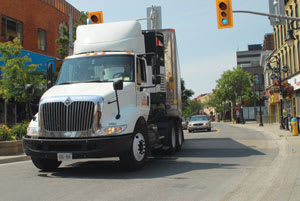
Aerodynamics matter on short hauls. A penny saved is a penny earned.
6 min to read
More shippers are using intermodal service rather than long-haul trucking to move goods across the country, while many more shippers are bringing their distribution points closer to their customers and suppliers.
Many of the nation's largest truckload fleets have reported double-digit shrinkage of average-length-of-haul numbers, Werner Enterprises, Schneider National and Swift among them. In 2008, only 5% of Schneider's freight was regional. Today, it's closer to 25%. The Green Bay, Wis.-based mega carrier has said its goal is to make regional freight account for half of its truckload business.
As the supply chain morphs from long-haul to regional and local, more fleets will be looking for a piece of that action. That will necessitate a shift in their equipment spec to day cabs, in many cases, or trucks equipped for two or three days on the road rather than two or three weeks.
"The traditional long-haul trip is getting shorter, and intermodal is becoming a much larger part of many shippers' distribution strategy," says Rhonda Zielinski, director of Navistar's on-highway vehicle strategy. "Carriers are handing off a lot of their cross-country work to intermodal providers while they take care of the local and regional movements at either end."
Zielinski says the magic number where rail becomes more cost-effective than road is about 400 miles, which figures nicely into a good day's work for a driver under current hours of service.
The typical regional movement is now 200 to 400 miles, she says. That has changed the truck spec in several ways: shorter bumper-to-back-of-cab and shorter wheelbase measurements for better maneuverability and visibility; day-cabs or short sleepers rather than tall "condo" sleepers; one fuel tank rather than two, to name a few.
What hasn't changed, she says, is the drivers' expectation of a comfortable cab. "We're installing high-end interiors in day-cab tractors," she says. "That's something you would not have seen five years ago. We're trying to improve the driver environment for the regional haulers, because drivers coming off long-haul are not going to settle for the mid-level amenities."
Navistar announced plans for an Eagle-level interior in its TranStar regional model. That's a far cry from the days of vinyl seats, plastic headliners and rubber floor mats.
Driver comfort aside, sleepers are still a necessity in some applications. Regional work isn't all day trips, or sometimes the trips are just long enough that the driver could run up against HOS, so a smaller, more utilitarian sleeper is a good option. Rather than a 60-inch bunk, in many cases a 48-inch or even a 36-inch bunk would do.
"Typically, regional haul specs will be much more minimalist than the specs of long haulers," says Erik Johnson, Kenworth's on-highway marketing manager. "The regional haul spec will be a single bunk sleeper, and instead of making room in the bunk for a refrigerator, for example, the regional hauler might just spec a power outlet for a cooler."
Targeted powertrain
Spec'ing a regional truck offers the advantage of being able to dial in the powertrain spec very precisely for the terrain and operating conditions. Long-haulers need a truck that will perform well anywhere in the country - mountains, plains, cities, rolling hills, etc. The regional hauler, says Steve Slesinski, director of global product planning for Dana Holding Corp., has the luxury of spec'ing for a 400- to 500-mile radius of home.
"A regionally focused truck can be a real competitive advantage for the fleet owner," he says. "They can spec the truck for the intended weights and speeds, as well as for gradability, startability and overall power demands."
A flatlander might not need a lot of hill-climbing power, while a fleet operating in the Northwest might go for a larger displacement engine for the retarding capability or a shorter gear set for the mountains and more torque, he says. A truck operating in the South won't need a differential lock, which would save cost and weight, and might even get away with a 6x2 single-screw configuration rather than a tandem drive axle.
With transmissions, a straight 8- or 10-speed could probably do the trick, but there is overdrive or direct drive to consider, and with the automated manuals, you have even more choices.
According to Shane Groner, product planning manager for Eaton, the company's UltraShift Plus automated transmissions offer fleets the freedom to spec for their unique applications and operating environments.
Getting specific
From dumps to fuel tankers or retail delivery applications, regional trucks are anything but one-size-fits-all.
"There's a lot of opportunity for optimization when you are operating in a small geographic area or specific application," Slesinski says. "From the drivetrain to the tires and even the size of the fuel tanks, you can get pretty precise with the spec when you know where the truck will be every day and what it will be doing."
In the bulk-hauling sphere, payload is king, so lightweight and durable components rule the day. Jerry Warmkessel, Mack's marketing manager for highway products, says smaller engines offer more payload capacity, and lightweight components contribute a few pounds here and there, but customers can get very specific about weight reduction.
"We see every request from aluminum crossmembers and wide-single tires to single fuel tanks, minimal batteries, 6x2s, aluminum fifth wheels and half-sets of chassis fairings," he says. "Some even opt to leave the sleeper off and will put a driver in a hotel at night, and many leave out the passenger seat. They don't leave any stone unturned in the search for weight savings."
Dave Fields, director of operations at Long Branch Transportation in Toledo, Ohio, has all but given up his over-the-road operations in favor of regional service. Of his 22 trucks, only four continue to run all 48 states.
"With CSX's expansion in northwest Ohio, I saw an opportunity to serve several of their hubs. I'm running half the truck I used to need," he says. The biggest change was the engine. He switched from 5-year-old 500-horsepower 15-liter engines to new 395-horsepower 11-liter engines. "The difference in weight and fuel consumption is something else," he says. "That big engine was more than I needed dragging rail cans around a 350-mile radius from Toledo."
With the smaller engine, smaller fuel tanks and the day cab, Fields says his new trucks are nearly 2,000 pounds lighter than his previous trucks. "I got really serious about what I needed to do the work, and I don't miss that big power at all."
Although the stripped-down day cab works well for container haulers like Fields, the definition of "regional" runs the gamut. That truck might not work for a hub-and-spoke operation where all the driving is at highway speed. It's very customer-specific, says Jim Bingaman, division applications manager at Peterbilt.
"Some customers are looking for aerodynamic improvements because they spend 400 of their 450 daily miles at highway speeds," he says. "The difference between a pony-express type of operation and a regional pick-up and delivery business isn't that great at the end of the day. Any time spent above about 45 mph is a concern. You can still improve fuel economy, just on a smaller percentage of the overall mileage."
Maintenance considerations
Because their assets are closer to home, it's easier for a regional hauler to stay on top of those small maintenance items that can get away on a truck that's gone for weeks.
"Regardless of the length of haul or the terrain, fleet managers like to keep their hands off their truck
Subscribe to Our Newsletter
More Equipment
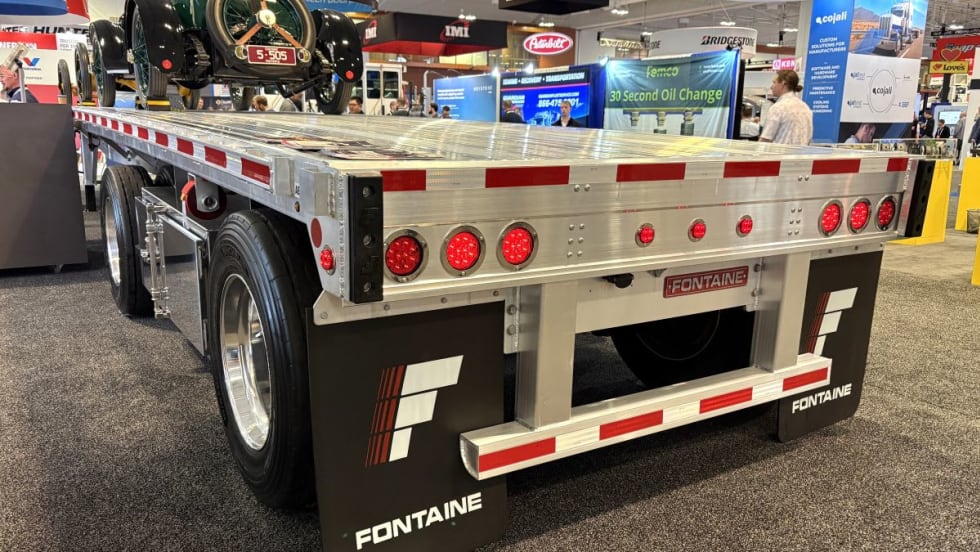
Fontaine Expands Flatbed Lineup with New Fleet-Focused Models, Eyes 2027 Launch
Fontaine is broadening its flatbed lineup with new models aimed at fleets, including a lightweight aluminum trailer expected in 2027 that emphasizes durability, repairability, and lower cost.
Read More →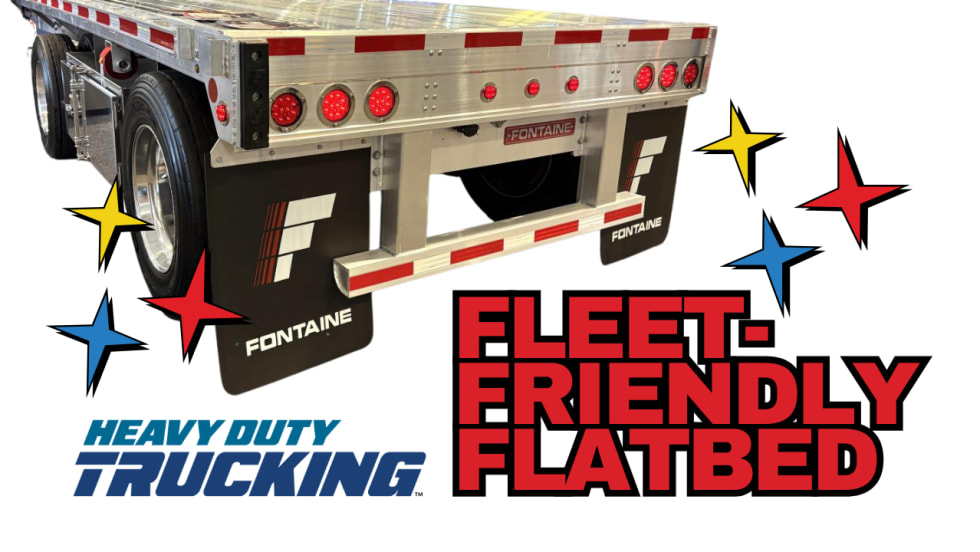
Fontaine's Fleet-Focused Force Flatbed Prototype [Watch]
A new prototype from Fontaine Trailer focuses on what fleets say they need most: easier repairs, lower maintenance costs, and practical, service-friendly design.
Read More →
From Long Haul to Short Loops: The New Math Behind Day Cabs
As warehouse networks expand, predictable regional routes are replacing long-haul runs—reshaping how fleets spec, operate, and resell day cabs.
Read More →
Hyundai Translead Bringing Trailer Production to U.S.
The new Hyundai Translead production sites will improve trailer and body delivery to customers by reducing lead times and leveraging a growing dealer network.
Read More →
HDT Honors the Best New Products of 2025 at TMC [Photos]
Heavy Duty Trucking's Top 20 Products awards recognize the best new products and technologies. Check out the award presentations at the 2026 Technology & Maintenance Council annual meeting.
Read More →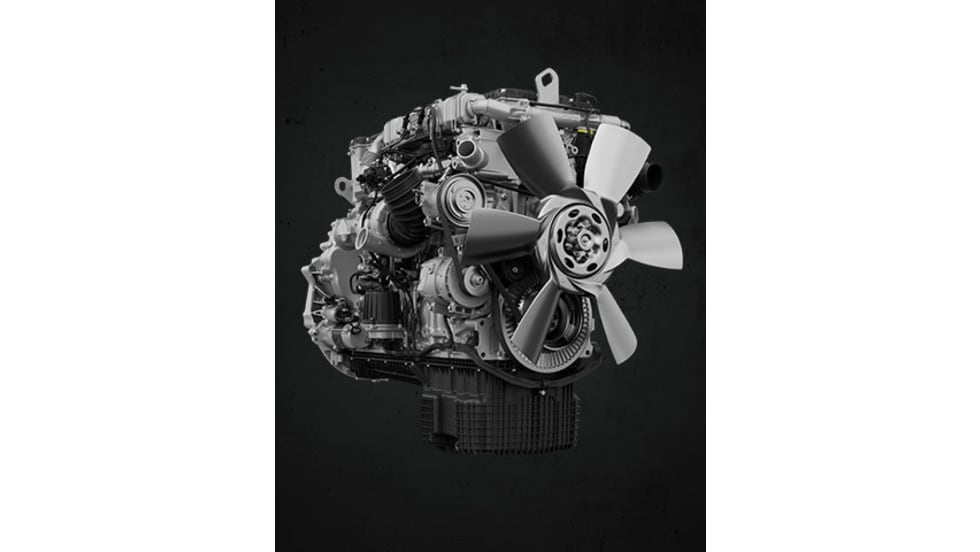
Sponsored•March 31, 2026
Detroit Engines: Trusted Performance, Built for What's Next
The Detroit® Gen 6 engine platform proves that real progress doesn’t require a complete redesign. Built on 20 years of trusted technology, these engines are designed for efficiency, stronger performance, and greater reliability than before. And they do it all while complying with 2027 EPA standards on every mile.
Read More →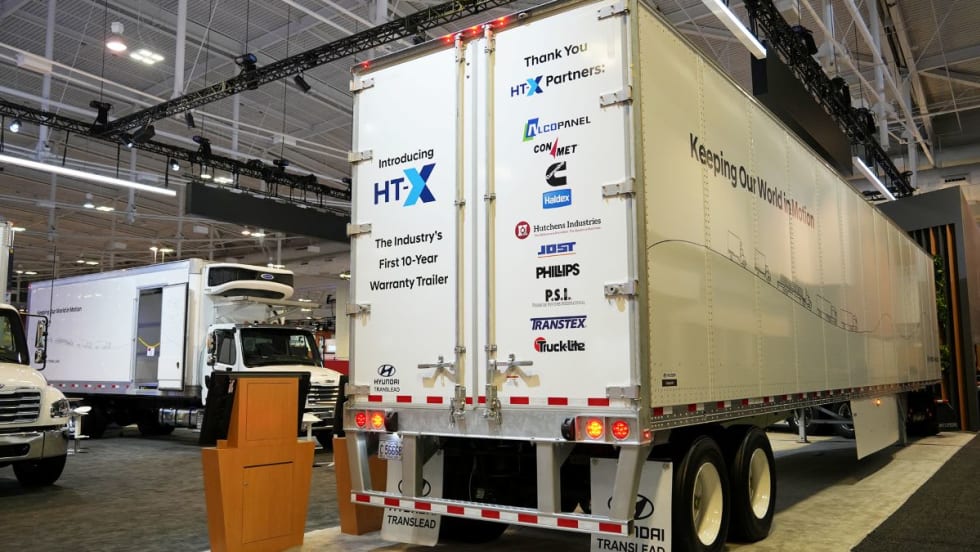
Hyundai Translead Expands Trailer Tech, Introduces Long-Life Dry Van, New Refrigerated Body
Smart safety systems, AI-powered visibility, a 10-year-warranty dry van, and a modular refrigerated body debuted at TMC.
Read More →
EPA Targets DEF Sensor Failures Behind Truck Derates
New guidance allows engine makers to replace problematic DEF sensors with NOx-based systems, aiming to reduce unnecessary derates and downtime caused by failures in the sensors designed to monitor diesel exhaust fluid on trucks.
Read More →
Heavy Duty Trucking is Searching for the Top Green Fleets of 2026
Is your company a leader in sustainability efforts among trucking fleets? If so, Heavy Duty Trucking's editors want to hear from you.
Read More →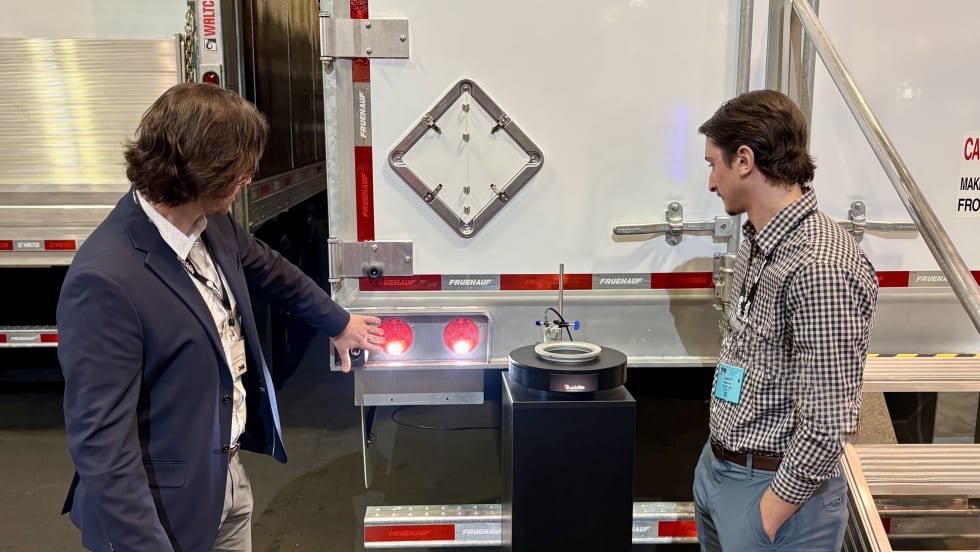
Clarience Technologies Expands Safety and Visibility Portfolio at TMC
From advanced connectivity to AI-powered cameras and next-gen fuel filtration, Clarience companies outlined a roadmap for safer, more connected trailers at TMC’s Annual Meeting.
Read More →