




Big-Fleet IT Functionality for Smaller Fleets
When it comes to serving customers, small carriers have the same requirements as the largest. If a small carrier can respond to a customer's demands as well as a much larger fleet, he can be competitive

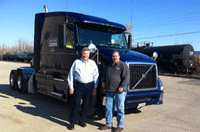
Though First choice only has 55 trucks, Jousma said they decided a few years ago to make the investment in the same type of fleet management software and other technologies used by big competitors.
When it comes to serving customers, small carriers have the same requirements as the largest. If a small carrier can respond to a customer's demands as well as a much larger fleet, he can be competitive.
Trucking management software can help smaller fleets compete with larger ones, but until a few years ago, the "sweet spot" for trucking management software vendors consisted of fleets between 100 and 1,000 trucks. Larger carriers were already up and running with systems, often proprietary or heavily customized, while carriers with fewer than 100 trucks were often considered too small for the cost of a system to pencil out.
In recent years, the size of the carrier no longer makes as much difference. Products tailored for smaller fleets have been available for some time. But more recently, we have seen top-tier trucking management software providers developing versions of their products priced for the small fleet market, allowing these fleets the same types of functionality as their larger brothers.
The equalizer: the Internet and the ability to deliver software-as-a-service (Saas) applications via Web portals to fleets with minimal computing infrastructure. All they need is an Internet connection and they are good to go.
Trucking management software systems automate the most common functions within a trucking company. These include dispatch, accounting, driver management, customer management, vehicle management, fuel-card integration, mileage and routing integration, business intelligence capabilities, safety and regulatory management, fuel tax reporting, and so on.
"Beyond dispatch and accounting, our customers are looking for mobile communications integration, mileage integration, a web portal for their customers, fuel card management, EDI integration, document imaging, load board integration and management analytics including business intelligence," says Kevin Pasternack, national sales manager for Prophesy Transportation Solutions, Bloomington, Conn.
Many vendors describe the fleet management software market as consisting of three tiers: low-end, mid-level and high-end. The lower-end systems consist mainly of dispatching and route management systems that can integrate with other systems the carrier may already be using, such as accounting or mileage software. The mid-level systems have more capabilities in terms of the number of trucks and drivers they can handle, as well as additional functions integrated within the core product. The high-end systems are fully featured enterprise systems that tie every aspect of the business together.
Of course the higher-end systems also cost more to purchase. Yet the cost associated with running, not buying, the system is the most common barrier.
"The cost of the software is just one element in the cost equation," says Ken Weinberg, vice president of LTL software provider Carrier Logistics, Tarrytown, N.Y. "Even if some carriers got the software for free, they still could not use it, because they couldn't afford the cost of installing and maintaining it.
"That said, in today's environment, the ability to use SaaS applications or acquire software on a subscription basis reduces a small fleet's overhead and cost. So they are able to acquire the same functionality that the larger fleets have."
More products are available in modular fashion, as well, so smaller fleets can implement their software solutions in pieces as they grow.
Technology also has helped reduce the cost of training, Weinberg notes. Sending staff to a vendor's location or having the vendor send its people to your office for training adds up to a lot of expense. Much of that training can now be done via web conferences or webinars.
Some of these offerings are available from the same vendors that supply high-end systems to the largest carriers. Ray West, vice president and general manager of the Innovative product lines at TMW Systems, Beachwood, Ohio, says that today a 50- to 75-truck fleet can run the same software as a 14,000-truck carrier.
TMW's Innovative Access product line is an SaaS offering that is priced based on the number of trucks a carrier runs. Because it's available as a "cloud" system, it "removes the barrier on entry" that has kept small fleets from fully implementing trucking management software. "There is virtually no infrastructure on the carrier's end," West says. "All they need is a PC that runs terminal emulation."
The system allows plenty of room for a carrier to grow. Yet because the pricing is based on the number of trucks, if a carrier shrinks their fleet, their price goes down, West says.
Such cloud-based systems offer the same functionality as server-based systems but also include the advantage of a secure, off-site location for a carrier's data.
West notes that his company's for-hire customers want "soup to nuts" in terms of capabilities, from the standard dispatch and accounting functions to integration with third-party financial systems, routing packages and mobile communications. TMW targets its SaaS product, Innovative Access, to fleets of less than 50 trucks, and its Innovative Access Plus package to fleets of 50 to 250.
There are a number of other companies offering these types of systems. A few examples:
- PCS Software, The Woodlands, Texas, offers a cloud-based version of its Express Dispatch product that includes the same functionality as its installed product, including dispatch, accounting (including payroll and settlements), integrated document imaging, freight tracking and log scanning.
- FreightData Transportation Software, Buena Park, Calif., offers on-demand software for a number of small -to medium-sized carriers, primarily in California. The company has both truckload and LTL enterprise software packages that integrate electronic dispatch, rating, billing, manifesting, accounting, management and financial reporting, driver management and pay, equipment maintenance and more. Additional modules can be added for EDI, imaging mobile technologies, warehousing and Web tracking.
- Truckers Helper, Melbourne, Fla., offers a trucking management system for owner-operators and fleets. Its fleet product includes dispatching, accounting, driver and customer records, maintenance and other functions. The company also offers an online product for one-truck operations, with an online product for fleets currently in development.
With the advent of SaaS offerings, smaller fleets also can take advantage of capabilities that had been restricted to the high-end systems, such as business intelligence, CSA management and lane analysis.
For instance, Vigillo, Portland, Ore., recently released a bundle of its CSA management products priced at a discount for carriers with fewer than 100 drivers. It includes Vigillo's CSA Scorecard subscription, Inspection Management System, a pre-employment screening system, Roadside Resume for drivers and a product to help brokers evaluate carriers based on safety scores.
It bears noting that management systems for truckload and LTL operations are not the same kind of animal. A carrier should have a solid understanding of what its business actually is before calling in vendors. While it is true that some truckload fleets do some LTL and vice versa, the operations are totally different, and the management systems designed for these operations will be different as well.
In many respects, a full-featured LTL system will be much more complex than a strictly truckload system. "There is a distinction," says TMW's West. "Most systems are built around truckload." In a truckload system, there will most often be a one-to-one relationship between shipments, trips and bills. In LTL, on the other hand, a carrier may consolidate up to 500 orders on one truck, making LTL very complex, West says.
"Truckload is a much easier system to dev
More Fleet Management

Volvo Trucks Adds Unattended Over-the-Air Software Update Capabilities
The latest evolution of Volvo’s over-the-air update technology allows software updates to run while trucks are parked, helping fleets keep vehicles current without disrupting operations.
Read More →
How Waste Connections is Using Data, Telematics, and AI
How do you manage and maintain more than 18,000 connected trucks? Data. Lots of it.
Read More →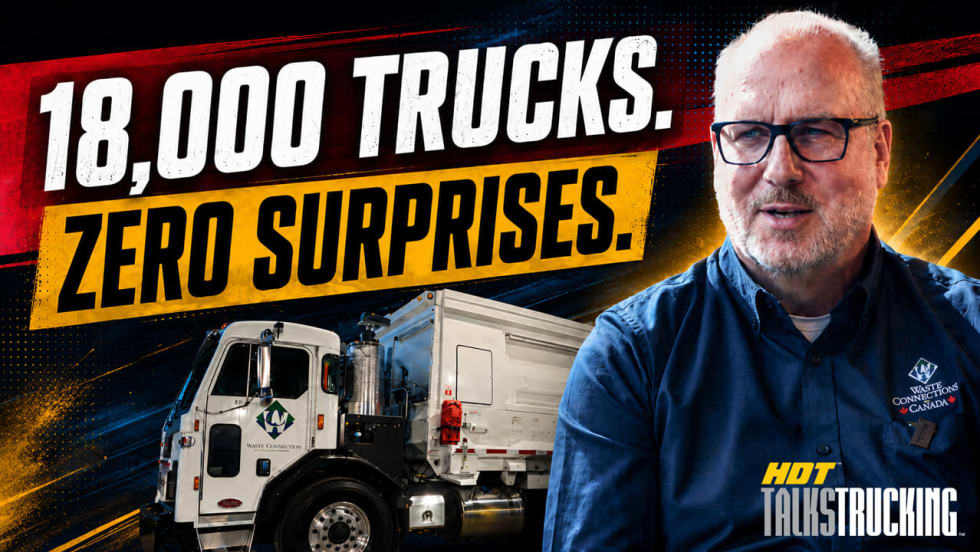
Why Fleet Data Matters More Than Ever at Waste Connections [Watch]
Waste Connections' Chuck Palmer explains how telematics, predictive maintenance, safety analytics, and AI help keep vehicles on the road and drivers safe in this episode of HDT Talks Trucking.
Read More →
NMFTA Launches Free, Anonymous Cybersecurity Threat Report Portal
Organizations are encouraged to anonymously report freight fraud, cargo crime, and cyber threats while gaining visibility into incidents reported across the transportation sector.
Read More →
AI Can Optimize a Fleet. Can It Replace Human Judgment?
Fleets fear falling behind if they don’t adopt AI quickly enough. They also fear what happens if the technology makes the wrong decision.
Read More →
Jamie Hagen Gets Real About Running a Small Fleet in an Uncertain Economy
Small fleet owner Jamie Hagen says new legal risks, volatile fuel prices, and a changing freight market are forcing small carriers to rethink how they operate — and what they can afford.
Read More →
Jamie Hagen Gets Real About Freight, Fuel Prices, Safety, and Small-Fleet Survival
Running a small trucking fleet right now isn’t easy, especially right now. And Jamie Hagen doesn’t sugarcoat it.
Read More →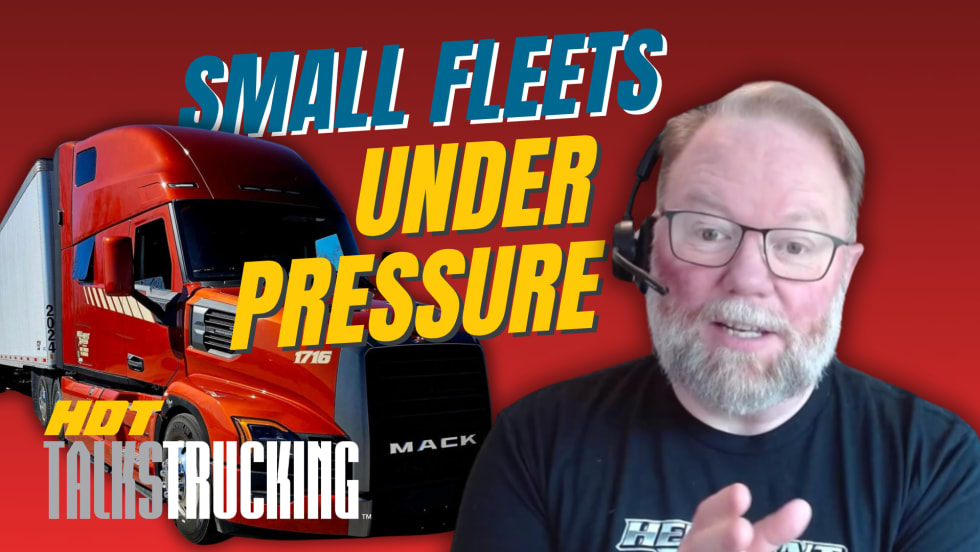
Jamie Hagen Gets Real About Freight, Fuel Prices, Safety, and Small-Fleet Survival
Running a small trucking fleet right now isn’t easy, especially right now. And Jamie Hagen doesn’t sugarcoat it.
Read More →
Data Lock‑In or Integration Lock‑Out?
Data fragmentation is costing dealerships, OEMs, fleets, and upfitters millions. Here’s why interoperability may be the fix the trucking industry needs.
Read More →
What Trucking Fleets and Brokers Need to Know About This Supreme Court Case
In May, the U.S. Supreme Court ruled that freight brokers can be held liable for damages if a truck they have contracted with is involved in an accident. Listen as this transportation attorney breaks down the ruling and its implications for the trucking industry.
Read More →