




The Facts about Lumen Ratings
When considering the purchase of LED lights, be wary of the "lumen" rating
When considering the purchase of LED lights, be wary of the "lumen" rating.
If you've ever looked into LED lights, you've almost certainly read the term "lumen." It is the standard unit of measure for how well a light source will illuminate objects. Because output is typically one of the major factors people use to evaluate light-emitting diode lamps, many manufacturers prominently display this figure on product literature and boast of high lumen numbers.
What these manufacturers may fail to tell you, however, is that those big numbers are actually the raw lumen outputrather than the effective lumen output. What's the difference, and why does it matter?
Raw Lumens
The raw lumen output of a light is actually a theoretical value rather than an actual measure of useful light output. Manufacturers calculate raw lumens by taking the number of LEDs in a light and multiplying that by their maximum output rating. For example, if a light uses 10 LEDs that have a maximum output rating of 100 lumens, the raw lumen output would be 1,000 lumens.
No photometric testing is necessary to come up with this number - it's just simple math. The reason that raw lumens should not be relied upon for evaluating LED lights is that they don't take into account real-world factors that can decrease the light output as much as 75 percent.
What causes these decreases in light output? First, there are thermal losses. LEDs produce less light as they get hotter. And, as LEDs are powered for longer and longer periods of time, they typically heat up. In fact, it is not uncommon for LEDs to reach temperatures of over 212 degrees Fahrenheit. So, it stands to reason that if you measure the initial light output of an LED (when it is cooler) vs. after it has been on for 30 minutes (when it is hot), you're going to see a decrease in the light output.
Remember how the raw lumen calculation relies on the maximum output rating of the component LEDs? Manufacturers calculate their maximum output ratings by measuring the light output of the component LED after 25 milliseconds, equivalent in duration to the burst of a flash bulb. We're pretty sure that most of you use your lights longer than 25 milliseconds at a time, which means that your light output is going to be less than the raw lumen value. How much less depends upon the thermal management of the light, but the loss is typically in the neighborhood of 10-25 percent.
The other major factors reducing raw lumen figures are the current used to drive the LEDs, optical losses, and assembly variations. Driving a higher current through an LED will produce more light, but it also make the LED hotter, thus creating thermal losses and shortening the life of the LED.
Whenever light travels through or reflects off of a material (lenses, reflector optics, etc.), it loses some of its intensity. This is due to inherent losses inside the material as well as at the material's surface as the light travels from air through the lens and back to air. Any light that has optics, reflector optics or a lens will fall victim to these losses - there's no getting around it.
Coupling these optical losses with assembly variations, and you've got an additional 20-50 percent decrease in light output that the raw lumen figure doesn't account for.
Effective Lumens
Effective lumens is an actual measurement of light output that does take into account all of the real world losses we've just discussed. Measuring the effective lumen output of a light requires the use of high-tech photometry equipment.
Because of the cost and expertise involved in conducting photometric testing, some manufacturers opt to cut corners and use the theoretical raw lumen numbers. This makes it very difficult to make an apples-to-apples comparison between lights, and often results in consumers receiving less useable light than what's advertised.
To illustrate this point, let's take a look at a practical example. LED Light #1 has an output rating of 2,000 raw lumens and 1,000 effective lumens. LED Light #2 has an output rating of 3,000 raw lumens, but only 500 effective lumens. If you were basing your decision solely on raw lumens, Light #2 would be the clear choice.
Once you turn both lights on, however, Light #1 would be twice as bright as Light #2. Light #1 is brighter because it has the higher effective lumen output.
More Equipment
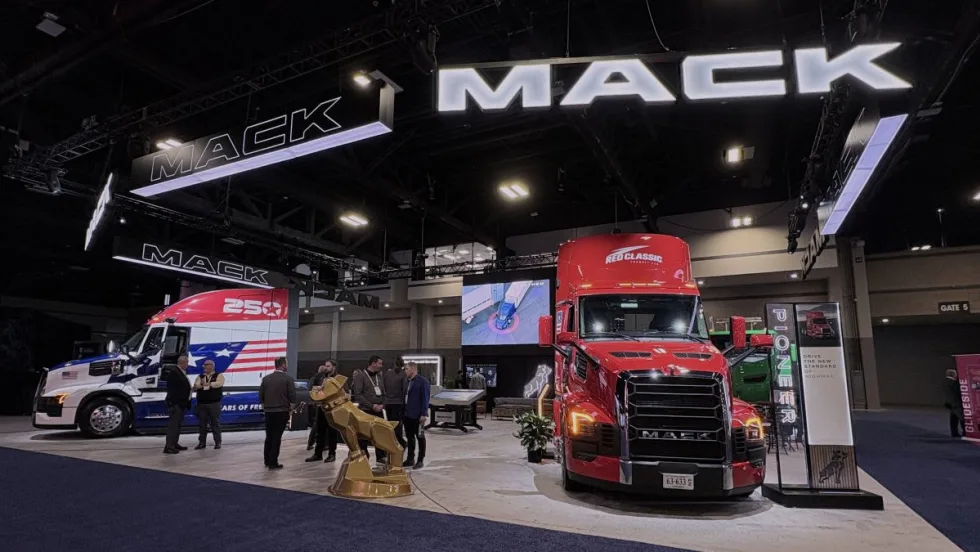
Trucks at ATA's 2026 MC&E in Charlotte, North Carolina [Photos]
From rigs decked out in patriotic America's 250 paint schemes to autonomous trucks and more, check out these photos from ATA's 2026 Management Conference & Exhibition.
Read More →
Help HDT Find Trucking’s Top Products
Have you come across a new product that could make a difference for trucking fleets? Nominate it for HDT’s 2027 Top 20 Products Awards by November 9.
Read More →
Volvo Unveils New VNX Heavy-Haul and Vocational Truck
Volvo Trucks has launched the VNX, a new vocational truck also available as a tractor in day cab and two sleeper configurations, with one heavy-haul model. The Volvo VNX is powered by Volvo's D13 platform, which delivers up to 540 horsepower and 1,950 pound-feet of torque and is EPA 2027-compliant.
Read More →
How GP Transco Cuts Trucking Fuel Costs, a Tenth of a Gallon at a Time
What’s another tenth of a mile per gallon worth? GP Transco shares how equipment upgrades and driver coaching turn small gains into meaningful fuel savings.
Read More →
Electric Yard Tractors Move Beyond Pilots
Operating-cost savings have overtaken sustainability goals as the leading reason surveyed fleets are adopting battery-electric terminal tractors, according to new NACFE research.
Read More →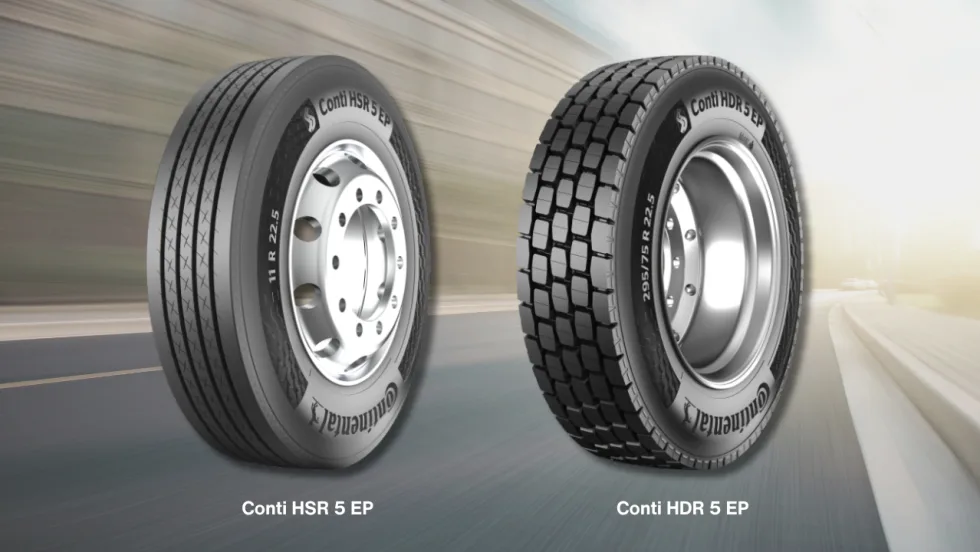
Continental Introduces New Regional Truck Tires
Continental says its new Generation 5 steer and drive tires for regional operations offer longer tread life, with estimated mileage gains of 22% and 19%, respectively.
Read More →
Tekmodo Introduces CargoBright Brand for Translucent Trailer Roofs
CargoBright is designed to diffuse daylight across the cargo area while performing as a working vehicle roof.
Read More →
Fleet Economics Shape Electric Truck Outlook
ACT Research expects costs, charging infrastructure, and technology improvements to drive zero-emission commercial vehicle adoption as federal regulations and incentives retreat.
Read More →
Kodiak Targets Dallas–Houston for Driverless Trucks
The company says its autonomous trucks are completing the I-45 run without a safety observer taking control. It plans to remove the observer by the end of 2026.
Read More →
Kodiak Hauls Produce in California Autonomous Truck Pilot
Kodiak AI and DTL Transport have begun hauling produce between Fresno and Los Angeles under California’s new rules for testing heavy-duty autonomous trucks. A safety driver remains behind the wheel.
Read More →