




Bendix-Based Safety System Standard on Volvo VNL and VNR Models
Bendix has announced that for the first time in North America, the camera- and radar-based collision mitigation technology of its Wingman Fusion vehicle safety system is now standard equipment on certain heavy-duty trucks.


The paint is hardly dry on the new trucks, but Volvo continues to push the technology envelope with its new VNL and VNR tractor models. Bendix has announced that for the first time in North America, the camera- and radar-based collision mitigation technology of its Wingman Fusion vehicle safety system is now standard equipment on these heavy-duty trucks. Both the VNR and VNL series feature Volvo Active Driver Assist, which the company said integrates Fusion to create a comprehensive, leading-edge system.
Introduced in fall 2016, Volvo Active Driver Assist uses Bendix’s flagship collision mitigation technology, integrating radar, camera, and the vehicle’s brake system into a driver assistance system that delivers driver alerts and interventions to help them mitigate rear-end collisions, rollovers, and loss-of-control situations.
Unlike systems that only use radar, Volvo said its Active Driver Assist creates a highly detailed and accurate data picture using deep, multisystem integration of the input gathered through radar, video, and the vehicle’s brakes working together. The system’s camera is powered by the Mobileye System-on-Chip EyeQ processor with state-of-the-art vision algorithms.
Volvo engineers said these technologies – working together and not just in parallel – along with powerful next-generation computing, create a system that typically assesses situations faster and reacts earlier, while also significantly reducing false alerts and false interventions.
Volvo Active Driver Assist offers as standard alert prioritization, enhanced collision mitigation, stationary vehicle braking, and an optional integrated lane departure warning system with data capture capability. Other options include blind spot detection.
While not integrated into the Volvo Active Driver Assist system, the blind spot technology offers an additional feature to help drivers detect vehicles that may not be visible in their mirrors. And because it is built on the Volvo Enhanced Stability Technology by Bendix full-stability system, Volvo Active Driver Assist also helps drivers avoid additional crash situations, including rollovers and loss-of-control.
Volvo Active Driver Assist is fully integrated into the Volvo Driver Information Display located on the dashboard, and includes an industry-first heads-up windshield display if a driver approaches too closely to an object in front of them.
“When the Bendix and Volvo teams work together, there’s one overriding goal in mind: making North America’s trucks and highways safer for everybody,” said Scott Burkhart, Bendix vice president – sales, marketing, and business development. “For years, we’ve been proud to call Volvo a true partner in providing the most advanced safety technologies to fleets and drivers, and it’s more evident than ever in the continued development and implementation of Volvo Active Driver Assist. There is no doubt in our minds that fleets, drivers, and our shared roads will benefit from Volvo’s newest and most advanced trucks becoming the first to include Wingman Fusion’s technology as standard.”
“Safety has always been part of the essence of Volvo Trucks, and it has been one of our core values since 1927,” said Göran Nyberg, president of Volvo Trucks North America. “Making Volvo Active Driver Assist with Bendix Wingman Fusion™ standard in Volvo VNR and VNL models demonstrates our commitment to improving the safety of everyone who travels on our roads.”
More Drivers
Trucker Path Expands Reserved Parking Network
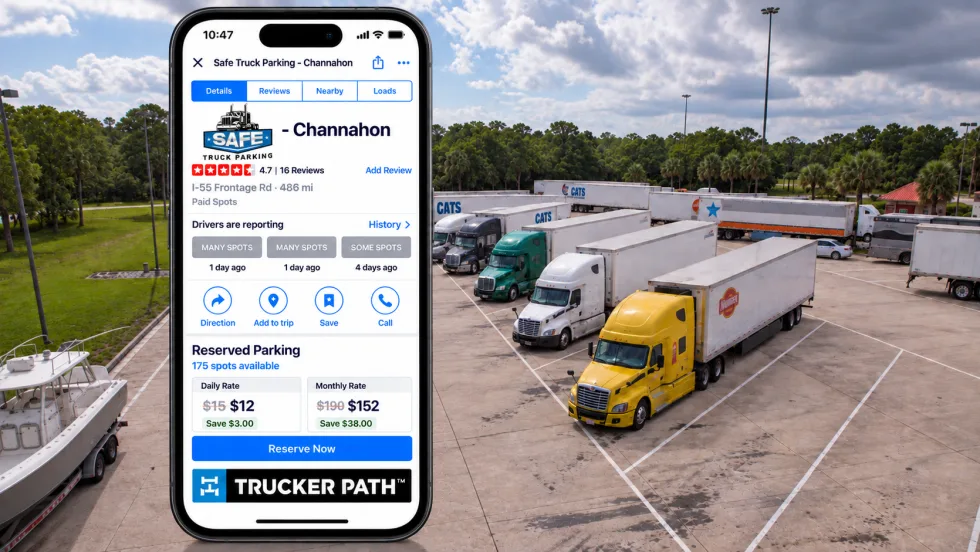
Trucker Path has added close to 6,000 more truck parking spaces to its Trucker Path Reserved Parking Network with the addition of Safe Truck Parking.
Read More →
EEOC Sues Texas Trucking Company Over Driver Age Limits
The agency says Trancasa USA rejected applicants over 65 and applied tougher driving-record standards to those over 60.
Read More →
Nussbaum, Roehl Announce Second Driver Pay Increase This Year
This year has seen a swath of major truck driver pay increases as freight capacity has tightened.
Read More →
From One Generation to the Next: How Mentorship Builds Safer Truck Drivers
After three decades in trucking, Harold Perry shares what he's learned about driver safety, mentorship, and helping the next generation build confidence behind the wheel.
Read More →
Truck Drivers Need More Than Another Alert
Fleets have more visibility into truck health, safety events, and driver activity than ever. The next challenge is turning all that information into useful guidance for the person who has to decide what to do next.
Read More →
FMCSA Removes 110 Truck Driver Training Schools from Certified ELDT List
Federal regulators also are targeting more than 160 additional training providers and launching a nationwide audit of third-party CDL skills testers as part of a broader crackdown on trucking fraud.
Read More →
Hours of Service Pilot Programs: FMCSA Readies for 2027 Rollout
Two pilot programs could eventually reshape hours-of-service rules, giving truck drivers options to pause their 14-hour clock or use longer split sleeper rest periods.
Read More →
Medical Cards, English Proficiency Reshape Roadcheck Violations
Medical-card violations jumped to the top of the driver out-of-service list during CVSA’s 2026 International Roadcheck, while English-language proficiency violations appeared among the leading violations for the first time.
Read More →
Driver Trust Can Make or Break the Success of Fleet Safety Technology
New Teletrac Navman research suggests that onboarding, transparency about driver data, and positive feedback can play a significant role in how commercial drivers respond to safety and coaching technology.
Read More →
EEOC Sues KLLM Over Alleged Sex Discrimination in Driver Training
KLLM is facing a federal sex-discrimination lawsuit over policies the EEOC alleges put female truck driver trainees at a disadvantage.
Read More →