




Related: Uber, Amazon, and What the Sharing Economy Means for Freight Hauling
Investors Show Increased Interest in Uber-Like Trucking Startups
Money is lending credibility to a new crop of Uber-like trucking startups, with two large investment firms recently spending millions of dollars to fund the startups Transfix and CargoX.
by Staff
July 26, 2016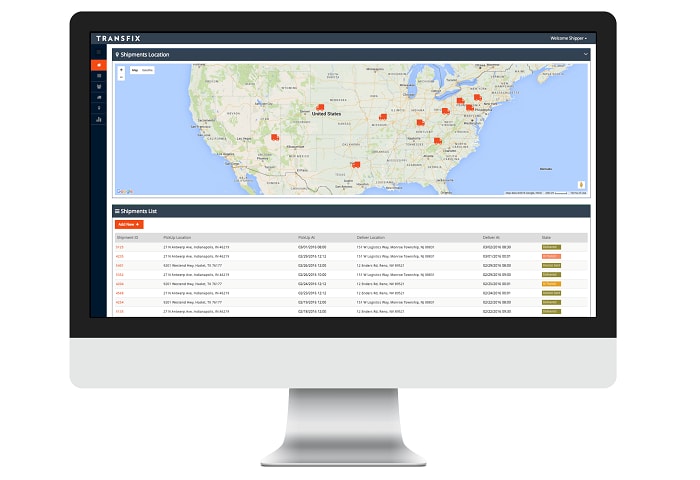
Image via Transfix
2 min to read

Image via Transfix
Money is lending credibility to a new crop of Uber-like trucking startups, with two large investment firms recently spending millions of dollars to fund the startups Transfix and CargoX.
Transfix, a provider of on-demand trucking, raised $22 million in Series B funding led by an investment from New Enterprise Associations, a global venture capital firm. The funding will go toward investment in technology as well as expanding its product offerings.
Transfix features an online marketplace for trucking and logistics, matching shipments with available trucks. The company is focused on the full truckload market and aims to reduce empty miles driven by truckers using algorithms that match freight with available capacity.
“Transfix has differentiated themselves in a space, which is expected to grow more than 20% in the next decade, by using a tech-first approach to the full truckload market,” said Scott Sandell, managing general partner, NEA. “Seventy percent of the trucking industry relies on brokers to help match customers to carriers, and Transfix’s technology brings much-needed innovation to the market, as well as efficiency not previously available.”
Goldman Sachs has made a similar investment in the on-demand trucking realm, with $10 million raised in Series B funding for the Brazilian startup, CargoX, according to TechCrunch.
CargoX is aimed at the Brazilian trucking industry, which is in need of the technology to better connect truckers to shippers. But with Goldman Sachs funding, it is examining whether the company model could be used in more markets, according to CargoX CEO Frederico Vega. The company aims to reduce the amount of time trucks are running empty, Vega told TechCrunch.
The company is even looking ahead at autonomous vehicles, as its service is currently mapping out and collecting data on Brazil’s roads. This will allow it to better understand the fastest and safest routes depending on the time of day, which could make shipping more efficient and reliable.
These startups join others in the increasingly crowded freight matching, on-demand trucking market, along with companies such as Trucker Path, Convoy, uShip and Cargomatic. With the prevalence of smartphones, which provide not only instant communication but instant location data, these companies are all trying to fill cargo space in more efficient ways. According to analysis from Frost & Sullivan, smartphone-based freight brokering in North America will grow from around $125 million in 2015 to as much as $26.4 billion in 2025.
"Smartphone-based freight brokering is creating new and powerful ways of connecting shippers to carriers, driving a greater degree of transparency, facilitating on-demand logistics, and benefiting both the less-than-truckload and full-truck load markets,” said Wallace Lau, team leader and industry principal at Frost & Sullivan.
More Fleet Management

Why Private Fleets Are Taking More Freight
Private fleets are putting their own trucks on demanding customers and high-cost lanes as companies seek greater control over service, costs, and capacity.
Read More →
Sponsored•September 16, 2026
Color Match Smarter: Tools That Restore & Perform
For fleet managers and collision repair professionals keeping heavy-duty trucks on the road, getting the color right the first time isn't just about appearance — it's about efficiency, turnaround time, and bottom-line results. Discover how today's digital color tools are transforming the repair process from guesswork to precision.
Read More →
FMCSA Pauses Biennial-Update Enforcement Amid Motus Transition
Carriers whose updates were due on or after June 1 have more time, while FMCSA works to stabilize its new registration system and warns of phishing sites impersonating its new carrier registration system, Motus.
Read More →


Sponsored•September 14, 2026
2026 Blueprint for Countering Smarter Supply Chain Theft
Cargo theft is no longer just the cost of doing business. It's a multi-billion-dollar criminal enterprise exploiting vulnerabilities across your fleet, drivers, and supply chain.
Read More →
Sponsored•September 1, 2026
How Telematics Improves Visibility, Control, and Performance in Refrigerated Fleets
Explore how telematics help refrigerated fleets improve visibility, uptime, efficiency, compliance, and cargo protection across connected cold chain operations.
Read More →
What the U.S.-Canada Trade War Means for Trucking
Escalating U.S.-Canada tariffs could disrupt cross-border freight, reduce truck volumes, raise costs, and create new uncertainty for carriers on both sides of the border.
Read More →
What Are Trucking’s Top Concerns for 2026?
The American Transportation Research Institute wants to know what's worrying trucking fleet managers, drivers, and other stakeholders in its annual Industry Issues survey.
Read More →
American Trucking Associations Looks for a New Leader
ATA President and CEO Chris Spear abruptly left his job at the association on August 21, at a pivotal time for the trucking industry.
Read More →
Public Wi-Fi Cybersecurity Risks: How Truck Drivers and Fleets Can Protect Their Data
Public Wi-Fi can expose truck drivers and fleets to credential theft, malware, and other cyber threats. Here’s how to reduce the risk on the road.
Read More →
For Nicky Cupp, Fleet Innovation Starts With Frustration
HDT Truck Fleet Innovator Nicky Cupp turns everyday pain points at Fraley & Schilling into opportunities for better technology and smarter processes.
Read More →