Earnings Watch: ABF Parent ArcBest Moves to a First Quarter Loss
The parent to less-than-truckload carrier ABF Freight moved into the red in the first quarter of the year, according to its earnings report released Friday, as many other companies are also reporting weaker performances compared to a year ago
The parent to less-than-truckload carrier ABF Freight moved into the red in the first quarter of the year, according to its earnings report released Friday, as many other companies are also reporting weaker performances compared to a year ago
ArcBest Corp. (NASDAQ: ARCB) had a net loss of $6.1 million compared to net income of $700,000 a year earlier, or a loss of 24 cents per share versus a profit of 3 cents per share in the 2015 quarter. , The results are worse than Wall Street forecasts.
Ad Loading...
This happened as revenue moved higher to $621.4 million compared to $613.3 million a year earlier.
““Ongoing economic weakness continued to impact our business, consistent with trends that began in the fall of 2015,” said ArcBest Chairman, President and CEO Judy R. McReynolds. “We are encouraged by the ongoing stability in LTL pricing and by the positive reception our customers have to the expanding array of services we offer in helping them better manage their complex supply chain issues.”
ABF Freight had revenue of $439.5 million compared to $441.2 million in first quarter 2015, a per-day decrease of 2%. An operating loss of $9 million and an operating ratio of 102.1% compared to breakeven operating income in first quarter 2015.
Tonnage per day fell 0.9% compared to first quarter 2015 while total billed revenue per hundredweight decreased 1.2% reflecting lower fuel surcharges, according to the company. Excluding fuel surcharge, the percentage increase on ABF Freight’s traditional LTL freight was in the low-single digits.
ArcBest said ABF Freight’s first quarter revenue decline was due to reduced freight tonnage levels associated with weak U.S. manufacturing, high customer inventory levels and excess industry capacity available to move larger-sized shipments.
Ad Loading...
“While total quarterly revenue was lower, ABF Freight’s 2% daily shipment count increase caused the need for additional labor and freight handling resources in order to maintain customer service.”
The company’s asset-light logistics segment, which includes Panther Premium Logistics, ABF Logistics and FleetNet America, saw revenue increase to $194.7 million compared to $183.7 million in first quarter 2015. Its operating income fell to $1.2 million from $2.8 million a year earlier, largely due to smaller operating income for Panther and increased operating losses with its household goods moving services ABF Moving.
“During the first quarter, ArcBest’s total asset-light revenue increase was driven by ABF Logistics’ December 2015 brokerage acquisition and new customers at FleetNet America,” the company said. “Revenue per shipment for ABF Logistics and Panther was suppressed by the effect of lower fuel prices and the impact of excess, available truckload capacity in the spot market. In addition, continued changes in the year-over-year business mix of Panther’s shipments have resulted in shorter average lengths of haul and the need for a higher proportion of smaller cargo vans and straight trucks and fewer tractor-trailers.”
It said ABF Moving, which typically experiences its lowest operating results in the first quarter, reported lower revenue versus last year, primarily due to fewer government shipments despite increased consumer and corporate business levels.
The Wall Street Journal is reporting that the first quarter earnings season so far has been disappointing, with overall profits falling for the third straight quarter, the longest slide since the Great Recession, as businesses suffer the effects of the slump in energy production and a global economic slowdown.
Ad Loading...
While few trucking companies reported a loss for the first quarter, only a minority reported increases from a year ago. Anecdotal reports have indicated that carriers were seeing less freight and increased capacity during the first three months of the year. At the same time, a number of economic reports during the quarter showed weaker business conditions, including a report Thursday saying overall economic growth in the period slowed to just a 0.5% annual increase, the weakest GDP performance in two years.
Cargo theft has shifted from parking-lot break-ins to organized international schemes using double brokering, phishing, and even spoofing tracking signals. In this HDT Talks Trucking video podcast episode, cargo-theft investigator Scott Cornell explains what’s changed and what fleets need to do now.
Daimler Truck’s David Carson sees early signs of tightening capacity — yet buyers remain wary, extending trade cycles and resisting a pre-2027 emissions surge.
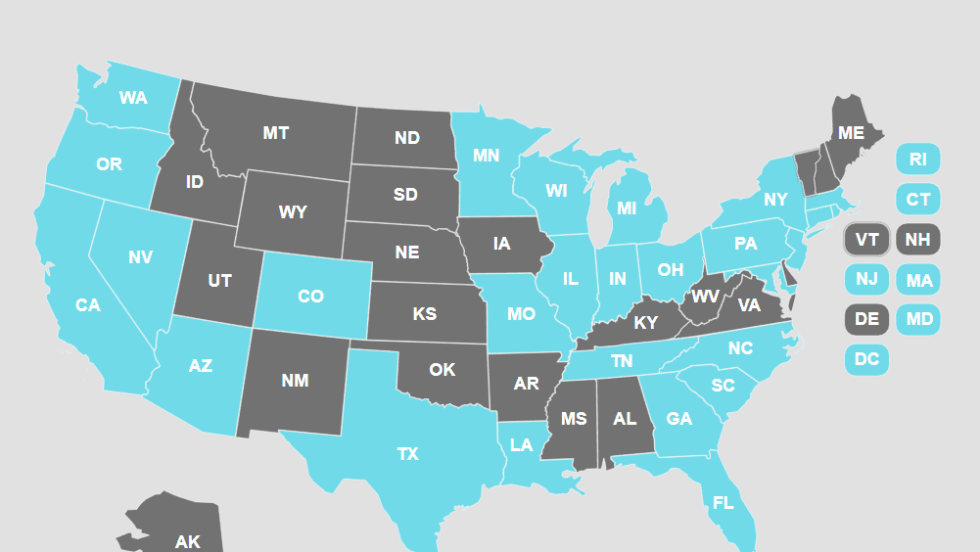
The American Transportation Research Institute's annual analysis of truck speeds through congested interchanges yielded a new worst bottleneck this year.
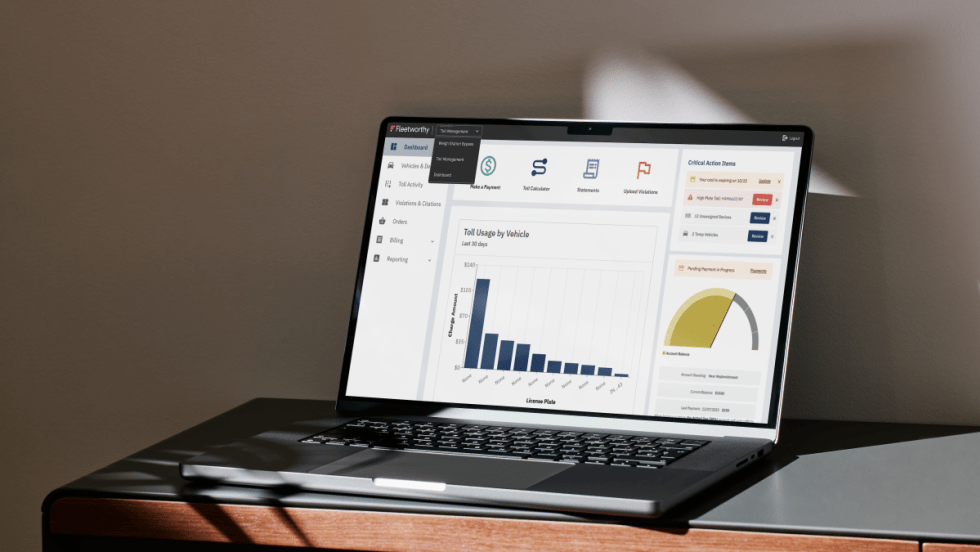
From pricing intelligence and compliance tools to charging infrastructure, diagnostics, tires, and AI, HDT’s 2026 Top 20 Products recognize the new tools, technologies, and ideas heavy-duty trucking fleets are using to run their businesses.
Artificial intelligence is evolving faster than fleets can keep up, and telematics must evolve with it, Cawse said during Geotab Connect. The future? A single AI coordinating every system — and leaders who know how to guide it.
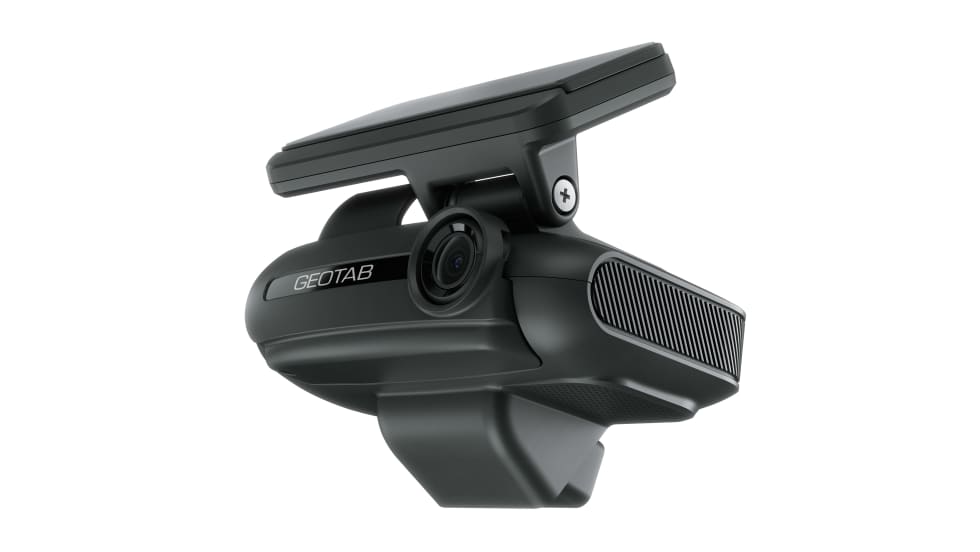
Geotab launches GO Focus Pro, an AI-powered 360-degree dash cam designed to reduce collisions, prevent fraud, and protect fleets from nuclear verdict risk.
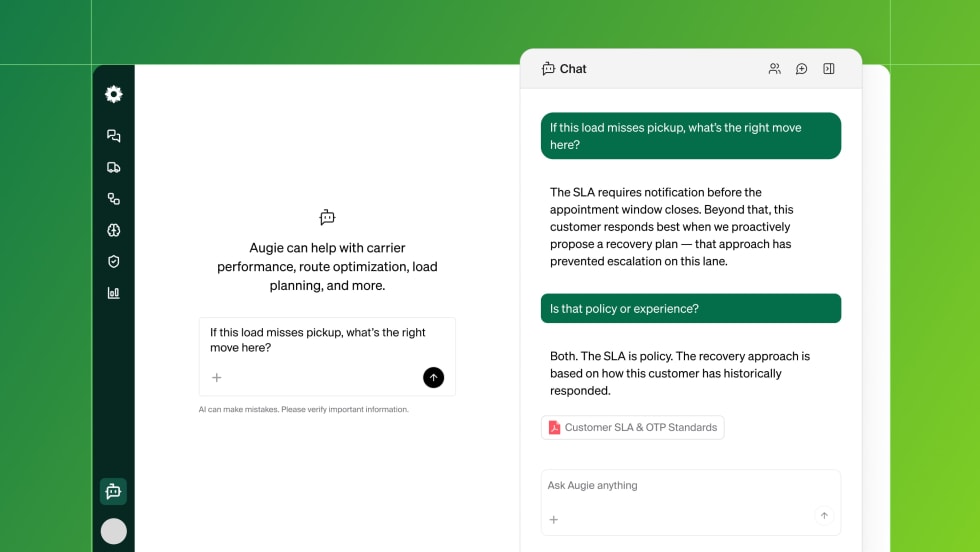
Knowledge Hub is designed to turn scattered tribal knowledge into execution-ready intelligence and help logistics teams make faster, more consistent decisions.