



Large carriers lead the trucking industry on several key metrics including per-mile rates, driver retention, and revenue-per-driver, according to a recent survey conducted by transportation consultation firm Katz, Sapper & Miller.
 MENU
MENU SEARCH
Large carriers lead the trucking industry on several key metrics including per-mile rates, driver retention, and revenue-per-driver, according to a recent survey conducted by transportation consultation firm Katz, Sapper & Miller.

Large carriers lead the trucking industry on several key metrics including per-mile rates, driver retention, and revenue-per-driver, according to a recent survey conducted by transportation consultation firm Katz, Sapper & Miller.
While large carriers had the longest length of haul, averaging 600 miles, they also posted the highest rate-per-mile. Large carriers averaged $2.28 per mile while medium carriers averaged $2.00 per mile and small carriers averaged $1.96.
Large carriers averaged $235,605 of revenue per driver, according the survey, which was more than $10,000 higher than in medium-sized carriers and nearly $25,000 more than in small carriers. The survey also found a correlation in trailer-to-truck ratio that indicated that larger fleets were more successful at using their assets.
In addition to operating more efficiently than smaller carriers, large carriers also had a more diversified revenue stream. While small carriers attributed as much as 63% of revenue to its top five customers, large carriers were much less reliant on top customers, making up only 28% of total revenue.
When it comes to retention, large carriers typically have more driver turnover but that changes after a year, according to the survey. It found that after 12 months, large carriers retain more of their drivers than both medium and small carriers. Without giving specific reasons for the higher retention, the survey found that the average age of tractors at small large fleets tended to be younger than those at medium and small carriers and noted that large carriers have made efforts to increase driver pay.
"The results from this year's survey indicate that large carriers are leading the field in terms of rate per mile, long-term driver retention and revenue per driver," said Tim Almack, partner-in-charge of KSM's Transportation Services Group. "By analyzing the correlations between carrier size and certain performance metrics, our findings provide clues on how the large carriers are mastering the game."
The survey was collected using data from fleets using McLeod LoadMaster Enterprise and represented 51 carriers and over 63,000 trucks. Carriers of all sizes were represented in the survey. Small carriers were considered those with 100 trucks or less, medium carriers had 101-500 trucks, and large carriers had 501 trucks or more. There were 18 small carriers, 21 medium carriers and 12 large carriers included in the survey.
To learn more, click here.
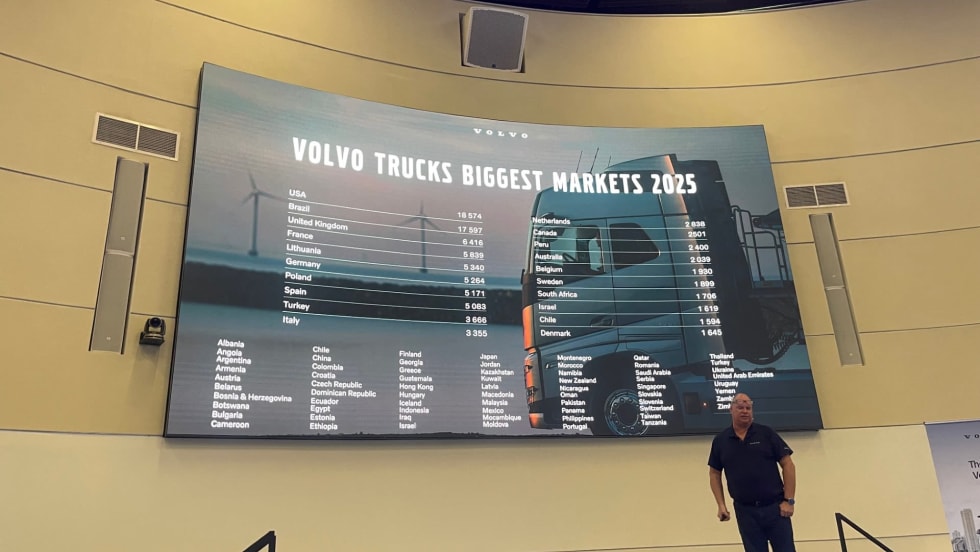
Soft freight conditions persist, but aging fleets, strong order intake, and new-product momentum signal a more optimistic second half of 2026, Volvo Trucks North America says.
Read More →
Cargo theft is evolving from regional smash-and-grab operations to sophisticated fraud schemes. Strategic theft now accounts for roughly a third of cargo crime, with incidents rising sharply in recent years. Here’s how the schemes work — and what fleets can do to protect themselves.
Read More →
Heavy Duty Trucking's Top 20 Products awards recognize the best new products and technologies. Check out the award presentations at the 2026 Technology & Maintenance Council annual meeting.
Read More →
The Detroit® Gen 6 engine platform proves that real progress doesn’t require a complete redesign. Built on 20 years of trusted technology, these engines are designed for efficiency, stronger performance, and greater reliability than before. And they do it all while complying with 2027 EPA standards on every mile.
Read More →
The 2026 ACT Expo is focusing heavily on what organizer Erik Neandross calls trucking's digital frontier. This interview excerpt dives into artificial intelligence, zero-emission vehicles, and tips to make sense of it all.
Read More →
There's an amazing amount of new technology for trucking out there. For fleets, the challenge is figuring out what’s real, what’s hype, and what’s worth investing in.
Read More →
Artificial intelligence, the software-defined vehicle, telematics, autonomous trucks, electric trucks and alternative fuels, and more in this HDT Talks Trucking interview
Read More →
ACT Research data shows volumes hitting a four-year high and supply-demand balance strengthening, but higher oil prices are undercutting tariff relief and tempering optimism.
Read More →
The patent-pending cargo solution integrates a digitally connected cargo door and an intelligent locking system with the TrailerHawk.AI technology platform.
Read More →
The impact of the Iran conflict extends beyond fuel costs, bringing more fraud and cybersecurity risks to the trucking industry.
Read More →