Worthington Buys Controlling Interest in CNG System Company
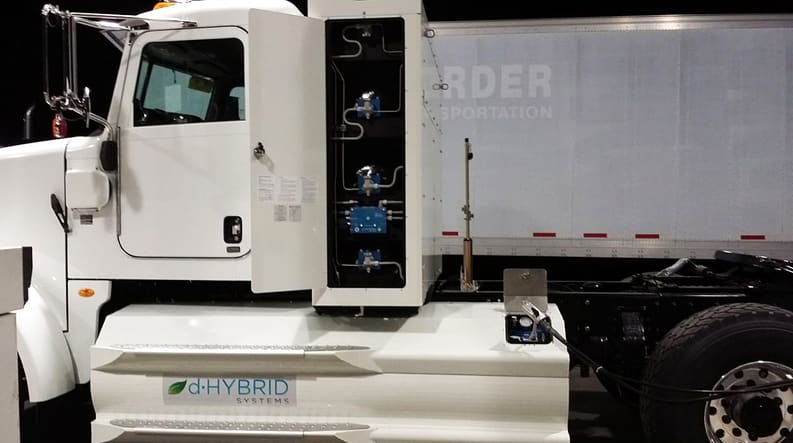
Worthington Industries, which manufactures pressure tanks for CNG and LNG storage among other things, acquired a majority interest in dHybrid Systems, a designer of CNG fuel systems.
by Staff
October 28, 2014
Photo via dHybrid Systems.
2 min to read
Photo via dHybrid Systems.
Worthington Industries, which among other things manufactures pressure tanks for compressed natural gas and liquified natural gas storage, acquired a majority interest in dHybrid Systems, a designer of CNG fuel systems.
The company will own 80% of the equity while the remaining 20% will be retained by the dHybrid founder who will remain in a leadership role.
Ad Loading...
Worthington Industries is a manufacturing company that produces several products, including pressure cylinders for CNG and LNG storage, transportation, and alternative fuel tanks.
“The acquisition of dHybrid gives us the opportunity to increase our participation in the fast-growing CNG fuel market and enhance the value of our supply chain offering,” said Andrew Billman, president of the Worthington pressure cylinder business. “We expect the combination of dHybrid’s innovative system designs and Worthington’s commercial and manufacturing capabilities to help drive significant growth for this portion of our alternative fuel platform.”
The acquired company, dHybrid, designs CNG fuel systems mainly for refuse and heavy duty truck application. The company’s systems have a symmetrical design and use common components to improve installation times and make replacement parts more interchangeable, according to the company.
DHybrid sells to fleet operators, heavy-duty truck dealers, fuel system installers and OEMs. This allows customers to procure vehicles using dHybrid products from several different parts of the supply chain.
The company designs fuel systems for the back of cab, top of body, side rail, combo and more. Its systems are applied to both Class 7 and 8 trucks. Based in Salt Lake City, dHybrid is housed in a 50,000-square-foot facility employing 28 people.
Purdue researchers demonstrated a high-power wireless charging system capable of delivering energy to electric heavy-duty trucks at highway speeds, advancing the concept of electrified roadways for freight transportation.
The Environmental Protection Agency is asking diesel engine makers to provide information about diesel exhaust fluid system failures as it considers changes to emissions regulations.
The Environmental Protection Agency said California can’t enforce its Heavy-Duty Inspection and Maintenance Regulation, known as Clean Truck Check, on vehicles registered outside the state. But California said it will keep enforcing the rule.
The Trump administration has announced it will no longer criminally prosecute “diesel delete” cases of truck owners altering emissions systems in violation of EPA regulations. What does that mean for heavy-duty fleets?
Natural gas is quietly building a reputation as a clean, affordable, and reliable alternative fuel for long-haul trucks. And Ian MacDonald with Hexagon Agility says the Cummins X15N is a big reason why.
Mercedes-Benz has begun a new series of tests in Europe to validate vehicle compatibility with megawatt chargers and assess charging performance, thermal management, and usability on long-haul duty routes.
Safety, uptime, and insurance costs directly impact profitability. This eBook looks at how fleet software is evolving to deliver real ROI through proactive maintenance, AI-powered video telematics, and real-time driver coaching. Learn how fleets are reducing crashes, defending claims, and using integrated data to make smarter operational decisions.