




N.J. Trucking Executive Warns Senate on the True Cost of Tolls
In testimony before the Senate Commerce, Science and Transportation Committee, NFI Chief Financial Officer Steve Grabell warned that rapidly increasing toll rates, as well as the spread of tolls across the country, are a threat to consumers and to the trucking industry
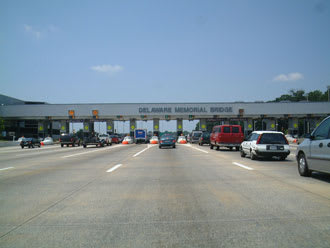
NFI Chief Financial Officer Steve Grabell warned that rapidly increasing toll rates, as well as the spread of tolls across the transportation system, are a threat to consumers and to the trucking industry. (Photo courtesy of http://www.sxc.hu)
In testimony before the Senate Commerce, Science and Transportation Committee, NFI Chief Financial Officer Steve Grabell warned that rapidly increasing toll rates, as well as the spread of tolls across the country, are a threat to consumers and to the trucking industry.
"I am deeply concerned about the significant increases in toll costs that have been imposed on NFI and other trucking companies over the past few years," said Grabell, testifying on behalf of American Trucking Associations during a hearing of the Commerce Committee's Subcommittee on Surface Transportation and Merchant Marine Infrastructure, Safety and Security.
Grabell told the Committee's chairman, Sen. Frank Lautenberg, D-N.J., and other members that in 2011 alone the Cherry Hill, N.J., carrier paid $14 million in tolls.
"These added costs have forced us to re-route our trucks to less efficient secondary roads, which raises our costs and increases congestion and safety concerns," he said. "In addition to the impact increased tolls have on logistics providers, the added costs associated with toll increases filter down to the consumer and affect business decisions regarding hiring and facility location and expansion.
"Where toll facilities serve interstate traffic, we believe that federal oversight and possible intervention in determining toll rates is necessary and appropriate," Grabell said, urging the committee to support the Commuter Protection Act, introduced by Chairman Lautenberg to provide federal oversight for toll authorities.
"While there are many examples of actions by tolling authorities that merit federal attention, I would like to cite two examples which have been brought to light by recent state audits - the Port Authority of New York and New Jersey and the Delaware River Port Authority."
Grabell said the planned increases in tolls on the bridges between New York and New Jersey operated by the Port Authority of New York and New Jersey would increase tolls 163% by 2015, to a total of $105 per truck, "nearly three times greater than the country's next highest bridge toll," adding that it "appears the vast majority of the revenue will be used to benefit seaports and airports and to complete the reconstruction of the World Trade Center office buildings."
Meanwhile, according to a state audit the DRPA has "violated many of its own policies and procedures" during the past decade including using $440 million for economic development funds "at the expense of critical bridge maintenance and improvement projects."
"Congress has an obligation under the Constitution's Commerce Clause to ensure that interstate travelers, who may not be represented when toll rate setting and spending decisions are made, have a voice in these processes," Grabell said, adding that ATA believes the Commuter Protection Act "is a significant step toward ensuring better oversight of tolling authorities that serve interstate traffic."
More Drivers

EEOC Sues Texas Trucking Company Over Driver Age Limits
The agency says Trancasa USA rejected applicants over 65 and applied tougher driving-record standards to those over 60.
Read More →
Nussbaum, Roehl Announce Second Driver Pay Increase This Year
This year has seen a swath of major truck driver pay increases as freight capacity has tightened.
Read More →
From One Generation to the Next: How Mentorship Builds Safer Truck Drivers
After three decades in trucking, Harold Perry shares what he's learned about driver safety, mentorship, and helping the next generation build confidence behind the wheel.
Read More →
Truck Drivers Need More Than Another Alert
Fleets have more visibility into truck health, safety events, and driver activity than ever. The next challenge is turning all that information into useful guidance for the person who has to decide what to do next.
Read More →
FMCSA Removes 110 Truck Driver Training Schools from Certified ELDT List
Federal regulators also are targeting more than 160 additional training providers and launching a nationwide audit of third-party CDL skills testers as part of a broader crackdown on trucking fraud.
Read More →
Hours of Service Pilot Programs: FMCSA Readies for 2027 Rollout
Two pilot programs could eventually reshape hours-of-service rules, giving truck drivers options to pause their 14-hour clock or use longer split sleeper rest periods.
Read More →
Medical Cards, English Proficiency Reshape Roadcheck Violations
Medical-card violations jumped to the top of the driver out-of-service list during CVSA’s 2026 International Roadcheck, while English-language proficiency violations appeared among the leading violations for the first time.
Read More →
Driver Trust Can Make or Break the Success of Fleet Safety Technology
New Teletrac Navman research suggests that onboarding, transparency about driver data, and positive feedback can play a significant role in how commercial drivers respond to safety and coaching technology.
Read More →
EEOC Sues KLLM Over Alleged Sex Discrimination in Driver Training
KLLM is facing a federal sex-discrimination lawsuit over policies the EEOC alleges put female truck driver trainees at a disadvantage.
Read More →
FMCSA Moves to Codify English Language Requirements for Commercial Drivers
By changing regulations on English-language proficiency requirements for commercial drivers, rather than relying on a guidance memo, the FMCSA said future administrations won't be able to walk back the Trump administration's stricter enforcement with just a memo.
Read More →