Heavy Duty Trucking Logo
MenuMENU
SearchSEARCH

Economic Recovery Bringing Renewed Congestion Growth

After two years of slight declines in overall traffic congestion - attributable to the economic downturn and high fuel prices - leading indicators suggest that as the economy rebounds, traffic problems are doing the same. While 2008 was the best year for commuters in at least a decade, the problem again began to grow in 2009

by Staff
January 20, 2011
Economic Recovery Bringing Renewed Congestion Growth

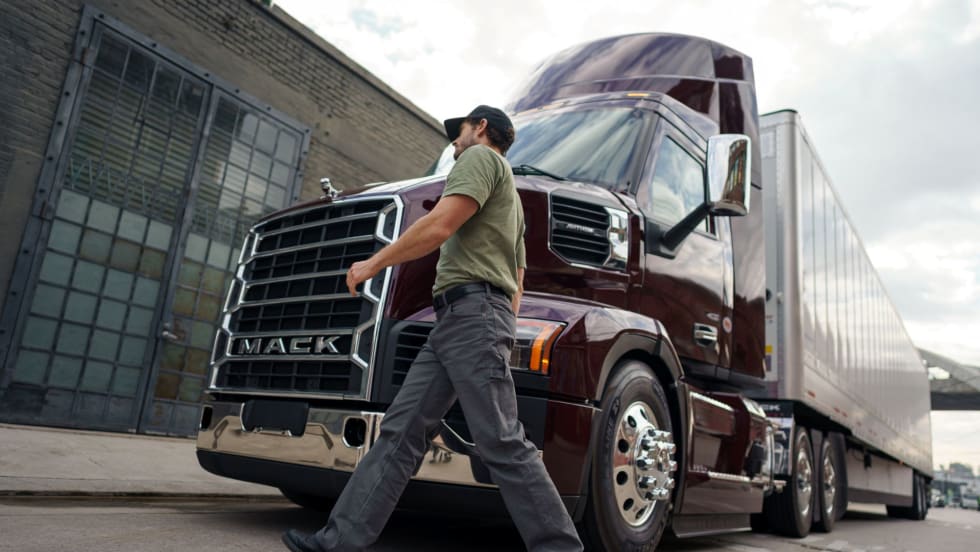
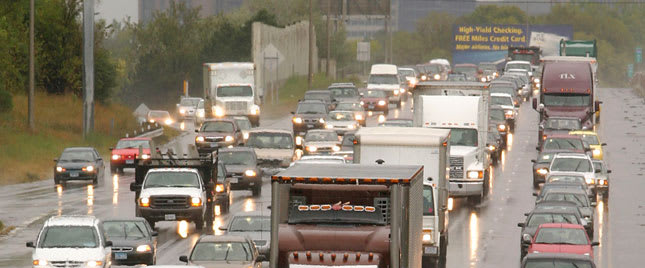
If the recession had you thinking congestion was getting better, think again. (Photo courtesy Michelin.)

3 min to read


After two years of slight declines in overall traffic congestion - attributable to the economic downturn and high fuel prices - leading indicators suggest that as the economy rebounds, traffic problems are doing the same. While 2008 was the best year for commuters in at least a decade, the problem again began to grow in 2009.


The 2010 Urban Mobility Report, published by the Texas Transportation Institute at Texas A&M University, paints a more accurate picture of traffic congestion in the 439 U.S. urban areas. Thanks to the wealth of speed data provided by INRIX, a private-sector provider of travel time information, the current report offers a greatly enhanced picture of congestion on a city-by-city basis, according to researchers.

"This Urban Mobility Report begins an exciting new era for comprehensive national congestion measurement," noted researcher Tim Lomax. "By combining the traffic speed data from INRIX with the traffic volume data from the states, we are now able to provide a much better and more detailed picture of the problems facing urban travelers."

Highlights from the research illustrate the effects of the nation's traffic problems:

* Congestion costs continue to rise: measured in constant 2009 dollars, the cost of congestion has risen from $24 billion in 1982 to $115 billion in 2009.

* The total amount of wasted fuel in 2009 topped 3.9 billion gallons - equal to 130 days of flow in the Alaska Pipeline.

* Cost to the average commuter: $808 in 2009, compared to an inflation-adjusted $351 in 1982.

* Yearly peak delay for the average commuter was 34 hours in 2009, up from 14 hours in 1982.

"We have a great deal more confidence in the numbers we now have for the chaotic years of 2007, 2008 & 2009," researcher Shawn Turner said. "Thanks to technology, we are using data that simply could not have been gathered a few years ago."

The methodology used to calculate congestion has been improved more than a dozen times since the Urban Mobility Report was first published in 1984, but the changes made possible by access to hour-by-hour speed data are the most significant improvement yet, researchers say.

"This year's report is a remarkable game changer," researcher David Schrank explained. "The new data address the biggest shortcoming of previous reports. The data show conditions for every day of the year and include the effect of weather problems, traffic crashes, special events, holidays, work zones and other factors directly impacting traffic flow."

As a result of the new data, a revised congestion trend has been constructed for each urban region from 1982 to 2009. Eleven new urban regions have been added.

Researchers recommend a balanced and diversified approach to reducing traffic congestion - one that focuses on more of everything. Their strategies include:

* Get as much use as possible out of the transportation system we have.

* Add roadway and public transportation capacity in the places where it is needed most.

* Change our patterns, employing ideas like ridesharing and flexible work times to avoid traditional "rush hours."

* Provide more choices, such as alternate routes, telecommuting and toll lanes for faster and more reliable trips.

* Diversify land development patterns, to make walking, biking and mass transit more practical.

* Adopt realistic expectations, recognizing for instance that large urban areas are going to be congested, but they don't have to stay that way all day long.

"There is no rigid prescription - no 'best way' - to address congestion problems," Lomax noted.
"The most effective strategy is one where agency actions are complemented by efforts of businesses, manufacturers, commuters and travelers. Each region must identify the projects, programs and policies that achieve goals, solve problems and capitalize on opportunities."


More Drivers

Illustration of truck owner operator and magnifying glass with the word "regulations"
Driversby Deborah LockridgeFebruary 26, 2026

Owner-Operator Model Gets Boost as DOL Proposes 2024 Independent Contractor Definition Reversal

For an industry that has watched this issue go back and forth for years, the independent contractor proposal marks the latest swing in the regulatory pendulum.

Read More →
 Truck with door open and enforcement officer talking to driver about ELD
DriversFebruary 26, 2026

FMCSA Reinstates Field Warrior ELD to Registered Device List

One electronic logging device has been reinstated to the FMCSA's list of registered ELDs.

Read More →
Photo of truck driver in yellow safety vest walking alongside tractor-trailer
Driversby Deborah LockridgeFebruary 25, 2026

How One Company is Using Smart Suspension Technology to Reduce Driver Injuries and Improve Retention

America’s Service Line adopted Link’s SmartValve and ROI Cabmate systems to address whole-body vibration, repetitive strain, and driver turnover. The trucking fleet is already seeing measurable results.

Read More →
Ad Loading...
Illustration with photos from some of the 2026 Best Fleets to Drive For honorees
Driversby News/Media ReleaseFebruary 24, 2026

CarriersEdge Announces 2026 Best Fleets to Drive For

The 18th annual contest recognizing the best workplaces for truck drivers sees changes to Top 20, Hall of Fame

Read More →
Illustration of driver students around trucks with distressed graphic elements and safety cones
Driversby Deborah LockridgeFebruary 19, 2026

FMCSA Targets 550+ ‘Sham’ CDL Schools in Nationwide Sting Operation

The Federal Motor Carrier Safety Administration issued more than 550 notices of proposed removal to commercial driver training providers following a five-day nationwide enforcement sweep. Investigators cited unqualified instructors, improper training vehicles, and failure to meet federal and state requirements.

Read More →
 Illustration showing a driver behind the wheel, DOT offices, and examples of problematic non domiciled CDL
Driversby Deborah LockridgeFebruary 18, 2026

DOT Alleges Illinois Issued Illegal Non-Domiciled CDLs

Illinois is the latest state targeted and threatened with the loss of highway funding by the U.S. Department of Transportation in its review of states' non-domiciled CDL issuance procedures. The state is pushing back.

Read More →
Ad Loading...
 Illustration showing a driver behind the wheel, DOT offices, and examples of problematic non domiciled CDL
Driversby Deborah LockridgeFebruary 12, 2026

FMCSA Locks in Non-Domiciled CDL Restrictions

After a legal pause last fall, FMCSA has finalized its rule limiting non-domiciled commercial driver's licenses. The agency says the change closes a safety gap, and its revised economic analysis suggests workforce effects will be more gradual than first thought.

Read More →
Photo of Stone's Truck Stop
Driversby News/Media ReleaseFebruary 5, 2026

Trucker Path Names Top Truck Stops for 2026

Truck driver ratings reveal the best chain and independent truck stops in the country.

Read More →
SponsoredFebruary 1, 2026

Stop Watching Footage, Start Driving Results

6 intelligent dashcam tactics to improve safety and boost ROI

Read More →
Ad Loading...
Podcast thumbnail saying "Are we in for more regulatory turbulence?"
DriversJanuary 23, 2026

What FMCSA’s New Enforcement Push Means for Fleets in 2026 [Podcast]

Listen as transportation attorney and TruckSafe Consulting President Brandon Wiseman joins the HDT Talks Trucking podcast to unpack the “regulatory turbulence” of last year and what it means for trucking fleets in 2026.

Read More →