




C-TPAT Program Leaves Carriers Vulnerable to Drug Smugglers
A program designed to expedite trucking's passage across American borders has provided a way for Mexican drug smugglers to get drugs over the border, according to the Associated Press
A program designed to expedite trucking's passage across American borders has provided a way for Mexican drug smugglers to get drugs over the border, according to the Associated Press.
The Customs-Trade Partnership Against Terrorism program (C-TPAT) involves the Free and Secure Trade (FAST) program. To participate in FAST, motor carriers must become C-TPAT certified and their drivers must undergo a background check. Carriers can get expedited clearance of their equipment, driver, and cargo - as long as it belongs to a C-TPAT importer - in addition to getting access to a lane dedicated for FAST participants.
However, the program is not playing out as the government planned, as drugs have been found in truck loads, including 13 tons of marijuana that was discovered in a three-week period last spring, the AP reported.
According to the news service, the government keeps the list of member carriers confidential, but some of the 9,500 companies prefer to publicize their membership to help their businesses. This leaves them vulnerable to and attractive to smugglers.
The participants of the C-TPAT program account for more than half of all U.S. imports, the AP says. In addition, while Mexican trucking companies account for 6 percent of the participants in the program, these companies were involved in half of the 71 security violations in the last two years.
For more information about the C-TPAT program, click here.
More Safety & Compliance

Fleetworthy Integrates Lytx Video Snapshots into Safety+ Platform
A new Fleetworthy-Lytx integration gives fleet managers access to video context alongside safety event data, streamlining driver coaching and incident review.
Read More →
How Waste Connections is Using Data, Telematics, and AI
How do you manage and maintain more than 18,000 connected trucks? Data. Lots of it.
Read More →
Fleet Advantage: Top Logistics Fleets Outperform National Safety Benchmarks
Fleet Advantage's latest TRUST Safety Index found leading logistics fleets maintained significantly lower out-of-service rates and stronger safety scores than national averages, while highlighting persistent challenges related to tires, brakes, and unsafe driving behaviors.
Read More →
Why Fleet Data Matters More Than Ever at Waste Connections [Watch]
Waste Connections' Chuck Palmer explains how telematics, predictive maintenance, safety analytics, and AI help keep vehicles on the road and drivers safe in this episode of HDT Talks Trucking.
Read More →
Short Takes: How K&B is Using AI
Fleets need to "get on board the train" with AI, says Lance Evans of K&B Transportation in this HDT Talks Trucking Short Takes episode.
Read More →
Short Takes: Inside K&B’s Truck Safety Tech
Listen to learn how K&B Transportation uses cellphone-blocking technology, speed management systems, weather geofencing, bridge avoidance tools, and more to improve driver safety.
Read More →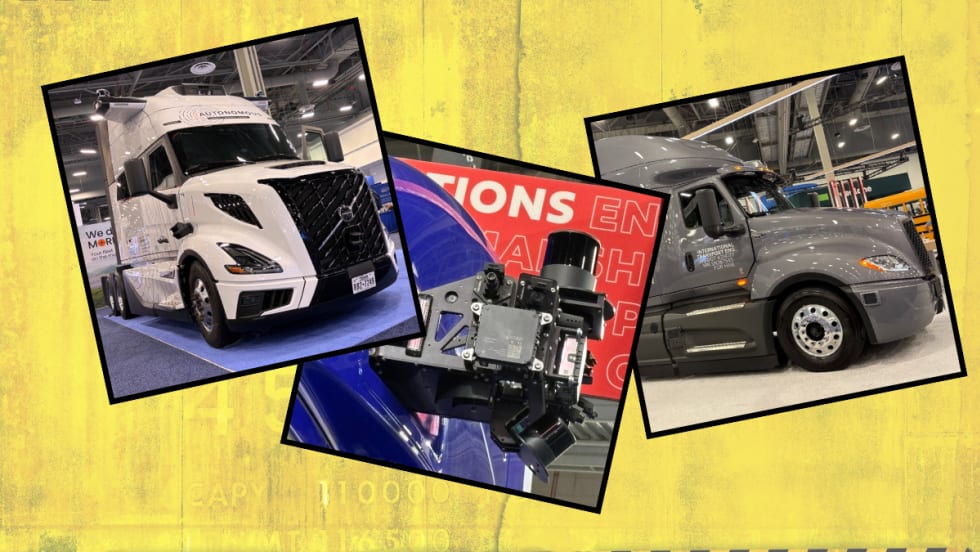
The Biggest Gap in Driverless Trucking Isn’t Tech. It’s Safety Validation
Nauto’s Stefan Heck says autonomous trucks are advancing quickly but proving they’re safe enough for large-scale deployment may be the industry’s hardest challenge.
Read More →
Truck Crash Rates Are Down. So Why Do Insurance Costs Keep Rising?
ATRI’s latest research points to litigation, social inflation, and soaring claims costs as key drivers behind record-high liability premiums for trucking fleets. But there are things motor carriers can do.
Read More →
FMCSA Removes More Than a Dozen ELDs from Registered List
The FMCSA continues its efforts to fight electronic logging devices that don't meet federal requirements, removing more than a dozen from the registered ELD list in May.
Read More →
How the Supreme Court Broker Liability Ruling Could Reshape Trucking’s Safety Landscape
The Supreme Court’s May 11 broker-liability ruling may not radically rewrite transportation law overnight. But industry experts say it will intensify pressure on brokers, carriers, and shippers to prove they are prioritizing safety.
Read More →