





Related News: Third 'Jason's Law' Truck Parking Survey Under Way
Streetline Expands Smart Truck Parking System on West Coast
Streetline is expanding smart truck parking tools, including a new I-5 deployment in Washington and a no-upfront-cost pilot model for state DOTs.
January 16, 2026
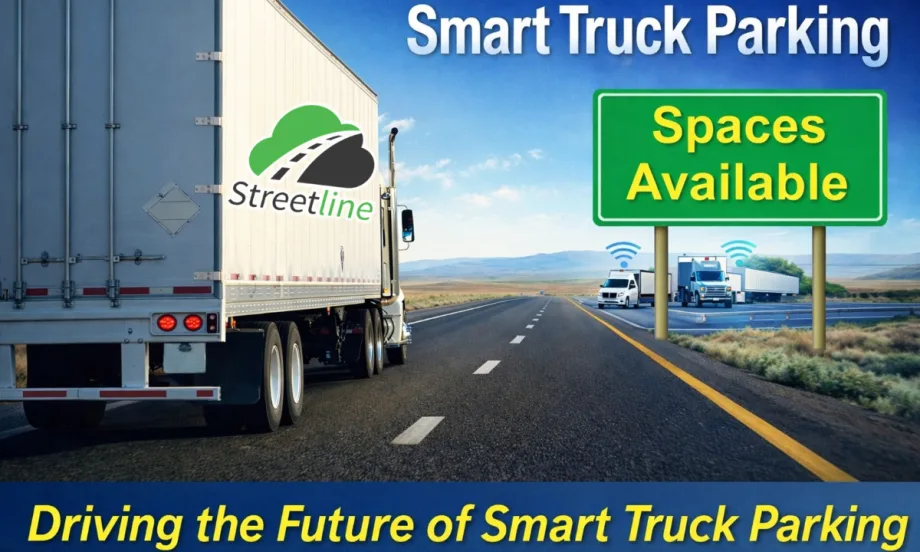
Streetline is rolling out smart truck parking technology that delivers real-time and predictive space availability to help drivers plan stops and reduce unsafe parking.
Photo: Streetline
2 min to read
Streetline has deployed its Truck Parking Information Management System and ParkerTruck mobile app along Interstate 5 in Washington state in cooperation with the Washington State Department of Transportation, while also launching a public-private partnership pilot model aimed at helping states roll out similar systems with no upfront cost.
The I-5 deployment is designed to provide truck drivers with real-time and predictive parking availability information across one of the busiest freight corridors in the U.S. The company said the system helps drivers identify safe truck parking options up to four hours in advance.
Washington I-5 Deployment
The WSDOT system uses AI-enabled cameras and machine learning to monitor truck entries and exits at rest areas, calculate occupancy in real time, and distribute availability data through:
Digital highway signs
A 511 traveler information system
The ParkerTruck mobile application
Streetline said the system is intended to support safer rest planning, reduce illegal shoulder parking, and cut unnecessary idling.
“Every truck driver knows the daily stress of exhausting their operating hours and finding a safe place to park,” said Bill Aboudi, president of AB Trucking, a small drayage carrier. “It gives peace of mind and helps carriers operate more efficiently while keeping our drivers safe.”
The company said the I-5 deployment builds on a recent truck parking availability system project along Interstate 10 in California and Arizona as part of a multistate corridor effort.
Public-Private Partnership Pilot Model for Truck Parking Information
Alongside the I-5 deployment, Streetline announced what it described as the nation’s first public-private partnership model for truck parking information management systems and truck parking availability systems.
Under the model, Streetline will design, deploy, operate, and validate systems at no cost during an initial evaluation period. At the end of the pilot, agencies can choose whether to adopt the system based on the results or end the trial without financial obligation.
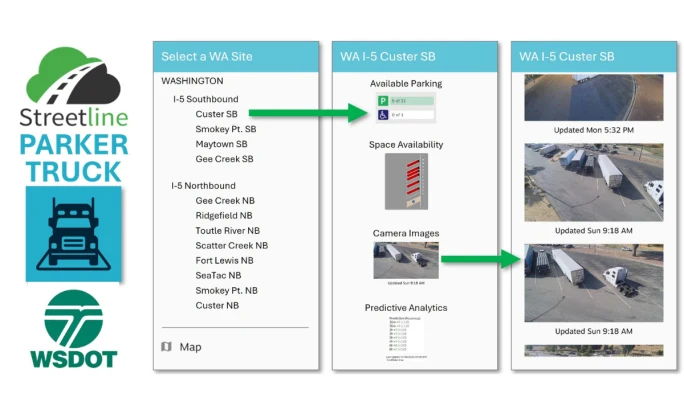
WSDOT’s I-5 deployment includes Streetline’s TPIMS platform and the ParkerTruck mobile app, which shares parking availability data and camera views from rest areas.
Photo: Streetline
“States have been asking for a way to move faster on truck parking solutions without increasing budget pressure or procurement risk,” said Taso Zografos, CEO of Streetline. “This low-risk P3 model changes the equation.”
Streetline said the platform is designed to integrate with existing state DOT infrastructure, including dynamic message signs and 511 systems, while offering:
Per-space real-time availability using camera-based AI
Predictive analytics to improve trip planning and reduce parking search time
Support for hours-of-service compliance
Scalable architecture for integration with third-party mobility platforms
Performance metrics agencies can independently verify
Streetline said it is now seeking state DOTs and related agencies to participate in the first wave of pilot deployments.
More Drivers

EEOC Sues Texas Trucking Company Over Driver Age Limits
The agency says Trancasa USA rejected applicants over 65 and applied tougher driving-record standards to those over 60.
Read More →
Nussbaum, Roehl Announce Second Driver Pay Increase This Year
This year has seen a swath of major truck driver pay increases as freight capacity has tightened.
Read More →
From One Generation to the Next: How Mentorship Builds Safer Truck Drivers
After three decades in trucking, Harold Perry shares what he's learned about driver safety, mentorship, and helping the next generation build confidence behind the wheel.
Read More →
Truck Drivers Need More Than Another Alert
Fleets have more visibility into truck health, safety events, and driver activity than ever. The next challenge is turning all that information into useful guidance for the person who has to decide what to do next.
Read More →
FMCSA Removes 110 Truck Driver Training Schools from Certified ELDT List
Federal regulators also are targeting more than 160 additional training providers and launching a nationwide audit of third-party CDL skills testers as part of a broader crackdown on trucking fraud.
Read More →
Hours of Service Pilot Programs: FMCSA Readies for 2027 Rollout
Two pilot programs could eventually reshape hours-of-service rules, giving truck drivers options to pause their 14-hour clock or use longer split sleeper rest periods.
Read More →
Medical Cards, English Proficiency Reshape Roadcheck Violations
Medical-card violations jumped to the top of the driver out-of-service list during CVSA’s 2026 International Roadcheck, while English-language proficiency violations appeared among the leading violations for the first time.
Read More →
Driver Trust Can Make or Break the Success of Fleet Safety Technology
New Teletrac Navman research suggests that onboarding, transparency about driver data, and positive feedback can play a significant role in how commercial drivers respond to safety and coaching technology.
Read More →
EEOC Sues KLLM Over Alleged Sex Discrimination in Driver Training
KLLM is facing a federal sex-discrimination lawsuit over policies the EEOC alleges put female truck driver trainees at a disadvantage.
Read More →
FMCSA Moves to Codify English Language Requirements for Commercial Drivers
By changing regulations on English-language proficiency requirements for commercial drivers, rather than relying on a guidance memo, the FMCSA said future administrations won't be able to walk back the Trump administration's stricter enforcement with just a memo.
Read More →