




Europe at the Green Energy Crossroads
A group of CEOs is urging the European Union to accelerate hydrogen mobility development or risk losing a strategic economic and security advantage. But another prominent group argues that hydrogen is a technological dead end.

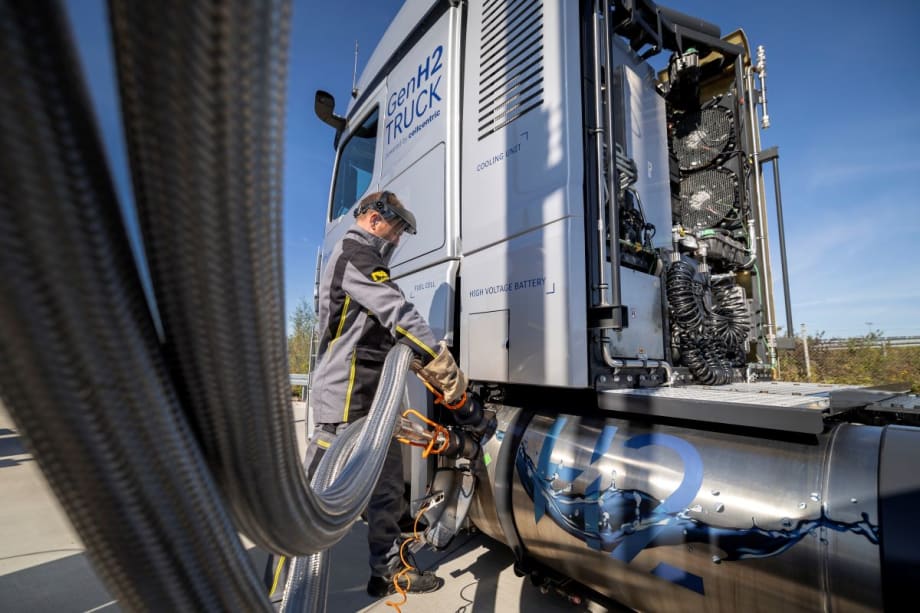
Hydrogen mobility is essential to Europe’s climate goals, industrial competitiveness, and strategic resilience, one group of experts argues.
Photo: Mercedes-Benz Truck
CEOs from the world’s leading energy, automotive, and technology companies have come together to issue a strong and unified message to European policymakers: Hydrogen mobility is essential to Europe’s climate goals, industrial competitiveness, and strategic resilience.
The group is calling for urgent action on hydrogen infrastructure buildout.
But another influential group of electrification experts says hydrogen is a technological dead end.
This group is urging the EU to accelerate the development of battery-electric trucks and a widespread electric vehicle infrastructure.
At the Heart of a Clean Transport System
In a joint letter addressed to EU and Member State leaders, the CEOs urged policymakers to firmly position hydrogen mobility at the heart of Europe’s clean transport and industrial strategies.
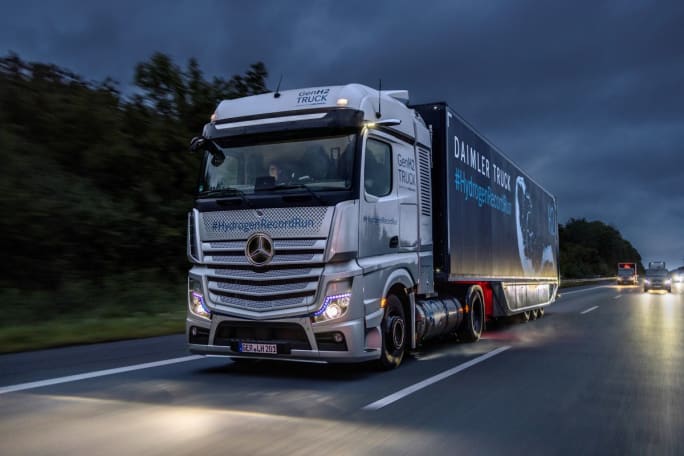
Hydrogen vehicles can complement battery-electric mobility options, a pro-hydrogen group says.
Photo: Mercedes-Benz Truck
The letter has been signed by executives from more than 30 companies, from multinationals to smaller vendors that combined span the entire hydrogen mobility ecosystem.
It calls for immediate and targeted policy support to unlock investment and scale deployment of hydrogen vehicles and infrastructure across the EU.
CEOs Point to Three Critical Issues:
Hydrogen mobility is a strategic imperative: Complementing battery-electric vehicles, hydrogen technologies are vital to ensuring a diversified, resilient, and cost-effective decarbonization of road transport. A combined approach could save Europe between 300-500 billion euros in infrastructure costs by 2050. Two mobility infrastructures will be cheaper for Europe than relying on just electrification.
Hydrogen mobility is a vector for jobs and industrial growth: Europe’s existing industrial strengths in automotive and advanced manufacturing can be leveraged to lead in hydrogen technology, providing up to 500,000 jobs by 2030.
Hydrogen mobility unlocks critical energy system synergies: Hydrogen enables demand aggregation, supports hard-to-abate sectors, and drastically reduces renewable energy waste.
Calls for a More Coordinated Approach
Despite progress, the CEOs warn that hydrogen mobility in Europe will stagnate unless a more coordinated and pragmatic policy framework is implemented to support the rollout of the necessary infrastructure and achieve the scale needed for the hydrogen mobility market to flourish.
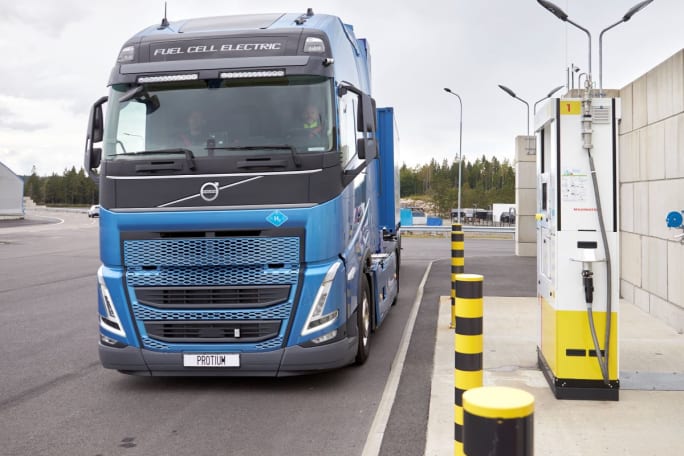
Volvo has been aggressively developing its own line of hydrogen fuel cell trucks in Europe.
Photo: Jack Roberts
For this to happen, hydrogen mobility must form a central element of strategic initiatives such as the Sustainable Transport Investment Plan and Clean Industrial Deal, while the ongoing push to simplify EU regulations can help drive down the cost and complexity of building hydrogen mobility infrastructure.
Is Hydrogen a ‘Costly’ Detour?
But not everyone in Europe is onboard the hydrogen technology train.
In response to CEO’s open letter urging the EU to ramp up support for hydrogen mobility, other industry experts warned that hydrogen is a costly detour away from more proven green transportation solutions.
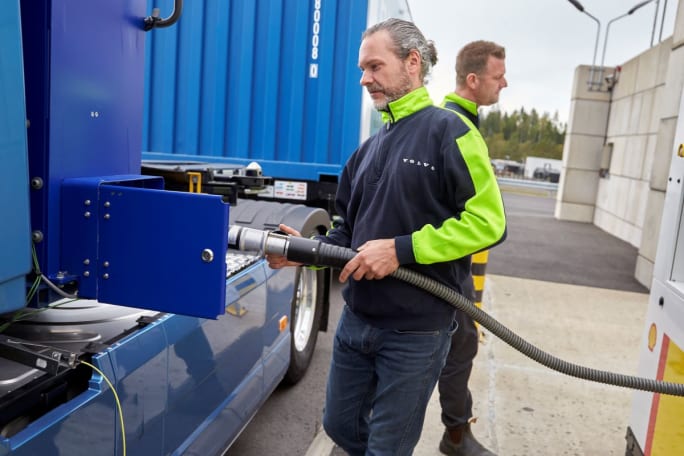
One benefit of hydrogen is fueling times that are very much on par with diesel fills today.
Photo: Jack Roberts
This group of experts say that investing in electrification is the most effective way to cut costs, boost job creation, and strengthen Europe's industrial competitiveness.
Electrification proponents are urging leading manufacturers like Volvo and Daimler Truck – both signatories of the hydrogen letter – to focus their efforts on advancing battery electric technologies.
Despite public commitments to electrify 50% of European truck sales by 2030, both Volvo and Daimler remain significantly off track, this group says.
They argue that in 2024, zero-emission vehicles accounted for less than 2% of their global truck sales and only 1.7% and <1% of their production capacity, respectively.
Together, the two manufacturers hold nearly 90% of the European truck market. But to remain competitive amid accelerating electric truck demand, they will need to rapidly scale up production of affordable, high-volume electric trucks, the electrification experts argue.
“When it comes to choosing new trucks, fleet operators–from one-truck owner-operators to massive, well-known logistics firms–are all asking the same two questions,” said Ben Scott, head of energy demand at Carbon Tracker. “First, how much will this cost me over the long run? And second, will it actually do the job? Manufacturers need to give them reassurance that battery electric trucks won’t compromise on capability.”
Hydrogen at a Disadvantage
Hydrogen trucks face steep structural disadvantages, this group argues.
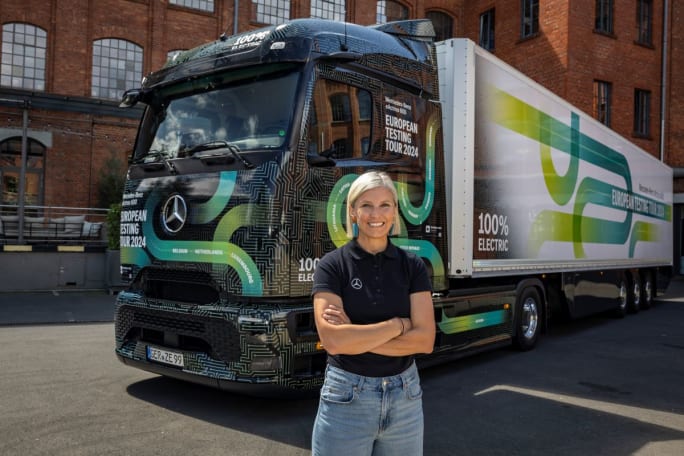
Daimler Truck CEO Rådström with a Mercedes eActros electric truck.
Photo: Mercedes-Benz Truck
It notes that infrastructure for hydrogen is expensive to build and operate. Hydrogen infrastructure often costs two to three times more than electric vehicle charging networks both in terms of capital investment and ongoing operational expenses.
Battery trucks will be cheaper to own and operate in Europe than hydrogen-powered equivalents until at least 2040, the group added.
Franco-German economists echoed this concern, recommending investment should prioritise BETs “as these represent the most mature and market-ready technology for road freight transport.”
While the EU has already committed substantial resources to hydrogen infrastructure–allocating around 25% of Alternative Fuels Infrastructure Regulation (AFIR) funds to hydrogen-industry experts argue that further support is unjustified.
“Hydrogen trucks aren’t expected to scale until around 2035, and the EU has already spent about a quarter of its infrastructure budget on them. That’s more than enough support,” said Jeppe Juul, head of transport policy at Green Transition Denmark.
Electric Trucks on the Move
Signs of momentum in the electric truck market are already emerging. Registrations of battery electric trucks in Europe grew by >50% year-on-year in Q1 2025, even though the total market remains at just 3.5%.
New entrants like Windrose are showing it is possible to achieve total cost of ownership parity with diesel today–delivering electric trucks at scale with a focus on affordability.

BEV OEMs like Windrose are showing it is possible to achieve total cost of ownership parity with diesel today–delivering electric trucks at scale with a focus on affordability, European EV advocates argue.
Photo: Jim Park
Legacy manufacturers that continue to hedge risk being overtaken, the group warned.
If Volvo and Daimler fail to scale electric truck availability and affordability in the near term, they not only jeopardize their climate commitments but risk falling behind newer, nimbler competitors undermining Europe’s industrial edge in the process.
“The next few years will be decisive for the future of the trucking industry,” said Merlin Jonack, transport policy officer at NABU. “On every critical measure–from energy costs to operating efficiency–battery electric trucks are clearly pulling ahead. Hydrogen, by contrast, will remain scarce and expensive for years to come and is urgently needed in sectors like aviation, shipping, and energy-intensive industries. Rather than conceding the race for battery-electric powertrains, European OEMs must now act decisively to close the gap and secure their competitiveness in a rapidly electrifying market.”
Investing further in hydrogen may seem like a hedge, the group warned. But in reality, it risks prolonging diesel dependence, weakening Europe’s industrial base, and eroding job security.
What Europe’s freight sector needs now is clarity about the way forward, electrification experts said.
Industry experts urge manufacturers to align industrial strategy, public investment, and innovation around battery electric trucks–both to accelerate progress on electrification and to safeguard industrial competitiveness.
More Fuel Smarts

How Volvo Updated Its D13 for EPA 2027 [Watch]
Volvo’s updated D13 promises lower emissions without sacrificing performance or fuel economy. Take a closer look at what changed inside the engine in this HDT Spotlight video.
Read More →
Diesel Price Spike Shortens Payback for Natural Gas Trucks, Report Says
Energy Vision estimates fleets could recover the higher purchase price of an RNG-fueled Class 8 tractor in 1.3 to 2.8 years under current fuel-price scenarios.
Read More →
Calstart Becomes Catalyst Mobility, Reflecting Broader Focus
Calstart is now Catalyst Mobility, reflecting the nonprofit’s growing national role in clean transportation, including zero-emission trucks, infrastructure and incentive programs.
Read More →

Record Diesel Prices Squeeze Trucking Fleets
Average U.S. diesel prices have climbed to nearly $6 a gallon, surpassing the 2022 record as tight refinery capacity and Middle East disruptions keep fuel costs elevated.
Read More →
How Fuel Delivery Shapes Engine Performance
Fuel delivery depends on more than what happens at the injector. For fleet, maintenance and technical professionals, looking at the full path from pump to injector can provide useful context for understanding engine performance.
Read More →
East Coast Port Launches $45M Electric Truck Push
The Port Authority of New York and New Jersey announced millions in incentives for zero-emission drayage trucks, yard tractors, and new charging hubs near the port.
Read More →
California Bill Could Shed Light on Electric Truck Prices
Why do battery-electric Class 8 trucks remain so expensive? A California bill headed to Gov. Gavin Newsom would give fleets and state agencies more visibility into what manufacturers charge.
Read More →
Detroit Opens Orders for EPA 2027 Engines
Detroit isn’t starting from scratch to meet EPA 2027 diesel emissions standards. Its Gen 6 DD13 and DD15 engines keep much of today’s platform while updating the fuel and aftertreatment systems.
Read More →
Zero-Emission Truck Corridor Planned for West Coast
California, Oregon, Washington, British Columbia and Baja California are coordinating plans for truck charging and hydrogen fueling from Canada to Mexico.
Read More →
A Closer Look at Kenworth’s Electric T880E Vocational Truck [Video]
Learn more about Kenworth's T880E battery-electric vocational truck at the Paccar Technical Center, including its range, applications, upfitting considerations, and PTO options, in this HDT Spotlight video.
Read More →