




3 Tips for Improving Collaboration with Service Shops
How fleet management software can help trucking operations maximize maintenance outsourcing.
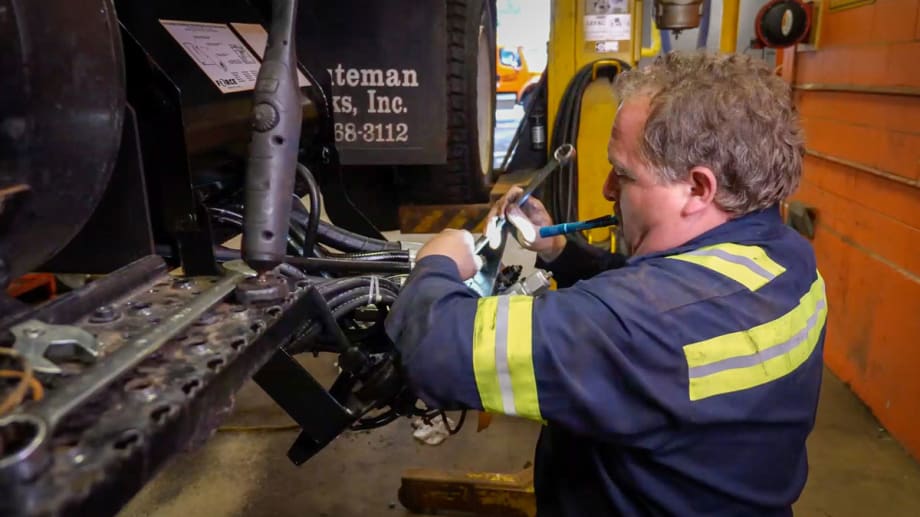
An important part of maintenance outsourcing is selecting the right shop and working with them to get a clear understanding around expectations.
Photo: Fleetio
Collaboration is a key component in fleet operations, but when working with third-party service shops, communication issues can arise, leading to missed work, repeated work, extended downtime, and inaccurate billing.
Technologies such as fleet management software can help fleets take advantage of a large maintenance provider network while improving service-related communication, auto-approving common service tasks, and consolidating billing, reducing downtime.
Tackling the Core Challenges of Outsourcing
For many fleets, cost and resource availability play heavily into the decision to outsource maintenance. For widespread trucking fleets that’s often going to be the best option, at least for some locations.
Unfortunately, a breakdown in communication around maintenance and repairs is one of the main contributors to a bad — and costly — overall experience.
Umair Tahir, director of fleet for Georgia-based delivery and logistics company DeliverOL, found out first hand just how frustrating these communication breakdowns can be.
“When I first started, we were using a thousand different shops,” he says. “I ended up assigning everything to Pep Boys National level, so no matter where we are in the country, we have that account and can just send vehicles over,” he explains.
Before adopting fleet management software, Tahir says shops always called or emailed, which caused some problems.
“If I didn’t like something — didn’t like the price, something didn’t need to be done, or they had recommendations — I had to email them back. They had to change it, then email me back again until we figured it out.
“We started losing things here and there — papers got misplaced for work that was done. We couldn’t keep up with warranty parts. We’d sometimes get five or six emails just for one repair order. That was a headache. It was a mess for one person to try to handle shops across the entire country.”
While consolidating all service work to one chain can greatly help reduce communication issues, building a strong relationship with the shop (or shops) you use is pretty much make-or-break for a successful partnership.
Part of this includes selecting the right shop and working with them to get a clear understanding around expectations, including discount tiers, timely scheduling, and triaging of high-priority repairs.
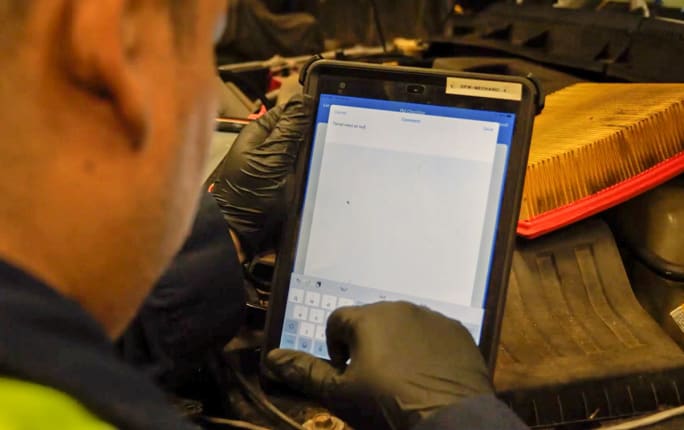
With the right fleet management and maintenance software, shops can communicate within digital repair orders if they have additional notes or recommendations.
Photo: Fleetio
Maximizing the Benefits of a Fleet Management System
After implementing a fleet management system and using the software’s maintenance shop integration feature, Tahir saw massive improvements in shop collaboration.
“I’ve definitely gotten a lot more ‘in it’ with the shops, understanding their process — how fast they can do things,” he explains.
“We still communicate all the time. [FMS] doesn’t detract from that. We still talk on almost a daily basis about what’s coming in and timelines. The guys at the shops are usually like, ‘We got you; we know how you are,’ because they start knowing you, and you start knowing them regarding the way you like to do things, how they like to do things, prices you’ve set, and the like.”
No matter what tactic you’re using to track asset service, here are a few key tips for improving collaboration with shops:
1. Streamline and Consolidate Communication
Keeping service information together — and organized — makes life a whole lot easier, on both the fleet and shops.
Robust maintenance spreadsheets are a great resource for fleets not using any maintenance management solutions but still needing to track a significant volume of service data. You can even add any necessary notes around services performed, such as shop recommendations for added service tasks.
Having this data readily available can help fleets address issues earlier based on the asset’s service history and notes accumulated from the shop.
With the right fleet management and maintenance software, shops can communicate within digital repair orders if they have additional notes or recommendations.
This is especially convenient when an asset arrives at a shop for a repair and the shop sees the asset has a scheduled preventive maintenance service coming due soon. They can tack those maintenance tasks onto the repair order for approval, which cuts down on the asset’s overall time in the shop.
Fleets can also set auto-approvals for repair orders based on service type or cost for more expedient service. A recent benchmarking report showed that FMS users experience an average issue resolution time of 1.68 days.
2. Track Service Histories to Estimate Service Duration
This tip goes hand-in-hand with setting expectations with shops.
For a realistic measurement of service task durations, it’s important to look at both service histories to get an average estimate and shop-related downtime. Shop-related downtime will give you a good idea of inefficiencies in the service process, whether that's having drivers sit around waiting on an invoice payment to go through, inability to take emergency repairs on the fly, or poor scheduling.
To determine shop downtime, compare average estimated service task duration against an asset’s time in the shop — which is hopefully recorded on the repair order.
When using a good maintenance software program, this data is automatically collected. Fleets can set estimated service durations in repair orders so shops know the time you expect certain tasks to take.
You can even set and monitor assets statuses, such as in-shop or waiting for repair to stay on top of shop-related downtime and its source. Working with the shop around service task duration can help both parties determine reasonable service timelines that fit the fleet’s needs while not overtaxing the shop’s capacity.
3. Reduce Billing Issues
Paying per service rather than on a monthly basis can lead to production loss and feeds into shop-related downtime, especially if shops don't take payment over the phone. This can be a major pain point for drivers, since time is money. Some shops offer billing on a monthly basis, which can help fleets avoid the unnecessary wait time and get drivers back on the road sooner.
Fleet management software can help fleets take advantage of a maintenance provider network with a built-in monthly billing cadence fleets can use to save time going back and forth about payments and reduce downtime.
While applying these tips to your trucking fleet operation can save you a lot of time and money, they can also improve your working relationship with the shops you use. And better relationships can lead to major gains across the fleet.

Photo: Fleetio
About the Author: Rachael Plant’s automotive background started in auto parts inventory management. After developing and contributing articles to construction magazines, she moved into overseeing fleet-specific editorial in national trade publications and eventually joined Fleetio, a fleet management software that helps organizations track, analyze and improve their fleet operations.
This contributed guest article was authored and edited according to Heavy Duty Trucking’s editorial standards and style to provide useful information to our readers. Opinions expressed may not reflect those of HDT.
More Maintenance

Color Match Smarter: Tools That Restore & Perform
For fleet managers and collision repair professionals keeping heavy-duty trucks on the road, getting the color right the first time isn't just about appearance — it's about efficiency, turnaround time, and bottom-line results. Discover how today's digital color tools are transforming the repair process from guesswork to precision.
Read More →
Wrong Repair Prompts Recall of Freightliner, Western Star 4x2 Trucks
DTNA is recalling more than 2,400 trucks that received an incompatible software fix instead of the hardware repair required to address brake valve corrosion.
Read More →
Truck Drivers Need More Than Another Alert
Fleets have more visibility into truck health, safety events, and driver activity than ever. The next challenge is turning all that information into useful guidance for the person who has to decide what to do next.
Read More →
The Maintenance Checks Trucking Fleets Should Prioritize Before Fall Freight Picks Up
Making it through August isn’t the same as being ready for the next several months of operation. Find out what systems may have suffered from summer heat and need to be checked out before fall.
Read More →
What Three Fleets Are Doing Differently When Buying Truck Parts in 2026
With freight improving but costs still climbing, fleet maintenance executives explain how they're balancing price, quality, and supplier relationships.
Read More →
Paccar Recalls 2027 Trucks Built This Summer for Possible Electrical Problem
The nearly 6,000 Kenworth and Peterbilt trucks in the recall could potentially lose engine power, among other things.
Read More →
Will API PC-12 Oil Change Trucking Fleet Maintenance?
The new API PC-12 heavy-duty engine oil category reflects the changing demands of modern diesel engines. But fleets like Foodliner are looking to getting their own data before making decisions on adopting the new oils and questions such as extending oil drain intervals.
Read More →
Brake Safety Week to Focus on Drums and Rotors
Commercial vehicle inspectors are focusing on truck brakes during CVSA's Brake Safety Week, August 23-29.
Read More →Possible Battery-Cable Fires Prompt Recall of 15,000+ International MV and HV Trucks
On the recalled vehicles, manufacturing variations can cause the battery interconnect cable to contact the auxiliary stud and hold down the bracket.
Read More →
Rush, MCT Team Up to Grow Refrigeration Service Network
The joint venture will operate MCT's network of Carrier Transicold dealerships and mobile service locations, with the companies promising greater service capacity and uptime for refrigerated fleets.
Read More →