




ChargePoint Announces Three Megawatt EV Truck Charging Architecture
The ChargePoint Megawatt Charging system delivers enough electricity to power approximately 1,000 residential homes.

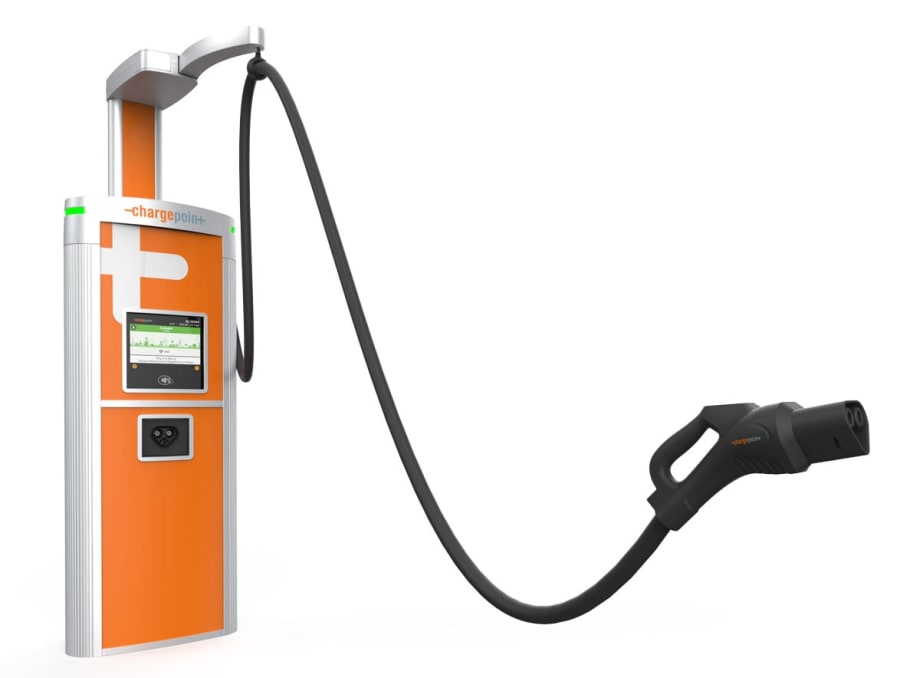
The Megawatt Charging System consists of a new electric cable and connector available on ChargePoint’s Power Link 2000 stations and part of the modular Express Plus DC fast charging platform.
Photo: ChargePoint
Charging solutions provider Chargepoint has announced its Megawatt Charging System. The new system is estimated to be capable of dispensing enough energy to power approximately 1,000 homes. It is also the latest addition to ChargePoint’s DC fast-charging lineup. The company said its immense rate of charge will help enable the electrification of commercial trucking.
A High-Capacity Cable and Connector
According to ChargePoint, the Megawatt Charging System consists of a new electric cable and connector. Both will be available on ChargePoint’s Power Link 2000 stations and part of the modular Express Plus DC fast charging platform.
Initially, the company said, the Megawatt Charging System will deliver up to 1.2 megawatts. The system also supports bi-directional charging and will enable output of up to three megawatts in the future — before vehicles capable of accepting such charge actually become available.
The system is also designed for charging in marine and aviation applications.
“Megawatt technology is the first step toward electrifying the commercial trucking industry,” said Hossein Kazemi, CTO, hardware at ChargePoint.
“Megawatt charging solves one half of the electrification equation for trucking. The companies developing electric trucks can now leverage this infrastructure to test and enable their vehicles until they meet – or even exceed – the distances covered by internal combustion trucks.”
ChargePoint added that the greatest benefit of an electrified trucking sector is the reduction of emissions, as transportation represents the largest polluting segment. The industry is currently responsible for an annual 400+ million metric tons of greenhouse gas emissions in the USA alone.
The electrification of these vehicles will represent a significant step towards achieving global climate goals, but first the megawatt charging infrastructure must go into place to charge them.
More Fuel Smarts

Why Small Fuel Savings Matter in Trucking
Can better fuel economy help pay for driver raises? In this podcast, GP Transco explains how small efficiency gains create room to reinvest in its people.
Read More →
How GP Transco Cuts Trucking Fuel Costs, a Tenth of a Gallon at a Time
What’s another tenth of a mile per gallon worth? GP Transco shares how equipment upgrades and driver coaching turn small gains into meaningful fuel savings.
Read More →
Electric Yard Tractors Move Beyond Pilots
Operating-cost savings have overtaken sustainability goals as the leading reason surveyed fleets are adopting battery-electric terminal tractors, according to new NACFE research.
Read More →
Geotab Links Fleet Card to Vehicle Data
The new card combines fuel discounts with telematics-based purchase controls. Geotab’s analysis also points to potential savings from choosing lower-priced fuel stops.
Read More →
Fleet Economics Shape Electric Truck Outlook
ACT Research expects costs, charging infrastructure, and technology improvements to drive zero-emission commercial vehicle adoption as federal regulations and incentives retreat.
Read More →
Wex Adds Cardless Fuel Payments for Over-the-Road Customers
A new fuel card feature for Wex customers offers convenience and security.
Read More →
New California Law Could Shed Light on Electric Truck Prices
Why do battery-electric Class 8 trucks remain so expensive? A California bill signed by Gov. Gavin Newsom would give fleets and state agencies more visibility into what manufacturers charge.
Read More →
How Volvo Updated Its D13 for EPA 2027 [Watch]
Volvo’s updated D13 promises lower emissions without sacrificing performance or fuel economy. Take a closer look at what changed inside the engine in this HDT Spotlight video.
Read More →
Diesel Price Spike Shortens Payback for Natural Gas Trucks, Report Says
Energy Vision estimates fleets could recover the higher purchase price of an RNG-fueled Class 8 tractor in 1.3 to 2.8 years under current fuel-price scenarios.
Read More →
Calstart Becomes Catalyst Mobility, Reflecting Broader Focus
Calstart is now Catalyst Mobility, reflecting the nonprofit’s growing national role in clean transportation, including zero-emission trucks, infrastructure and incentive programs.
Read More →