





NACFE: Hydrogen Has a Future in Long-Haul Despite Lingering Questions
Nikola’s Hydrogen-Truck Fueling Strategy
Nikola’s Hyla Energy division is using modular hydrogen refueling stations to help bridge the chicken-and-egg gap between supply and demand for fuel-cell-electric trucks.
April 26, 2024
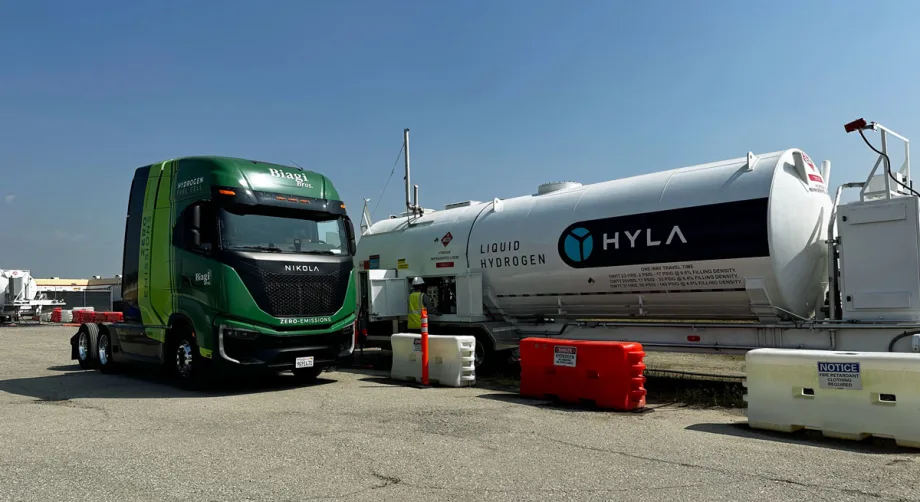
Biago Bros. was one of the fleets on hand for the opening ceremony of Nikola's hydrogen fueling station.
Photo: Chris Brown
6 min to read
Nikola’s Hyla energy brand is using modular hydrogen refueling stations to help bridge the chicken-and-egg gap between supply and demand for fuel-cell-electric trucks.
Hyla, announced in early 2023, is a brand devoted to procuring, producing, distributing and dispensing hydrogen to fuel its zero-emissions trucks — and those of other truck makers.
In February, Nikola opened its first high-pressure hydrogen refueling station. Located in Ontario, California, it’s right across from the Ontario airport. Flying in to that airport, you can see a carpet of warehouses and distribution centers surrounded by trailers and trucks, a market for zero-emission trucks as state mandates kick into gear.
The modular station will be capable of fueling up to 40 Nikola FCEV Class 8 trucks daily. It’s part of Nikola’s plan to develop up to nine refueling solutions set to be completed by mid-2024, with 14 total refueling solutions to be operational by the end of the year.
Nikola will provide 24/7 support with on-site “Hyla ambassadors” and technicians.
Hyla’s Hydrogen EcoSystem Strategy
In an interview at the grand opening celebration of the Ontario Hyla facility, Ole Hoefelmann, president of Nikola Energy, explained the importance of the modular strategy in solving the chicken-and-egg problem of investing in alternative fueling facilities.
“Ultimately what you’re looking for is that people build permanent stations,” he said. “This [facility] is not a solution for 10 years.”
The challenge in building permanent hydrogen fueling stations is the chicken-and-the-egg question. It’s not profitable for a developer to invest in a hydrogen fueling facility if there aren’t enough customers to support it. But trucking companies won’t invest in hydrogen trucks unless there’s a way to fuel them.
“What we've done is we’ve taken that conversation off the table,” Hoefelmann said.
These modular stations can help bring the permanent stations to fruition, he explained. Hyla can bring in the modular stations and install them around where the permanent station is being built, building density and building demand.
One of Hyla’s modular systems can fuel 50 to 70 trucks a day, he explained. With three of them, that’s capacity for 150 to 200 trucks. Hyla can work to bring in fleet customers that will use those modular stations. By the time the permanent station is ready to go, there will be a customer base ready.
“When the permanent station is ready to go, I transfer the fleets over, the customer base, and I remove my modular fuelers and go to the next site that I’m developing.”
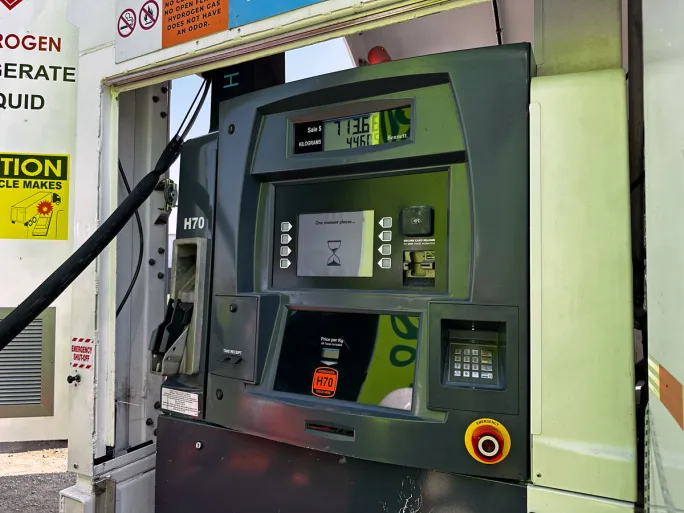
The Ontario station will be capable of fueling up to 40 Nikola hydrogen fuel cell electric Class 8 trucks daily.
Photo: Chris Brown
Asked about whether hydrogen could be delivered via pipeline similar to natural gas, Hoefelmann said that even with permanent stations, it’s unclear whether that is realistic.
“Today, the solution still is liquid deliveries into liquid trailers,” he says, and even permanent stations are likely to have liquid deliveries, he said.
But the advantage of hydrogen in liquid form, he said, is that the hydrogen can be trucked in from various locations. That offers flexibility on where hydrogen fueling stations can be built as well as where the hydrogen comes from.
Where Does the Hydrogen Come From?
One of the criticisms of hydrogen as a transport fuel has been that the production of hydrogen itself can be a source of pollution and greenhouse gases. And that is something that Hyla is working to address.
“There’s an ecosystem that has been built by the industrial gas companies,” Hoefelmann explains. “They have two kinds of systems that they build. One is large scale hydrogen production for like a refinery. So that’s a dedicated plant, tied to one customer or on a pipeline.
“Then you have an ecosystem that was built around what’s called the merchant market. So this is where you take hydrogen either in gaseous form and put it in a tube trailer and deliver it, or you liquefy it and you deliver it.”
In this legacy hydrogen system, he said, the feedstock is natural gas, which has a higher carbon intensity. This is often referred to as “gray” hydrogen. The quest is for “green” hydrogen, created from renewable energy sources.
Two or three years ago, he says, “there was a lot of hype around industrial green hydrogen, and those were really the growth markets.”
That has slowed down, he says, and new project developers are looking at mobility.
“They come and talk to Nikola and say, when your trucks coming, how much volume do you need? And our discussion with them is, what is your CI? [Carbon intensity]? How are you helping us help our customers in the end meet what they need to get to? And then also, what is the ultimate cost for this CI indicator that I'm able to achieve?”
During those discussions, Hyla asks project developers about the source of the hydrogen. It is an electrolyzer project? Is it using renewable sources such as manure?
“There’s all kinds of things out there that are looking to reduce CI, which then ultimately allows us to reduce the total cost to dispense the hydrogen.”
High Prices a Challenge in Adopting Hydrogen Fuel
The price of hydrogen fuel is a concern. Prices have been rising over the past two years, and estimates are that it currently could cost three times as much to fill up a truck as diesel. Other FCEV truck makers have said hydrogen needs to be priced closer to $10 per kilogram rather than the $25 plus it has been recently.
Asked about the problems with high prices, Hoefelmann said, “I think there’s a supply and demand question overall. And sometimes when people say they can get hydrogen cheaper somewhere else, when you start asking the questions, what kind of hydrogen is it, what pressure is it, is it liquid, can you deliver it, things start adding up.
“So when you look at the hydrogen cost, you have the cost to produce, you have the cost to liquefy, you have the cost to deliver, and the cost to dispense it.
“I think the market mechanisms that we have today in California in the light-duty market are not necessarily reflective of we’re trying to do on heavy-duty,” he said.
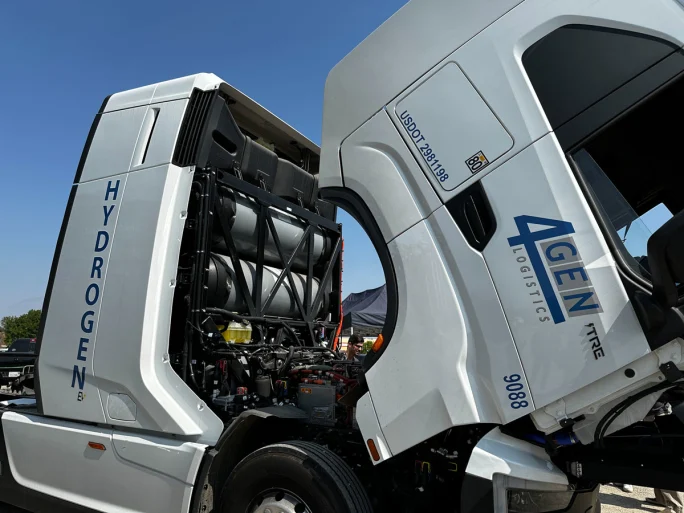
4 Gen Logistics is one of the fleets looking at incorporating fuel-cell-electric trucks.
Photo: Chris Brown
One challenge in that supply and demand equation is that trucking is not the only industry using hydrogen.
“There’s a market price today that exists when those molecules get sold to other applications, like the electronics industry or the steel industry, that we kind of compete with today —because the infrastructure was built for that market,” Hoefelmann said.
“What we’re trying to do here is work with other companies to build new capacity that does two things,” he explained. It gets out of that cost structure and allows the application of various “green” incentives.
Will Total Cost of Ownership Outweigh High Price of Hydrogen?
“If you look at that value chain that talks about production, distribution, dispensing… seven years ago, we were all waiting for heavy-duty to come to help bring their costs down and allow us to bring the technology at a competitive price for the operator.
“I think the discussion still needs to be more mature around TCO.”
Christian Appel, global head of Nikola's product and programs, stressed during the Ontario interview that it’s not just the price of the hydrogen itself that needs to be considered — it’s also total cost of ownership.
California-based Biagi Bros., which recently completed a two-month trial of a Nikola FCEV and had a truck at the Ontario event, told the Wall Street Journal that because the FCEV has longer range and a quick refueling time, his drivers got twice as much work out of the truck each day compared with battery-electric trucks.
Chris Brown, associate publisher of Bobit brands Automotive Fleet, Auto Rental News, and Fleet Forward, contributed to this story.
Topics:Fuel Smarts
Subscribe to Our Newsletter
More Fuel Smarts
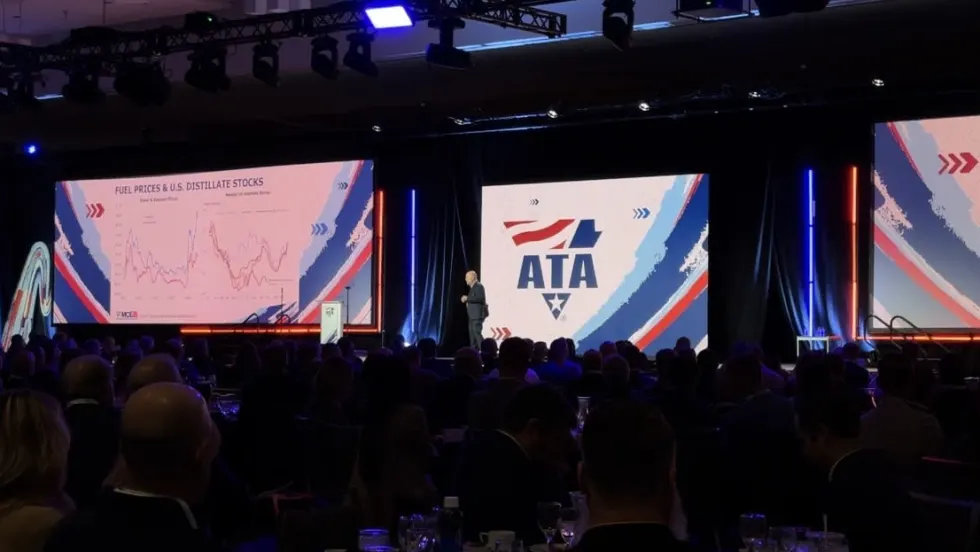
Trucking’s Diesel Squeeze Isn’t Letting Up
With diesel topping $6 a gallon nationally, ATA's Bob Costello explains why fleets should prepare for continued pressure at the pump.
Read More →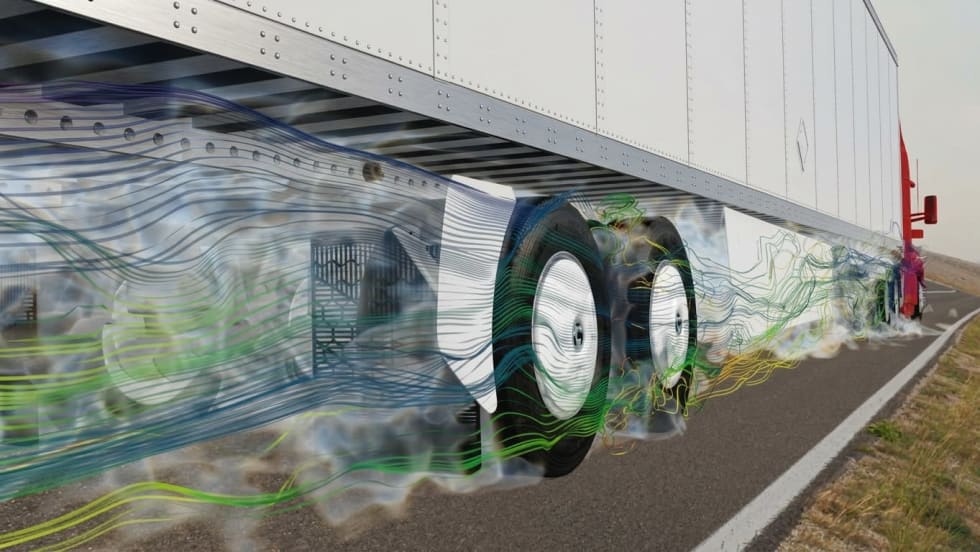
FlowBelow Redesigns Trailer AeroSlider to Cut Fuel Use
The lighter trailer aerodynamic system installs in less than 45 minutes, according to the company, with potential payback in under a year depending on fuel prices and trailer mileage.
Read More →
Why Diesel Price Relief Efforts May Fall Short
Diesel prices have eased from September’s record high, but doubts about additional Russian supply and limits on dyed-diesel tax relief mean trucking fleets still face expensive fuel. And prices could go higher.
Read More →
Why Small Fuel Savings Matter in Trucking
Can better fuel economy help pay for driver raises? In this podcast, GP Transco explains how small efficiency gains create room to reinvest in its people.
Read More →
How GP Transco Cuts Trucking Fuel Costs, a Tenth of a Gallon at a Time
What’s another tenth of a mile per gallon worth? GP Transco shares how equipment upgrades and driver coaching turn small gains into meaningful fuel savings.
Read More →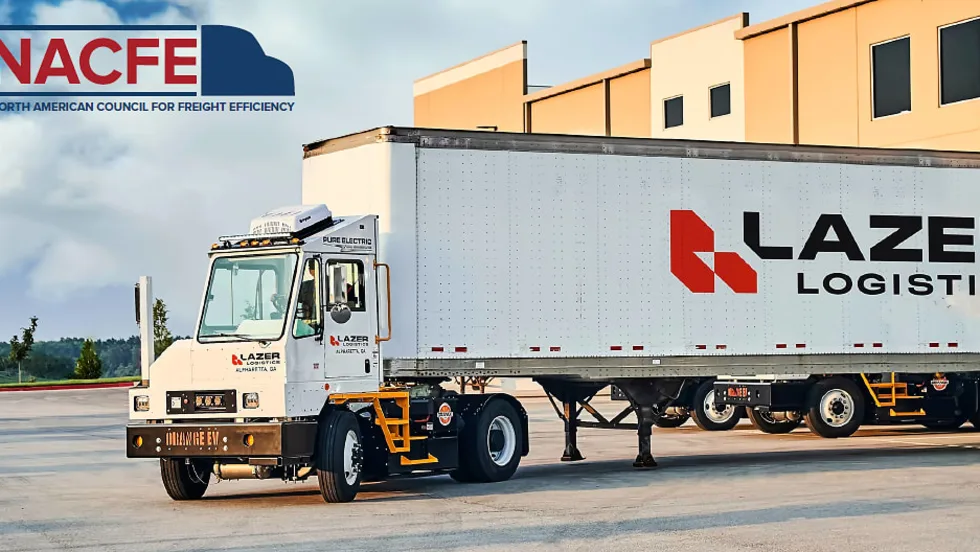
Electric Yard Tractors Move Beyond Pilots
Operating-cost savings have overtaken sustainability goals as the leading reason surveyed fleets are adopting battery-electric terminal tractors, according to new NACFE research.
Read More →
Geotab Links Fleet Card to Vehicle Data
The new card combines fuel discounts with telematics-based purchase controls. Geotab’s analysis also points to potential savings from choosing lower-priced fuel stops.
Read More →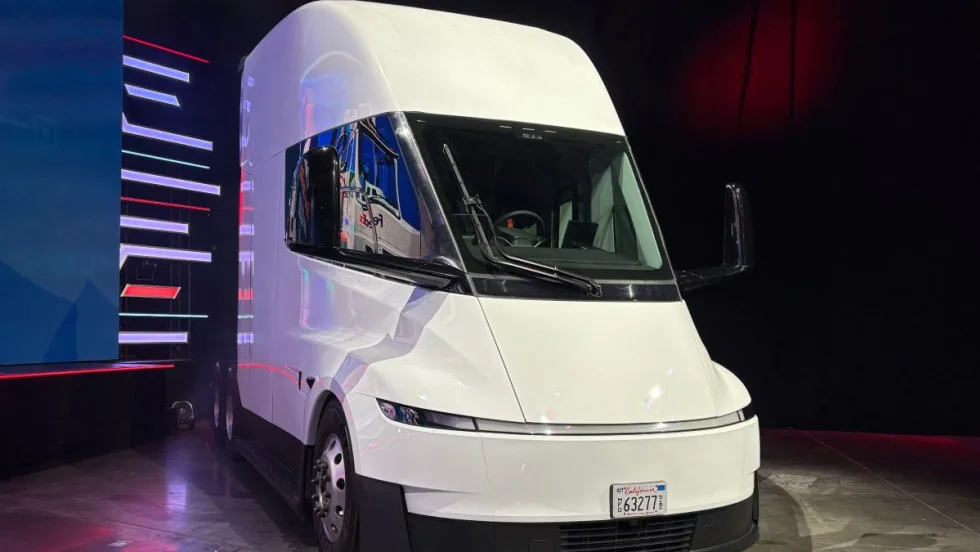
Fleet Economics Shape Electric Truck Outlook
ACT Research expects costs, charging infrastructure, and technology improvements to drive zero-emission commercial vehicle adoption as federal regulations and incentives retreat.
Read More →
Wex Adds Cardless Fuel Payments for Over-the-Road Customers
A new fuel card feature for Wex customers offers convenience and security.
Read More →
New California Law Could Shed Light on Electric Truck Prices
Why do battery-electric Class 8 trucks remain so expensive? A California bill signed by Gov. Gavin Newsom would give fleets and state agencies more visibility into what manufacturers charge.
Read More →