




Brake Issues Put 11% of CMVs Out of Service in CVSA Brake Safety Day
Inspectors found brake-related critical vehicle inspection items on 11.3% of the vehicles checked during the Commercial Vehicle Safety Alliance’s Brake Safety Day, resulting in 773 commercial vehicles placed out of service.


A commercial vehicle inspector takes measurements while checking a trailer during Brake Safety Day.
Photo: CVSA
Inspectors found brake-related critical vehicle inspection items on 11.3% of the vehicles checked during the Commercial Vehicle Safety Alliance’s (CVSA) Brake Safety Day. The enhanced focus resulted in the restriction of 773 commercial vehicles from travel until the violations were corrected.
In comparison, last year's Brake Safety Day saw nearly 1,300 commercial vehicles put out of service, or 14% of those inspected, for brake problems.
During this one-day unannounced inspection and enforcement campaign across Canada, Mexico, and the United States, commercial motor vehicle inspectors conducted their usual vehicle and driver inspections. They reported brake-related data to CVSA for a one-day snapshot of the state of brake systems on commercial motor vehicles.
The top three brake-related out-of-service conditions documented from the April 19 data were:
20% Brakes Violations: Of the vehicles checked, 479 had 20% brake violations. A vehicle is declared out of service when 20% or more of its service brakes have an out-of-service condition resulting in a defective brake, such as a brake out of adjustment, an audible air leak at the chamber, defective linings/pads, a missing brake where brakes are required, etc.
Other Brake Violations: CVSA reports 368 vehicles had other brake violations. Examples of other out-of-service brake violations are worn brake lines, broken brake drums, inoperative tractor protection system, inoperative low air warning device, air leaks, and hydraulic fluid leaks.
Steering Brake Violations: Inspectors noted 81 vehicles with steering brake violations. Examples of automatic standalone out-of-service steering axle brake violations are inoperative brakes, mismatched brake chambers, mismatched slack adjuster length, defective linings, etc.
Results by Country
Canada – 10% (88 vehicles) of the 894 total commercial motor vehicles inspected were placed out of service for brake-related violations.
Mexico – 34 commercial motor vehicles were inspected. Six (18%) had brake-related out-of-service violations and were placed out of service.
United States – Inspectors placed 679 (11.5%) of the 5,901 total commercial motor vehicles inspected out of service for brake-related violations.
Gathering Data
CVSA's Brake Safety Day is an opportunity to gather additional data related to the health and wellness of brake systems on commercial motor vehicles. This year, CVSA focused on capturing data on brake lining/pad violations. Brake lining/pad conditions can result in violations and affect a motor carrier’s safety rating.
Of the 6,829 commercial motor vehicles inspected, 108 power unit and 87 towed unit lining/pad violations were identified, for a total of 195 combined lining/pad violations.
In addition, eight of the CVSA member jurisdictions with performance-based brake testers (PBBTs) used those machines on Brake Safety Day to assess the braking performance of commercial motor vehicles. Those participating jurisdictions conducted 92 inspections with PBBTs. There were four failures (4.35%), which meant those four commercial motor vehicles were placed out of service for overall vehicle braking efficiency.
Operation Airbrake
Operation Airbrake is a CVSA program dedicated to improving commercial motor vehicle brake safety throughout North America in partnership with the Federal Motor Carrier Safety Administration, the Canadian Council of Motor Transport Administrators, and Mexico’s Ministry of Infrastructure, Communications and Transportation.
CVSA’s Operation Airbrake Program holds two annual brake safety campaigns each year:
Brake Safety Day, the one-day unannounced brake safety inspection and enforcement initiative
Brake Safety Week, which is scheduled for Aug. 20-26.
During both campaigns, commercial motor vehicle inspectors conduct inspections — primarily Level I and V Inspections — on large trucks and buses throughout North America to identify brake-system violations.
Because vehicle-related violations are the top vehicle-related out-of-service violation, the goal of this program is to reduce the number of highway crashes caused by faulty braking systems on commercial motor vehicles by conducting roadside inspections and educating drivers, mechanics, owner-operators, and others on the importance of proper brake inspection, maintenance, and operation.
More Safety & Compliance
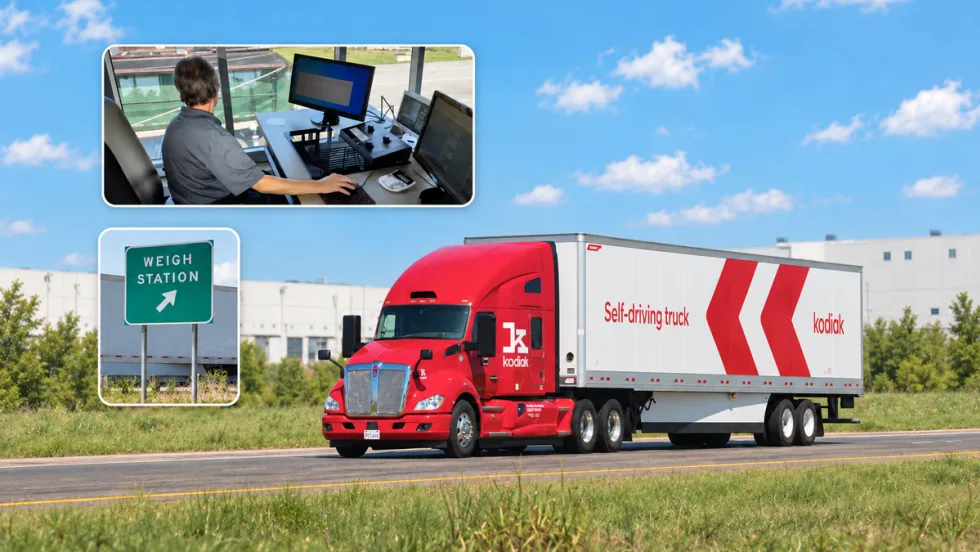
PrePass, Kodiak Connect Driverless Trucks to Roadside Enforcement
The system will allow enforcement agencies to verify Enhanced Inspection information and decide whether Kodiak’s autonomous trucks can bypass roadside screening sites.
Read More →
From One Generation to the Next: How Mentorship Builds Safer Truck Drivers
After three decades in trucking, Harold Perry shares what he's learned about driver safety, mentorship, and helping the next generation build confidence behind the wheel.
Read More →
FMCSA Pauses Biennial-Update Enforcement Amid Motus Transition
Carriers whose updates were due on or after June 1 have more time, while FMCSA works to stabilize its new registration system and warns of phishing sites impersonating its new carrier registration system, Motus.
Read More →
ZF Expands Commercial Vehicle Push in North America
ZF is expanding its North American commercial-vehicle presence with new transmission applications, electrification, trailer technology and autonomous-driving systems.
Read More →
Truck Drivers Need More Than Another Alert
Fleets have more visibility into truck health, safety events, and driver activity than ever. The next challenge is turning all that information into useful guidance for the person who has to decide what to do next.
Read More →
Tesla Wants a Self-Driving Semi. Are Cameras Enough?
Could Tesla’s camera-only autonomous driving technology work on an 80,000-pound Semi? In this commentary, HDT's Deborah Lockridge takes a look at Tesla, Cybercab, and how autonomous trucks see the road.
Read More →
What DOT’s Automated Vehicle Strategy Means for Trucking
The U.S. Department of Transportation issued a new automated-vehicle strategy that outlines plans for driverless-truck regulations, cross-state freight corridors, and federal safety standards.
Read More →
NYC Expands Speed, Pedestrian Safety Tech Across Fleet
New York City is expanding intelligent speed assistance and pedestrian-alert systems across its municipal fleet, moving the technologies from pilot programs into vehicle procurement and retrofit requirements.
Read More →
FMCSA Removes 110 Truck Driver Training Schools from Certified ELDT List
Federal regulators also are targeting more than 160 additional training providers and launching a nationwide audit of third-party CDL skills testers as part of a broader crackdown on trucking fraud.
Read More →
Beyond DOT Compliance: What Makes a Trucking Fleet Truly Safe?
A trucking fleet can follow every rule and still make unsafe decisions. The real test comes when safety conflicts with freight, productivity, or cost.
Read More →