





Dig Deeper: A Day in the Life of an Amazon Delivery Agent
Amazon Investing in Safety Technology for Middle-Mile, Last-Mile Fleet
Amazon said it's spending $200 million on safety technology across its transportation network in 2023.
March 7, 2023
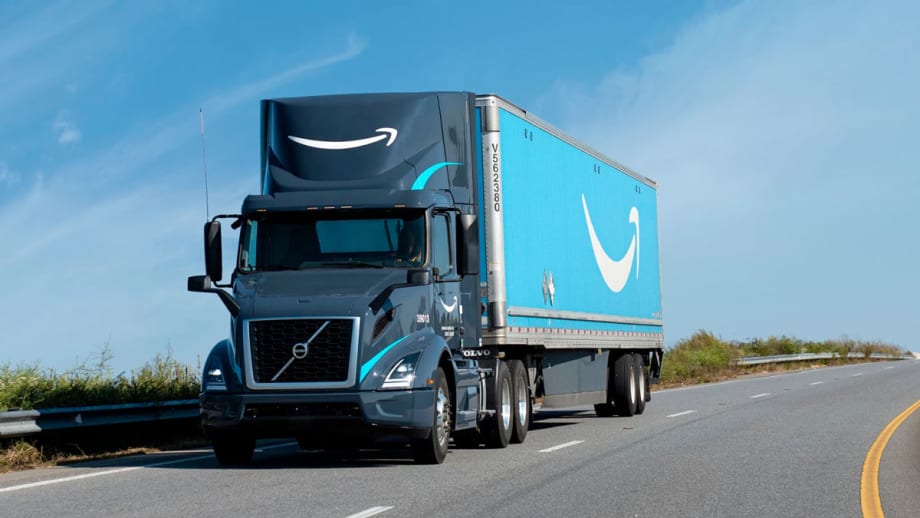
Amazon is piloting strobing brake light technology in some of our trailers, which it said has the potential to reduce rear-end collisions by as much as 30%.
Photo: Amazon
2 min to read
Amazon is spending $200 million on safety technology across its transportation network in 2023. A recent website post highlighted some of the technology-based safety and sustainability solutions it’s continuing to invest in and expand upon this year.
Udit Madan, vice president of Amazon Transportation, said the company is already working toward the goals outlined in the U.S. Department of Transportation’s National Roadway Safety Strategy (NRSS).
“It’s our belief that the technology we create, along with innovations spearheaded by our industry partners, can raise the bar on safety and reduce crash frequency and severity,” he said. “And in many cases, these innovations are better for the environment, too.”
Safety Technology for Middle-Mile Trucking
Amazon has equipped its middle-mile trucking network, which ships packages to and from operations sites before they’re dispatched for last-mile delivery to customers, with advanced safety technology, including:
automatic emergency braking
front-collision warning
stability control
lane-departure warning
side-object detection
adaptive cruise control
speed limiters.
Since 2017, Amazon tractors have also been equipped with driver-facing cameras. Trailers are outfitted with sensors to monitor lights, anti-lock braking systems, cargo and door sensors, and more.
“Based on our full technology package, equipment manufacturers have indicated that Amazon is a pioneer in incorporating the most advanced safety features,” Madan said. “And outside of our fleet, we’ve invested heavily in our route planning navigation systems and predictive analytics software to better monitor fleet safety.”
Last-Mile Delivery Safety Tech
Amazon also is expanding in-vehicle camera safety technology across its last-mile delivery network. This technology identifies safety events and provides real-time alerts.
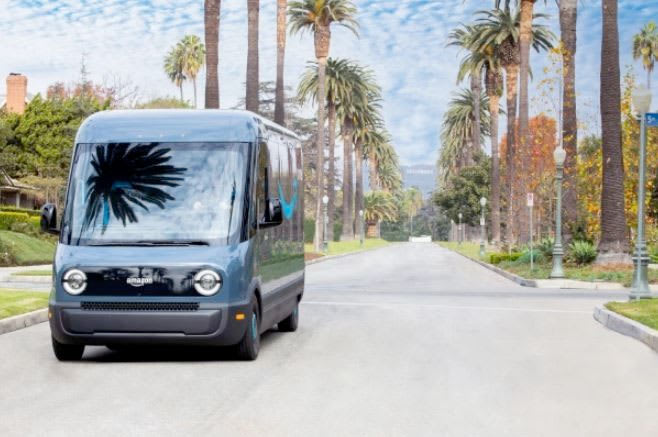
Amazon's custom electric delivery vehicles from Rivian feature in-cab cameras as well as a 360-degree camera detection system.
Photo: Amazon
“We began outfitting Amazon-branded delivery vans in the U.S. with this technology in 2020 and, since rolling it out, we’ve seen a 35% reduction in accident rates across our network,” Madan wrote. “This technology is a game-changer and will be in nearly 100% of Amazon-branded vehicles by April 2023.”
Madan also gave examples of some of the cutting-edge technologies it is piloting, such as strobing brake light technology in some trailers, and digital side mirror camera technology to reduce blind spots.
“As we pilot new technologies and learn about the safety efficacy, we’ll be able to make data-driven decisions about whether and how to deploy these and other technologies broadly across our fleet of vehicles and trailers.”
More Safety & Compliance

FMCSA Pauses Biennial-Update Enforcement Amid Motus Transition
Carriers whose updates were due on or after June 1 have more time, while FMCSA works to stabilize its new registration system and warns of phishing sites impersonating its new carrier registration system, Motus.
Read More →
ZF Expands Commercial Vehicle Push in North America
ZF is expanding its North American commercial-vehicle presence with new transmission applications, electrification, trailer technology and autonomous-driving systems.
Read More →
Truck Drivers Need More Than Another Alert
Fleets have more visibility into truck health, safety events, and driver activity than ever. The next challenge is turning all that information into useful guidance for the person who has to decide what to do next.
Read More →
Tesla Wants a Self-Driving Semi. Are Cameras Enough?
Could Tesla’s camera-only autonomous driving technology work on an 80,000-pound Semi? In this commentary, HDT's Deborah Lockridge takes a look at Tesla, Cybercab, and how autonomous trucks see the road.
Read More →
What DOT’s Automated Vehicle Strategy Means for Trucking
The U.S. Department of Transportation issued a new automated-vehicle strategy that outlines plans for driverless-truck regulations, cross-state freight corridors, and federal safety standards.
Read More →
NYC Expands Speed, Pedestrian Safety Tech Across Fleet
New York City is expanding intelligent speed assistance and pedestrian-alert systems across its municipal fleet, moving the technologies from pilot programs into vehicle procurement and retrofit requirements.
Read More →
FMCSA Removes 110 Truck Driver Training Schools from Certified ELDT List
Federal regulators also are targeting more than 160 additional training providers and launching a nationwide audit of third-party CDL skills testers as part of a broader crackdown on trucking fraud.
Read More →
Beyond DOT Compliance: What Makes a Trucking Fleet Truly Safe?
A trucking fleet can follow every rule and still make unsafe decisions. The real test comes when safety conflicts with freight, productivity, or cost.
Read More →
Hours of Service Pilot Programs: FMCSA Readies for 2027 Rollout
Two pilot programs could eventually reshape hours-of-service rules, giving truck drivers options to pause their 14-hour clock or use longer split sleeper rest periods.
Read More →
New Guide Offers Pet Safety Tips for Truck Drivers
Hundreds of thousands of pets travel in truck cabs. A new safety guide from Volvo Trucks and the Center for Pet Safety offers practical advice for truck drivers who bring dogs and cats along for the ride.
Read More →